 Add to Chrome
 Add to Firefox
 Add to Edge
ITKIT: Feasible CT Image Analysis based on SimpleITK and MMEngine
Mar 15, 2026
CT images are widely used in clinical diagnosis and treatment, and their data have formed a de facto standard - DICOM. It is clear and easy to use, and can be efficiently utilized by data-driven analysis methods such as deep learning. In the past decade, many program frameworks for medical image analysis have emerged in the open-source community. ITKIT analyzed the characteristics of these frameworks and hopes to provide a better choice in terms of ease of use and configurability. ITKIT offers a complete pipeline from DICOM to 3D segmentation inference. Its basic practice only includes some essential steps, enabling users with relatively weak computing capabilities to quickly get started using the CLI according to the documentation. For advanced users, the OneDL-MMEngine framework provides a flexible model configuration and deployment entry. This paper conducted 12 typical experiments to verify that ITKIT can meet the needs of most basic scenarios.

Interpretable Auto Window Setting for Deep-Learning-Based CT Analysis
Jan 07, 2025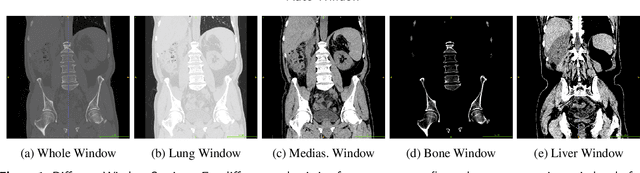
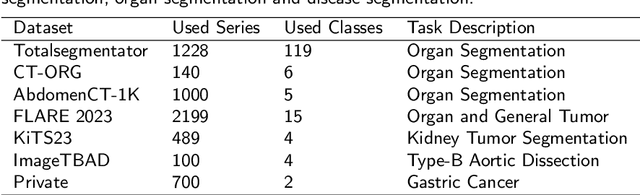
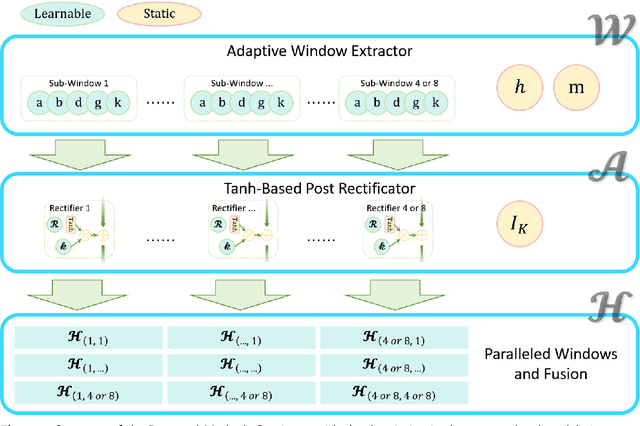
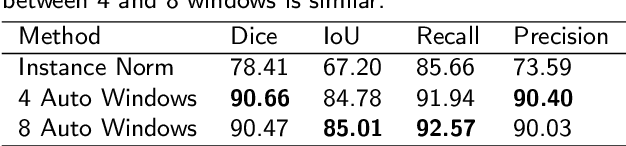
Whether during the early days of popularization or in the present, the window setting in Computed Tomography (CT) has always been an indispensable part of the CT analysis process. Although research has investigated the capabilities of CT multi-window fusion in enhancing neural networks, there remains a paucity of domain-invariant, intuitively interpretable methodologies for Auto Window Setting. In this work, we propose an plug-and-play module originate from Tanh activation function, which is compatible with mainstream deep learning architectures. Starting from the physical principles of CT, we adhere to the principle of interpretability to ensure the module's reliability for medical implementations. The domain-invariant design facilitates observation of the preference decisions rendered by the adaptive mechanism from a clinically intuitive perspective. This enables the proposed method to be understood not only by experts in neural networks but also garners higher trust from clinicians. We confirm the effectiveness of the proposed method in multiple open-source datasets, yielding 10%~200% Dice improvements on hard segment targets.
Intuitive Axial Augmentation Using Polar-Sine-Based Piecewise Distortion for Medical Slice-Wise Segmentation
Dec 04, 2024Most data-driven models for medical image analysis rely on universal augmentations to improve performance. Experimental evidence has confirmed their effectiveness, but the unclear mechanism underlying them poses a barrier to the widespread acceptance and trust in such methods within the medical community. We revisit and acknowledge the unique characteristics of medical images apart from traditional digital images, and consequently, proposed a medical-specific augmentation algorithm that is more elastic and aligns well with radiology scan procedure. The method performs piecewise affine with sinusoidal distorted ray according to radius on polar coordinates, thus simulating uncertain postures of human lying flat on the scanning table. Our method could generate human visceral distribution without affecting the fundamental relative position on axial plane. Two non-adaptive algorithms, namely Meta-based Scan Table Removal and Similarity-Guided Parameter Search, are introduced to bolster robustness of our augmentation method. Experiments show our method improves accuracy across multiple famous segmentation frameworks without requiring more data samples. Our preview code is available in: https://github.com/MGAMZ/PSBPD.