 Add to Chrome
 Add to Firefox
 Add to Edge
Revolutionizing Process Mining: A Novel Architecture for ChatGPT Integration and Enhanced User Experience through Optimized Prompt Engineering
May 17, 2024
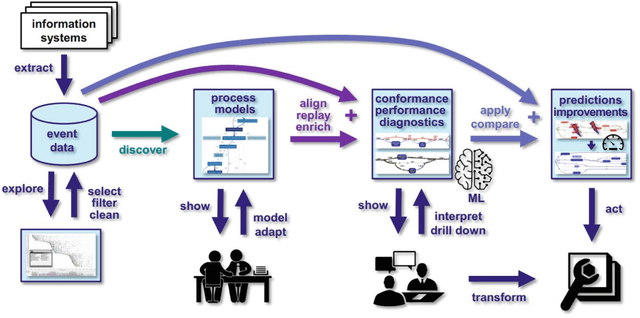
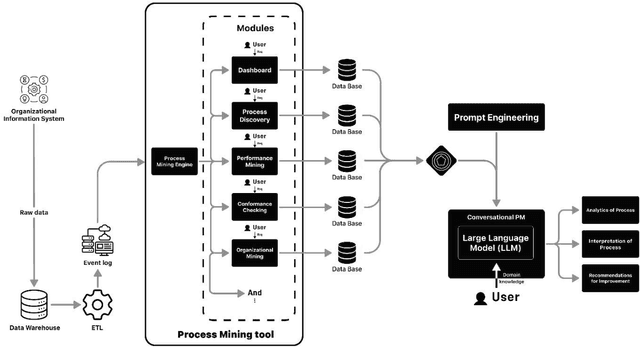
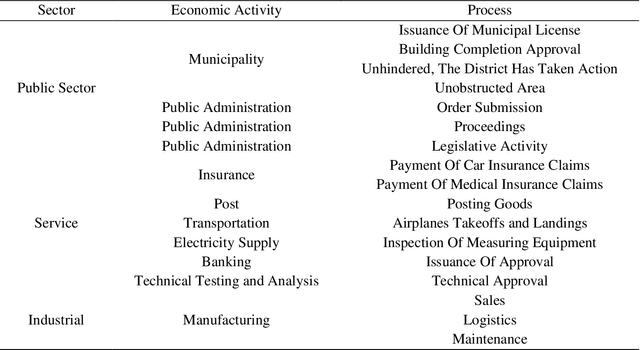
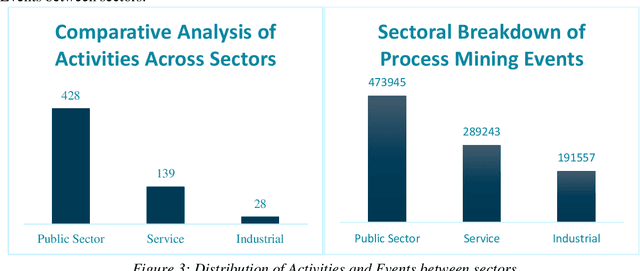
In the rapidly evolving field of business process management, there is a growing need for analytical tools that can transform complex data into actionable insights. This research introduces a novel approach by integrating Large Language Models (LLMs), such as ChatGPT, into process mining tools, making process analytics more accessible to a wider audience. The study aims to investigate how ChatGPT enhances analytical capabilities, improves user experience, increases accessibility, and optimizes the architectural frameworks of process mining tools. The key innovation of this research lies in developing a tailored prompt engineering strategy for each process mining submodule, ensuring that the AI-generated outputs are accurate and relevant to the context. The integration architecture follows an Extract, Transform, Load (ETL) process, which includes various process mining engine modules and utilizes zero-shot and optimized prompt engineering techniques. ChatGPT is connected via APIs and receives structured outputs from the process mining modules, enabling conversational interactions. To validate the effectiveness of this approach, the researchers used data from 17 companies that employ BehfaLab's Process Mining Tool. The results showed significant improvements in user experience, with an expert panel rating 72% of the results as "Good". This research contributes to the advancement of business process analysis methodologies by combining process mining with artificial intelligence. Future research directions include further optimization of prompt engineering, exploration of integration with other AI technologies, and assessment of scalability across various business environments. This study paves the way for continuous innovation at the intersection of process mining and artificial intelligence, promising to revolutionize the way businesses analyze and optimize their processes.

Video Recommendation Using Social Network Analysis and User Viewing Patterns
Aug 24, 2023With the meteoric rise of video-on-demand (VOD) platforms, users face the challenge of sifting through an expansive sea of content to uncover shows that closely match their preferences. To address this information overload dilemma, VOD services have increasingly incorporated recommender systems powered by algorithms that analyze user behavior and suggest personalized content. However, a majority of existing recommender systems depend on explicit user feedback in the form of ratings and reviews, which can be difficult and time-consuming to collect at scale. This presents a key research gap, as leveraging users' implicit feedback patterns could provide an alternative avenue for building effective video recommendation models, circumventing the need for explicit ratings. However, prior literature lacks sufficient exploration into implicit feedback-based recommender systems, especially in the context of modeling video viewing behavior. Therefore, this paper aims to bridge this research gap by proposing a novel video recommendation technique that relies solely on users' implicit feedback in the form of their content viewing percentages.