 Add to Chrome
 Add to Firefox
 Add to Edge
State-Specific Respiratory Signatures for Affective and Stress Recognition: Interpretable Respiratory Markers, Autocorrelation Lags, and Compact CNN Models
Jun 25, 2026
Respiratory activity is a direct and interpretable physiological channel for wearable stress and affective-state recognition, yet many studies emphasize classification accuracy without identifying which respiratory properties separate different states. This work reframes RESP-based recognition as a joint predictive and explanatory problem. Using the chest respiratory channel of the WESAD dataset, we analyze 60 s windows under leave-one-subject-out validation and combine two complementary branches: compact raw-signal one-dimensional convolutional neural networks (1D-CNNs) and physically grouped handcrafted respiratory signatures. The primary application task is binary stress versus non-stress detection, while baseline, stress, amusement, and meditation are additionally analyzed in a one-vs-rest setting to reveal state-specific respiratory markers. The feature space is organized into respiratory timing, breath-to-breath variability, waveform statistics, spectral/time-frequency descriptors, and autocorrelation/nonlinear predictability descriptors, with the raw 60 s signal treated as a sixth representation for the CNN branch. We introduce autocorrelation transition lags (Zpm/Zmp) as interpretable markers of respiratory correlation scale and separately evaluate exploratory FEG-Pro/Lyapunov-like descriptors. In the final CNN refit setting, the raw-signal model achieved the strongest stress-vs-rest performance, with accuracy 96.72 percent, macro-F1 95.30 percent, and MCC 90.61 percent. In contrast, compact feature models were stronger for baseline, with MCC 65.34 percent, amusement, with MCC 35.69 percent, and especially meditation, with MCC 88.65 percent. These results show that CNNs are most useful for the practical stress detector, whereas interpretable respiratory signatures provide stronger and more physiologically transparent state-specific markers for several non-stress conditions.

Machine Learning Sensors for Diagnosis of COVID-19 Disease Using Routine Blood Values for Internet of Things Application
Sep 08, 2022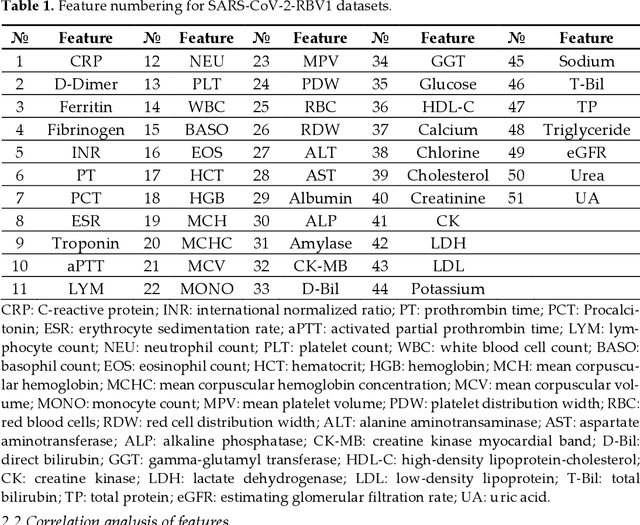
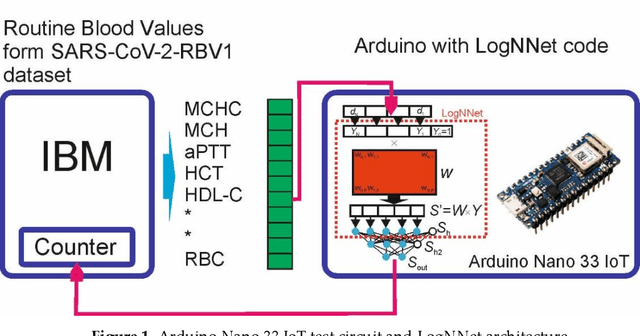
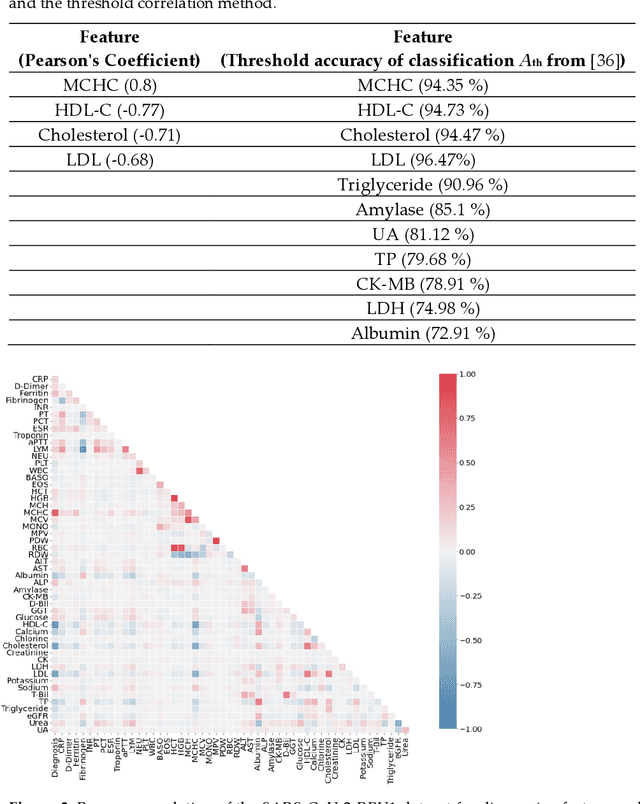
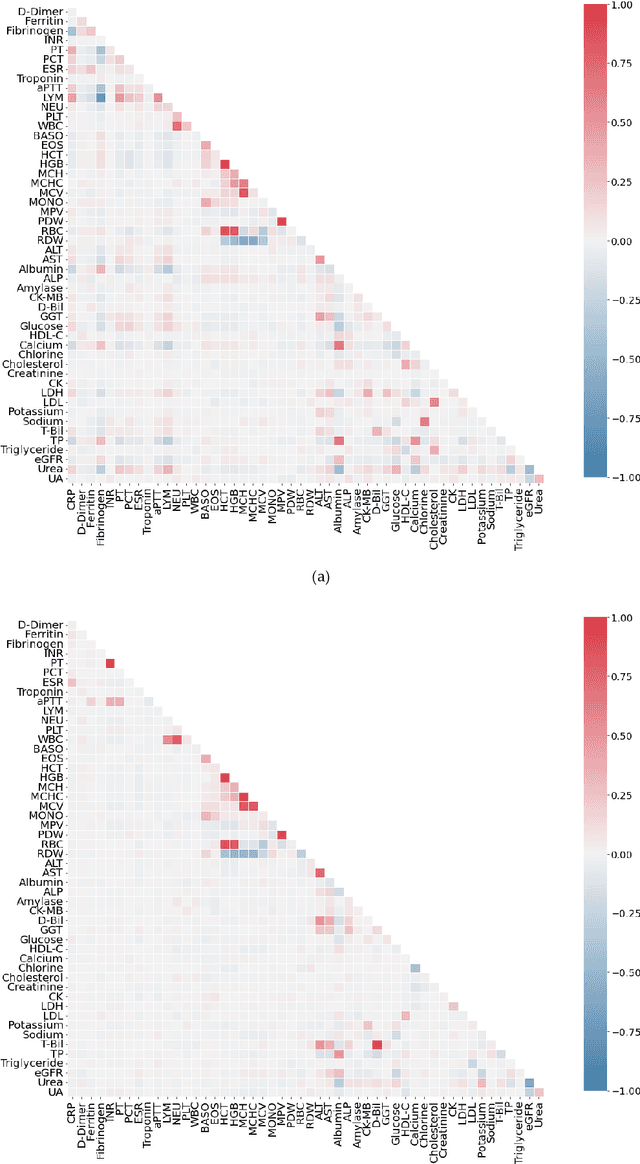
Healthcare digitalization needs effective methods of human sensorics, when various parameters of the human body are instantly monitored in everyday life and connected to the Internet of Things (IoT). In particular, Machine Learning (ML) sensors for the prompt diagnosis of COVID-19 is an important case for IoT application in healthcare and Ambient Assistance Living (AAL). Determining the infected status of COVID-19 with various diagnostic tests and imaging results is costly and time-consuming. The aim of this study is to provide a fast, reliable and economical alternative tool for the diagnosis of COVID-19 based on the Routine Blood Values (RBV) values measured at admission. The dataset of the study consists of a total of 5296 patients with the same number of negative and positive COVID-19 test results and 51 routine blood values. In this study, 13 popular classifier machine learning models and LogNNet neural network model were exanimated. The most successful classifier model in terms of time and accuracy in the detection of the disease was the Histogram-based Gradient Boosting (HGB). The HGB classifier identified the 11 most important features (LDL, Cholesterol, HDL-C, MCHC, Triglyceride, Amylase, UA, LDH, CK-MB, ALP and MCH) to detect the disease with 100% accuracy, learning time 6.39 sec. In addition, the importance of single, double and triple combinations of these features in the diagnosis of the disease was discussed. We propose to use these 11 traits and their combinations as important biomarkers for ML sensors in diagnosis of the disease, supporting edge computing on Arduino and cloud IoT service.
A New Feature Selection Method for LogNNet and its Application for Diagnosis and Prognosis of COVID-19 Disease Using Routine Blood Values
May 20, 2022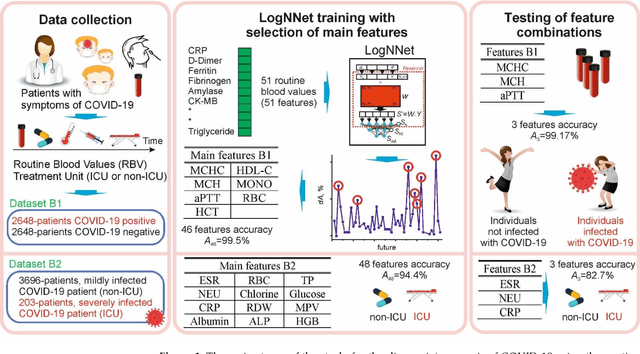
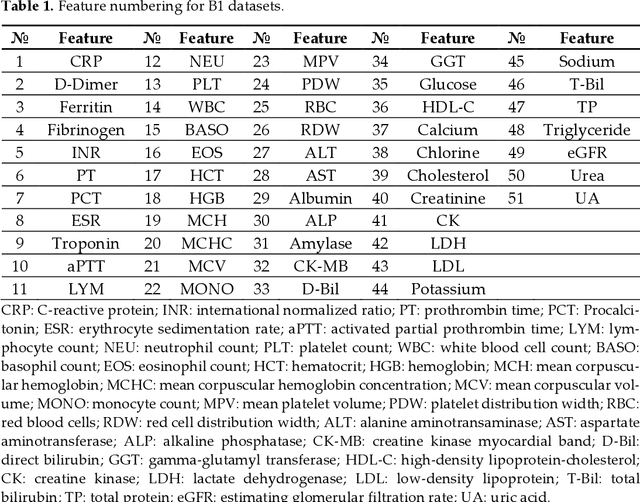
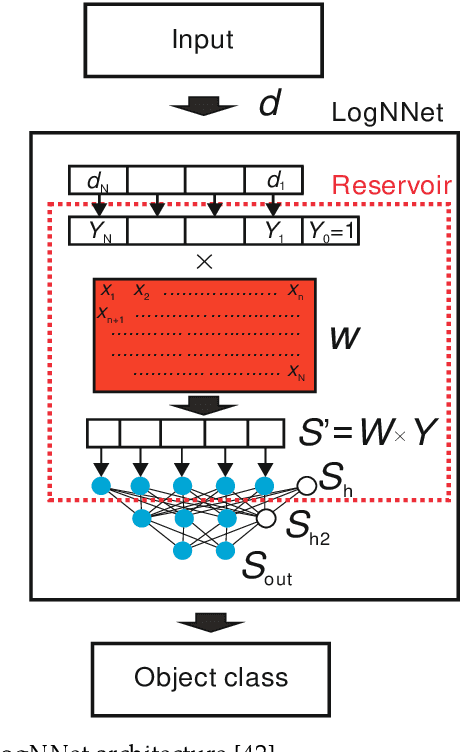
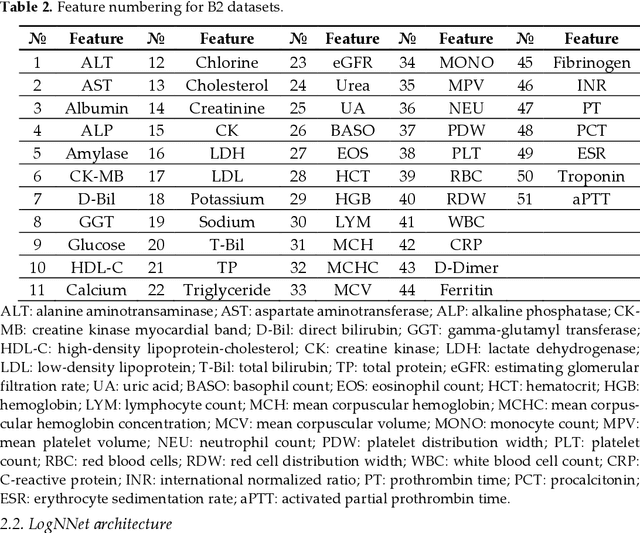
Since February-2020, the world has embarked on an intense struggle with the COVID-19 disease, and health systems have come under a tragic pressure as the disease turned into a pandemic. The aim of this study is to determine the most effective routine-blood-values (RBV) in the diagnosis/prognosis of COVID-19 using new feature selection method for LogNNet reservoir neural network. First dataset in this study consists of a total of 5296-patients with a same number of negative and positive covid test. Second dataset consists of a total of 3899-patients with a diagnosis of COVID-19, who were treated in hospital with severe-infected (203) and mildly-infected (3696). The most important RBVs that affect the diagnosis of the disease from the first dataset were mean-corpuscular-hemoglobin-concentration (MCHC), mean-corpuscular-hemoglobin (MCH) and activated-partial-prothrombin-time (aPTT). The most effective features in the prognosis of the disease were erythrocyte-sedimentation-rate (ESR), neutrophil-count (NEU), C-reactive-protein (CRP). LogNNet-model achieved an accuracy rate of A46 = 99.5% in the diagnosis of the disease with 46 features and A3 = 99.17% with only MCHC, MCH, and aPTT features. Model reached an accuracy rate of A48 = 94.4% in determining the prognosis of the disease with 48 features and A3 = 82.7% with only ESR, NEU, and CRP features. LogNNet model demonstrated a very high disease diagnosis/prognosis of COVID-19 performance without knowing about the symptoms or history of the patients. The model is suitable for devices with low resources (3-14 kB of RAM used on the Arduino microcontroller), and is promising to create mobile health monitoring systems in the Internet of Things. Our method will reduce the negative pressures on the health sector and help doctors understand pathogenesis of COVID-19 through key futures and contribute positively to the treatment processes.