 Add to Chrome
 Add to Firefox
 Add to Edge
Improving Automated Wound Assessment Using Joint Boundary Segmentation and Multi-Class Classification Models
Mar 28, 2026
Accurate wound classification and boundary segmentation are essential for guiding clinical decisions in both chronic and acute wound management. However, most existing AI models are limited, focusing on a narrow set of wound types or performing only a single task (segmentation or classification), which reduces their clinical applicability. This study presents a deep learning model based on YOLOv11 that simultaneously performs wound boundary segmentation (WBS) and wound classification (WC) across five clinically relevant wound types: burn injury (BI), pressure injury (PI), diabetic foot ulcer (DFU), vascular ulcer (VU), and surgical wound (SW). A wound-type balanced dataset of 2,963 annotated images was created to train the models for both tasks, with stratified five-fold cross-validation ensuring robust and unbiased evaluation. The models trained on the original non-augmented dataset achieved consistent performance across folds, though BI detection accuracy was relatively lower. Therefore, the dataset was augmented using rotation, flipping, and variations in brightness, saturation, and exposure to help the model learn more generalized and invariant features. This augmentation significantly improved model performance, particularly in detecting visually subtle BI cases. Among tested variants, YOLOv11x achieved the highest performance with F1-scores of 0.9341 (WBS) and 0.8736 (WC), while the lightweight YOLOv11n provided comparable accuracy at lower computational cost, making it suitable for resource-constrained deployments. Supported by confusion matrices and visual detection outputs, the results confirm the model's robustness against complex backgrounds and high intra-class variability, demonstrating the potential of YOLOv11-based architectures for accurate, real-time wound analysis in both clinical and remote care settings.

Using Computer Vision for Skin Disease Diagnosis in Bangladesh Enhancing Interpretability and Transparency in Deep Learning Models for Skin Cancer Classification
Jan 30, 2025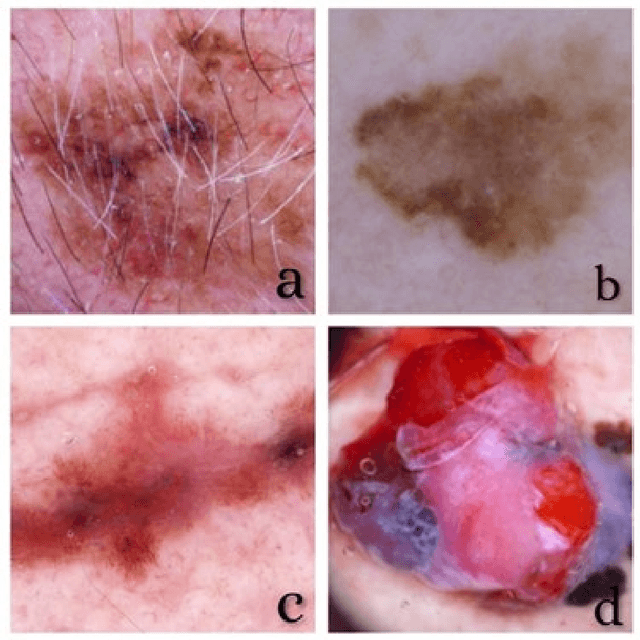
With over 2 million new cases identified annually, skin cancer is the most prevalent type of cancer globally and the second most common in Bangladesh, following breast cancer. Early detection and treatment are crucial for enhancing patient outcomes; however, Bangladesh faces a shortage of dermatologists and qualified medical professionals capable of diagnosing and treating skin cancer. As a result, many cases are diagnosed only at advanced stages. Research indicates that deep learning algorithms can effectively classify skin cancer images. However, these models typically lack interpretability, making it challenging to understand their decision-making processes. This lack of clarity poses barriers to utilizing deep learning in improving skin cancer detection and treatment. In this article, we present a method aimed at enhancing the interpretability of deep learning models for skin cancer classification in Bangladesh. Our technique employs a combination of saliency maps and attention maps to visualize critical features influencing the model's diagnoses.