 Add to Chrome
 Add to Firefox
 Add to Edge
Beyond Clean Text: Evaluating Encoder and Decoder Robustness for Bangla Event Detection in Noisy Text
Jun 29, 2026
Event detection (ED) systems are typically evaluated on clean, curated text, leaving their robustness to real-world noise largely unexplored, particularly for low-resource languages such as Bangla. We introduce a generalized Bangla news event ontology and a benchmark comprising 9,979 annotated sentences across 40 event subtypes, spanning clean news text, real-world Automatic Speech Recognition (ASR) transcripts, and orthographically corrupted text. We systematically evaluate fine-tuned encoder-only models (BanglaBERT and XLM-R) alongside instruction-tuned decoder-only large language models (Llama 3 and Gemma 3). Our results reveal a clear architectural trade-off: encoder models achieve higher performance on clean text but degrade substantially under noise, whereas decoder-only LLMs are markedly more robust, particularly when event triggers are corrupted. We further show that embedding annotation guidelines during instruction tuning establishes a higher performance baseline on noisy text but yields inconsistent reductions in performance degradation across noisy conditions. Finally, model scaling consistently improves the robustness of decoder-only LLMs, while combined training on clean and noisy data serves as an effective regularization strategy that disproportionately benefits encoder architectures, significantly narrowing the robustness gap.

BANGLASOCIALBENCH: A Benchmark for Evaluating Sociopragmatic and Cultural Alignment of LLMs in Bangladeshi Social Interaction
Mar 16, 2026Large Language Models have demonstrated strong multilingual fluency, yet fluency alone does not guarantee socially appropriate language use. In high-context languages, communicative competence requires sensitivity to social hierarchy, relational roles, and interactional norms that are encoded directly in everyday language. Bangla exemplifies this challenge through its three-tiered pronominal system, kinship-based addressing, and culturally embedded social customs. We introduce BANGLASOCIALBENCH, the first benchmark designed to evaluate sociopragmatic competence in Bangla through context-dependent language use rather than factual recall. The benchmark spans three domains: Bangla Address Terms, Kinship Reasoning, and Social Customs, and consists of 1,719 culturally grounded instances written and verified by native Bangla speakers. We evaluate twelve contemporary LLMs in a zero-shot setting and observe systematic patterns of cultural misalignment. Models frequently default to overly formal address forms, fail to recognize multiple socially acceptable address pronouns, and conflate kinship terminology across religious contexts. Our findings show that sociopragmatic failures are often structured and non-random, revealing persistent limitations in how current LLMs infer and apply culturally appropriate language use in realistic Bangladeshi social interactions.
A Regularized LSTM Method for Detecting Fake News Articles
Nov 16, 2024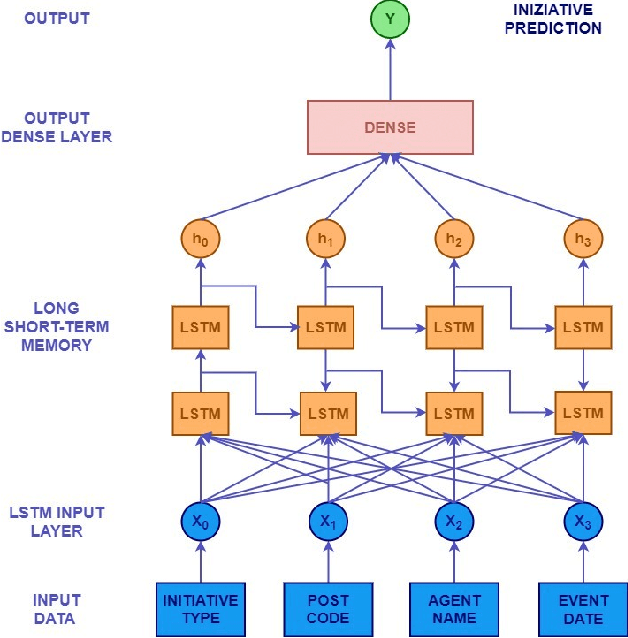
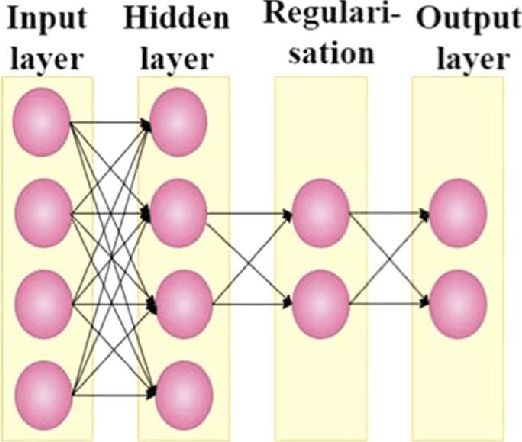
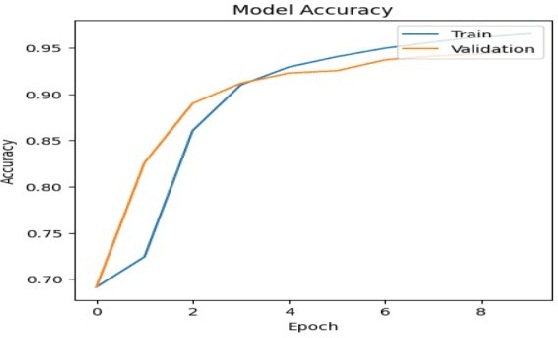
Nowadays, the rapid diffusion of fake news poses a significant problem, as it can spread misinformation and confusion. This paper aims to develop an advanced machine learning solution for detecting fake news articles. Leveraging a comprehensive dataset of news articles, including 23,502 fake news articles and 21,417 accurate news articles, we implemented and evaluated three machine-learning models. Our dataset, curated from diverse sources, provides rich textual content categorized into title, text, subject, and Date features. These features are essential for training robust classification models to distinguish between fake and authentic news articles. The initial model employed a Long Short-Term Memory (LSTM) network, achieving an accuracy of 94%. The second model improved upon this by incorporating additional regularization techniques and fine-tuning hyperparameters, resulting in a 97% accuracy. The final model combined the strengths of previous architectures with advanced optimization strategies, achieving a peak accuracy of 98%. These results demonstrate the effectiveness of our approach in identifying fake news with high precision. Implementing these models showcases significant advancements in natural language processing and machine learning techniques, contributing valuable tools for combating misinformation. Our work highlights the potential for deploying such models in real-world applications, providing a reliable method for automated fake news detection and enhancing the credibility of news dissemination.
Predicting Participants' Performance in Programming Contests using Deep Learning Techniques
Feb 11, 2023
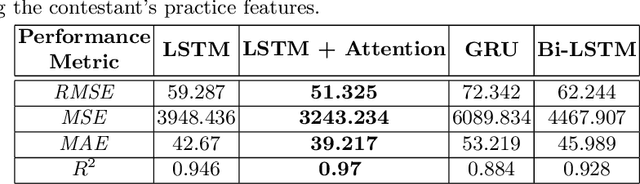
In recent days, the number of technology enthusiasts is increasing day by day with the prevalence of technological products and easy access to the internet. Similarly, the amount of people working behind this rapid development is rising tremendously. Computer programmers consist of a large portion of those tech-savvy people. Codeforces, an online programming and contest hosting platform used by many competitive programmers worldwide. It is regarded as one of the most standardized platforms for practicing programming problems and participate in programming contests. In this research, we propose a framework that predicts the performance of any particular contestant in the upcoming competitions as well as predicts the rating after that contest based on their practice and the performance of their previous contests.