 Add to Chrome
 Add to Firefox
 Add to Edge
BanglaRobustNet: A Hybrid Denoising-Attention Architecture for Robust Bangla Speech Recognition
Jan 25, 2026
Bangla, one of the most widely spoken languages, remains underrepresented in state-of-the-art automatic speech recognition (ASR) research, particularly under noisy and speaker-diverse conditions. This paper presents BanglaRobustNet, a hybrid denoising-attention framework built on Wav2Vec-BERT, designed to address these challenges. The architecture integrates a diffusion-based denoising module to suppress environmental noise while preserving Bangla-specific phonetic cues, and a contextual cross-attention module that conditions recognition on speaker embeddings for robustness across gender, age, and dialects. Trained end-to-end with a composite objective combining CTC loss, phonetic consistency, and speaker alignment, BanglaRobustNet achieves substantial reductions in word error rate (WER) and character error rate (CER) compared to Wav2Vec-BERT and Whisper baselines. Evaluations on Mozilla Common Voice Bangla and augmented noisy speech confirm the effectiveness of our approach, establishing BanglaRobustNet as a robust ASR system tailored to low-resource, noise-prone linguistic settings.

Adaptability of ASR Models on Low-Resource Language: A Comparative Study of Whisper and Wav2Vec-BERT on Bangla
Jul 02, 2025In recent years, neural models trained on large multilingual text and speech datasets have shown great potential for supporting low-resource languages. This study investigates the performances of two state-of-the-art Automatic Speech Recognition (ASR) models, OpenAI's Whisper (Small & Large-V2) and Facebook's Wav2Vec-BERT on Bangla, a low-resource language. We have conducted experiments using two publicly available datasets: Mozilla Common Voice-17 and OpenSLR to evaluate model performances. Through systematic fine-tuning and hyperparameter optimization, including learning rate, epochs, and model checkpoint selection, we have compared the models based on Word Error Rate (WER), Character Error Rate (CER), Training Time, and Computational Efficiency. The Wav2Vec-BERT model outperformed Whisper across all key evaluation metrics, demonstrated superior performance while requiring fewer computational resources, and offered valuable insights to develop robust speech recognition systems in low-resource linguistic settings.
CineXDrama: Relevance Detection and Sentiment Analysis of Bangla YouTube Comments on Movie-Drama using Transformers: Insights from Interpretability Tool
Nov 10, 2024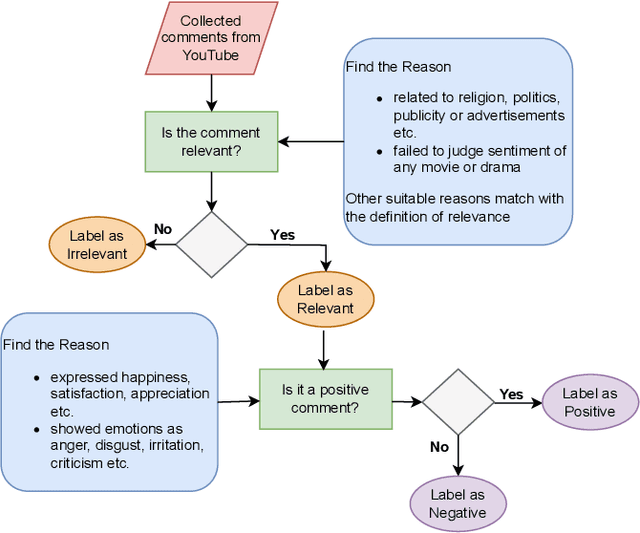
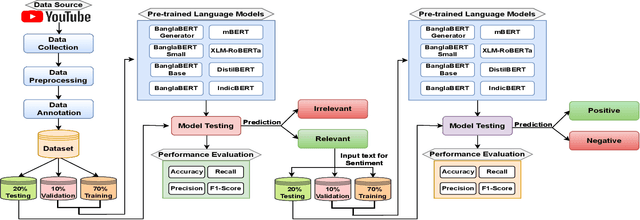
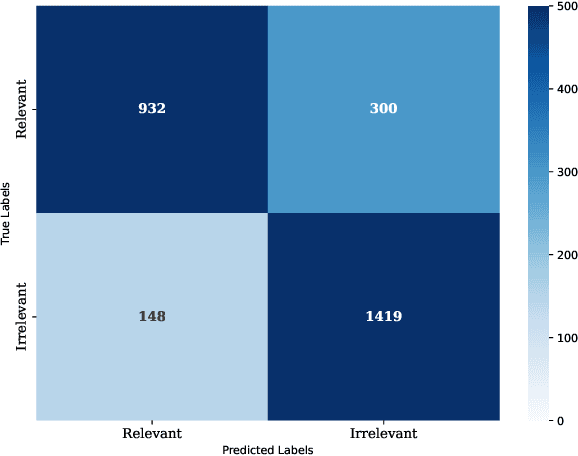
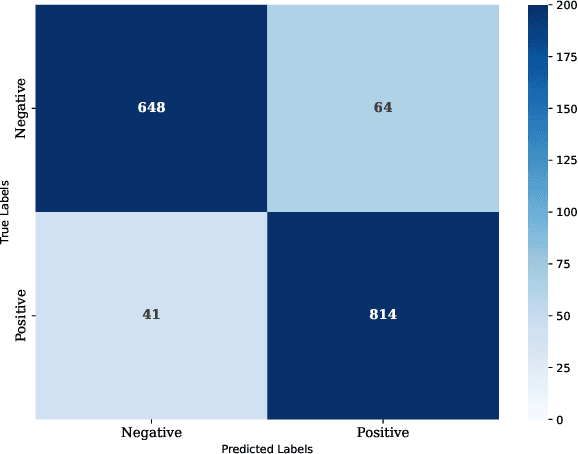
In recent years, YouTube has become the leading platform for Bangla movies and dramas, where viewers express their opinions in comments that convey their sentiments about the content. However, not all comments are relevant for sentiment analysis, necessitating a filtering mechanism. We propose a system that first assesses the relevance of comments and then analyzes the sentiment of those deemed relevant. We introduce a dataset of 14,000 manually collected and preprocessed comments, annotated for relevance (relevant or irrelevant) and sentiment (positive or negative). Eight transformer models, including BanglaBERT, were used for classification tasks, with BanglaBERT achieving the highest accuracy (83.99% for relevance detection and 93.3% for sentiment analysis). The study also integrates LIME to interpret model decisions, enhancing transparency.
Celeb-FBI: A Benchmark Dataset on Human Full Body Images and Age, Gender, Height and Weight Estimation using Deep Learning Approach
Jul 03, 2024
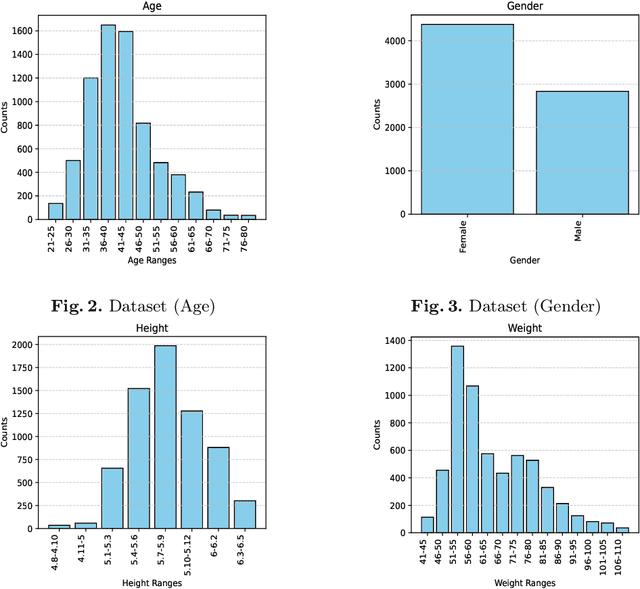
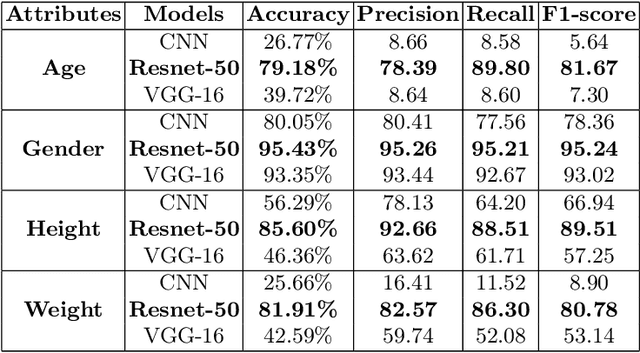
The scarcity of comprehensive datasets in surveillance, identification, image retrieval systems, and healthcare poses a significant challenge for researchers in exploring new methodologies and advancing knowledge in these respective fields. Furthermore, the need for full-body image datasets with detailed attributes like height, weight, age, and gender is particularly significant in areas such as fashion industry analytics, ergonomic design assessment, virtual reality avatar creation, and sports performance analysis. To address this gap, we have created the 'Celeb-FBI' dataset which contains 7,211 full-body images of individuals accompanied by detailed information on their height, age, weight, and gender. Following the dataset creation, we proceed with the preprocessing stages, including image cleaning, scaling, and the application of Synthetic Minority Oversampling Technique (SMOTE). Subsequently, utilizing this prepared dataset, we employed three deep learning approaches: Convolutional Neural Network (CNN), 50-layer ResNet, and 16-layer VGG, which are used for estimating height, weight, age, and gender from human full-body images. From the results obtained, ResNet-50 performed best for the system with an accuracy rate of 79.18% for age, 95.43% for gender, 85.60% for height and 81.91% for weight.