 Add to Chrome
 Add to Firefox
 Add to Edge
Hybrid Framework for Robotic Manipulation: Integrating Reinforcement Learning and Large Language Models
Mar 31, 2026
This paper introduces a new hybrid framework that combines Reinforcement Learning (RL) and Large Language Models (LLMs) to improve robotic manipulation tasks. By utilizing RL for accurate low-level control and LLMs for high level task planning and understanding of natural language, the proposed framework effectively connects low-level execution with high-level reasoning in robotic systems. This integration allows robots to understand and carry out complex, human-like instructions while adapting to changing environments in real time. The framework is tested in a PyBullet-based simulation environment using the Franka Emika Panda robotic arm, with various manipulation scenarios as benchmarks. The results show a 33.5% decrease in task completion time and enhancements of 18.1% and 36.4% in accuracy and adaptability, respectively, when compared to systems that use only RL. These results underscore the potential of LLM-enhanced robotic systems for practical applications, making them more efficient, adaptable, and capable of interacting with humans. Future research will aim to explore sim-to-real transfer, scalability, and multi-robot systems to further broaden the framework's applicability.

A Robust and Energy-Efficient Trajectory Planning Framework for High-Degree-of-Freedom Robots
Mar 13, 2025Energy efficiency and motion smoothness are essential in trajectory planning for high-degree-of-freedom robots to ensure optimal performance and reduce mechanical wear. This paper presents a novel framework integrating sinusoidal trajectory generation with velocity scaling to minimize energy consumption while maintaining motion accuracy and smoothness. The framework is evaluated using a physics-based simulation environment with metrics such as energy consumption, motion smoothness, and trajectory accuracy. Results indicate significant energy savings and smooth transitions, demonstrating the framework's effectiveness for precision-based applications. Future work includes real-time trajectory adjustments and enhanced energy models.
Advancements in Gesture Recognition Techniques and Machine Learning for Enhanced Human-Robot Interaction: A Comprehensive Review
Sep 10, 2024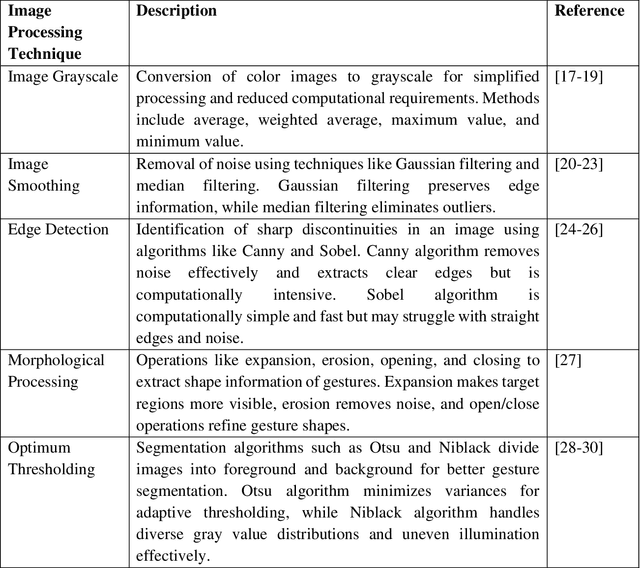
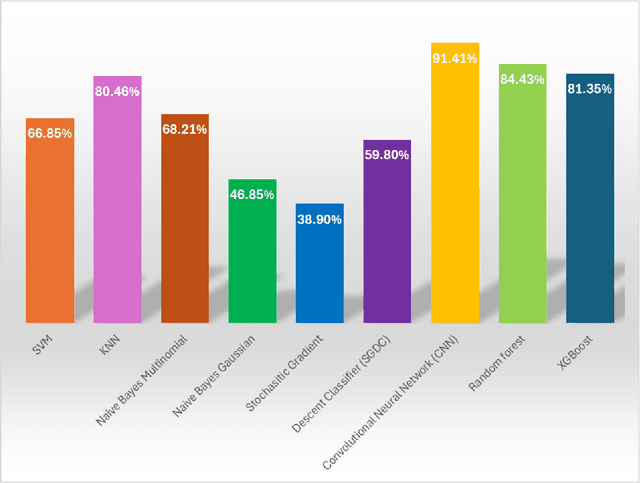
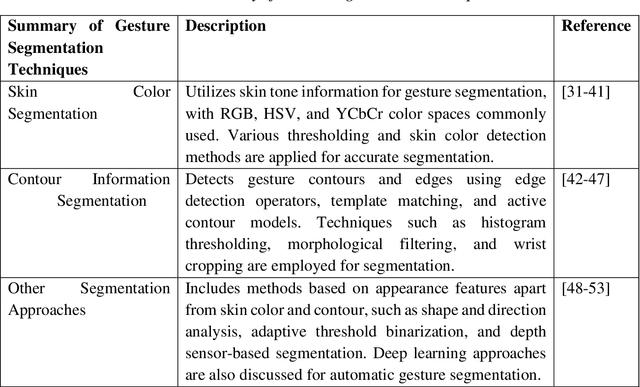
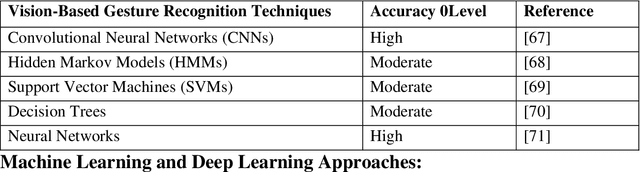
In recent years robots have become an important part of our day-to-day lives with various applications. Human-robot interaction creates a positive impact in the field of robotics to interact and communicate with the robots. Gesture recognition techniques combined with machine learning algorithms have shown remarkable progress in recent years, particularly in human-robot interaction (HRI). This paper comprehensively reviews the latest advancements in gesture recognition methods and their integration with machine learning approaches to enhance HRI. Furthermore, this paper represents the vision-based gesture recognition for safe and reliable human-robot-interaction with a depth-sensing system, analyses the role of machine learning algorithms such as deep learning, reinforcement learning, and transfer learning in improving the accuracy and robustness of gesture recognition systems for effective communication between humans and robots.
Simulation and optimization of computed torque control 3 DOF RRR manipulator using MATLAB
Sep 07, 2024
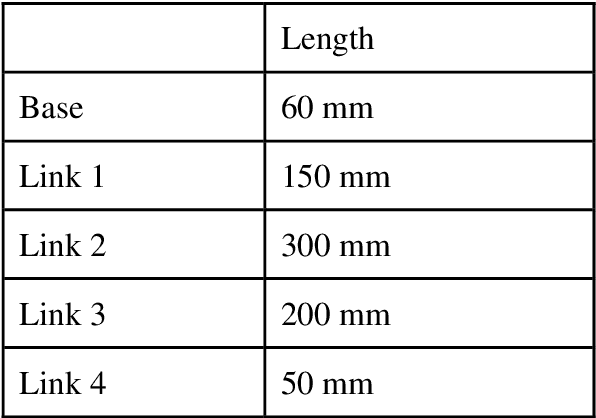


Robot manipulators have become a significant tool for production industries due to their advantages in high speed, accuracy, safety, and repeatability. This paper simulates and optimizes the design of a 3-DOF articulated robotic manipulator (RRR Configuration). The forward and inverse dynamic models are utilized. The trajectory is planned using the end effector's required initial position. A torque compute model is used to calculate the physical end effector's trajectory, position, and velocity. The MATLAB Simulink platform is used for all simulations of the RRR manipulator. With the aid of MATLAB, we primarily focused on manipulator control of the robot using a calculated torque control strategy to achieve the required position.