 Add to Chrome
 Add to Firefox
 Add to Edge
Conformal Anomaly Detection in Python: Moving Beyond Heuristic Thresholds with 'nonconform'
May 13, 2026
Most anomaly detection systems output scores rather than calibrated decisions, leaving practitioners to choose thresholds heuristically and without clear statistical interpretation. Conformal anomaly detection addresses this limitation by converting anomaly scores into calibrated p-values that are valid under the statistical assumption of data exchangeability, with a growing literature extending this idea beyond that setting. We present 'nonconform', a Python package for applying conformal anomaly detection within existing machine-learning workflows, and use it as the basis for an implementation-grounded introduction to the field. The package integrates with 'scikit-learn', 'pyod', and custom anomaly detectors, and provides a unified interface for calibration, p-value generation, and false discovery rate control. It supports several conformalization strategies, ranging from simple split-conformal calibration to more data-efficient and shift-aware extensions. Through a progression from foundational concepts to advanced conformalization strategies, complemented by code examples, the paper connects the statistical ideas behind conformal anomaly detection to their practical use in 'nonconform'. Empirical results demonstrate that the implemented methods enable statistically principled anomaly detection. Together, the package and exposition aim to make core conformal anomaly detection workflows more accessible and reproducible in experimental and production-oriented settings.

Early Detection of Forest Calamities in Homogeneous Stands -- Deep Learning Applied to Bark-Beetle Outbreaks
Mar 17, 2025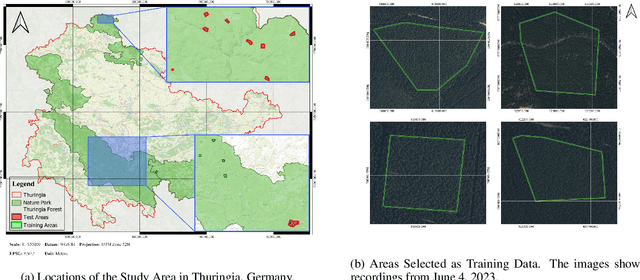
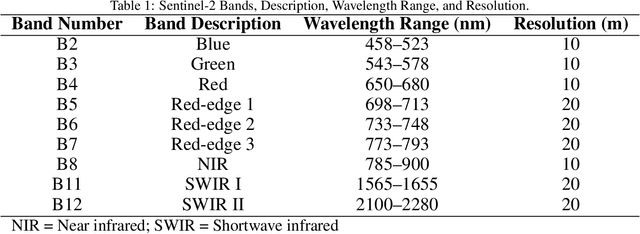
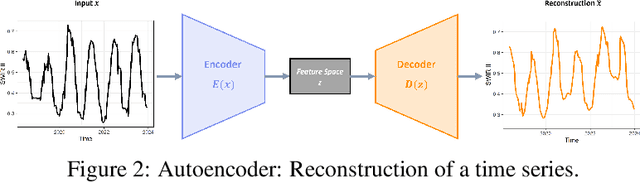
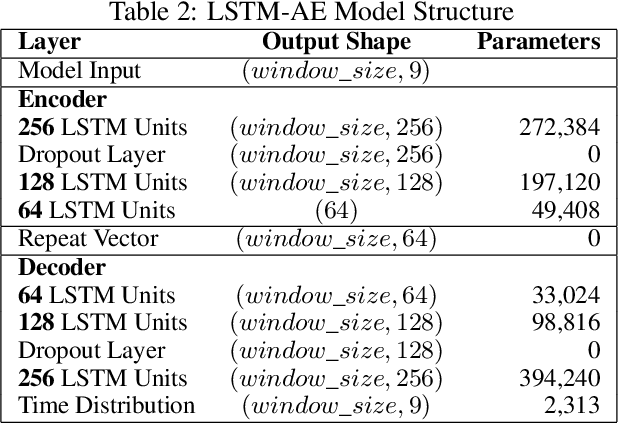
Climate change has increased the vulnerability of forests to insect-related damage, resulting in widespread forest loss in Central Europe and highlighting the need for effective, continuous monitoring systems. Remote sensing based forest health monitoring, oftentimes, relies on supervised machine learning algorithms that require labeled training data. Monitoring temporal patterns through time series analysis offers a potential alternative for earlier detection of disturbance but requires substantial storage resources. This study investigates the potential of a Deep Learning algorithm based on a Long Short Term Memory (LSTM) Autoencoder for the detection of anomalies in forest health (e.g. bark beetle outbreaks), utilizing Sentinel-2 time series data. This approach is an alternative to supervised machine learning methods, avoiding the necessity for labeled training data. Furthermore, it is more memory-efficient than other time series analysis approaches, as a robust model can be created using only a 26-week-long time series as input. In this study, we monitored pure stands of spruce in Thuringia, Germany, over a 7-year period from 2018 to the end of 2024. Our best model achieved a detection accuracy of 87% on test data and was able to detect 61% of all anomalies at a very early stage (more than a month before visible signs of forest degradation). Compared to another widely used time series break detection algorithm - BFAST (Breaks For Additive Season and Trend), our approach consistently detected higher percentage of anomalies at an earlier stage. These findings suggest that LSTM-based Autoencoders could provide a promising, resource-efficient approach to forest health monitoring, enabling more timely responses to emerging threats.