 Add to Chrome
 Add to Firefox
 Add to Edge
Modeling Fairness in Recruitment AI via Information Flow
Nov 16, 2025

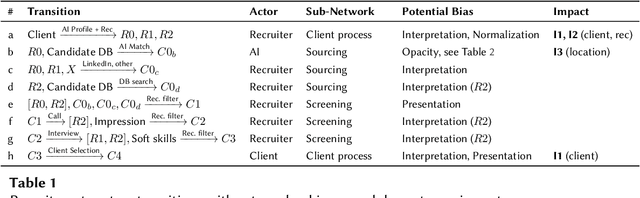
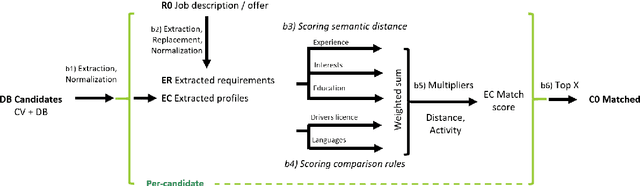
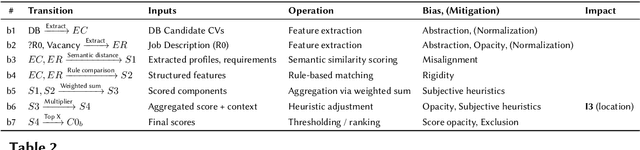
Avoiding bias and understanding the real-world consequences of AI-supported decision-making are critical to address fairness and assign accountability. Existing approaches often focus either on technical aspects, such as datasets and models, or on high-level socio-ethical considerations - rarely capturing how these elements interact in practice. In this paper, we apply an information flow-based modeling framework to a real-world recruitment process that integrates automated candidate matching with human decision-making. Through semi-structured stakeholder interviews and iterative modeling, we construct a multi-level representation of the recruitment pipeline, capturing how information is transformed, filtered, and interpreted across both algorithmic and human components. We identify where biases may emerge, how they can propagate through the system, and what downstream impacts they may have on candidates. This case study illustrates how information flow modeling can support structured analysis of fairness risks, providing transparency across complex socio-technical systems.

Let it RAIN for Social Good
Jul 26, 2022Artificial Intelligence (AI) as a highly transformative technology take on a special role as both an enabler and a threat to UN Sustainable Development Goals (SDGs). AI Ethics and emerging high-level policy efforts stand at the pivot point between these outcomes but is barred from effect due the abstraction gap between high-level values and responsible action. In this paper the Responsible Norms (RAIN) framework is presented, bridging this gap thereby enabling effective high-level control of AI impact. With effective and operationalized AI Ethics, AI technologies can be directed towards global sustainable development.