 Add to Chrome
 Add to Firefox
 Add to Edge
Trajectory-Level Data Augmentation for Offline Reinforcement Learning
May 13, 2026
We propose a data augmentation method for offline reinforcement learning, motivated by active positioning problems. Particularly, our approach enables the training of off-policy models from a limited number of suboptimal trajectories. We introduce a trajectory-based augmentation technique that exploits task structure and the geometric relationship between rewards, value functions, and mathematical properties of logging policies. During data collection, our augmentation supports suboptimal logging policies, leading to higher data quality and improved offline reinforcement learning performance. We provide theoretical justification for these strategies and validate them empirically across positioning tasks of varying dimensionality and under partial observability.

Active Alignments of Lens Systems with Reinforcement Learning
Mar 03, 2025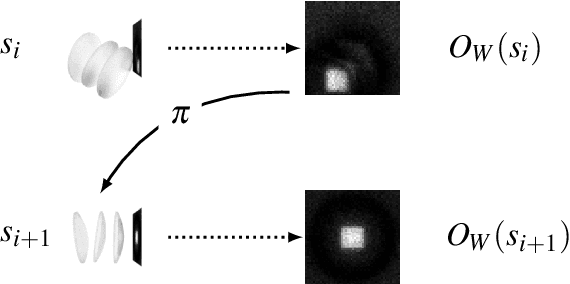
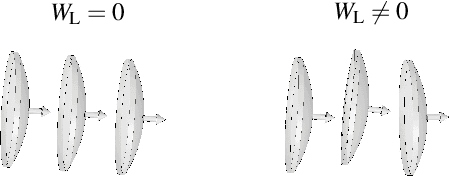
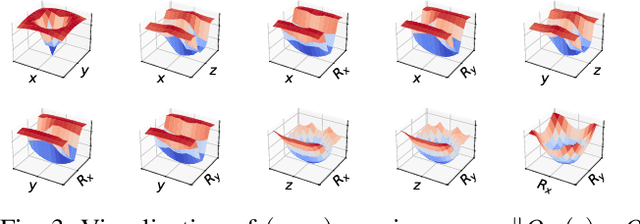
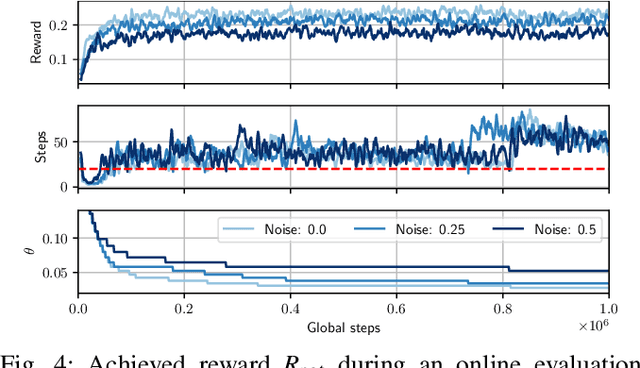
Aligning a lens system relative to an imager is a critical challenge in camera manufacturing. While optimal alignment can be mathematically computed under ideal conditions, real-world deviations caused by manufacturing tolerances often render this approach impractical. Measuring these tolerances can be costly or even infeasible, and neglecting them may result in suboptimal alignments. We propose a reinforcement learning (RL) approach that learns exclusively in the pixel space of the sensor output, eliminating the need to develop expert-designed alignment concepts. We conduct an extensive benchmark study and show that our approach surpasses other methods in speed, precision, and robustness. We further introduce relign, a realistic, freely explorable, open-source simulation utilizing physically based rendering that models optical systems with non-deterministic manufacturing tolerances and noise in robotic alignment movement. It provides an interface to popular machine learning frameworks, enabling seamless experimentation and development. Our work highlights the potential of RL in a manufacturing environment to enhance efficiency of optical alignments while minimizing the need for manual intervention.