 Add to Chrome
 Add to Firefox
 Add to Edge
Do Vision-Language-Action Models Mean What They Say? On the Role of Faithfulness in Embodied Reasoning
Jul 06, 2026
Embodied Chain-of-Thought has emerged as a promising mechanism to enhance robot decision-making and interpretability in black-box Vision-Language Action (VLA) models. However, whether this verbalized Chain-of-Thought truthfully reflects the policy's underlying decision process remains poorly understood. We distinguish between functional reasoning, in which reasoning improves task performance, and faithful reasoning, in which reasoning truly reflects the policy's internal decision process. We argue that SoTA alignment strategies offer a necessary but insufficient notion of faithfulness, admitting reasoning whose intermediate steps can mask the causal links in action prediction through confounding factors (e.g., reasoning that is ungrounded in the environment and internally disconnected or inconsistent), restricting policy generalization. We study this gap through a human evaluation of a SoTA reasoning model for autonomous driving, revealing an inconsistent coupling between reasoning quality and downstream trajectory improvement. We then operationalize a behavioral surrogate for embodied faithfulness through a learned critic, Pinocchio, scoring observation grounding and stepwise coherence, and use this critic as a dense reward signal in post-training an embodied policy with reinforcement learning. Across withheld driving benchmarks, our post-trained planner improves faithfulness by 4% and 18% over SoTA alignment and trajectory error post-training baselines, respectively, while maintaining competitive downstream task performance. Finally, on a synthetic out-of-distribution test set, post-training for faithfulness improves policy responsiveness to rare counterfactual scenarios by 1.6x that of a SoTA policy, suggesting that faithful reasoning traces contribute to more robust, generalizable, and interpretable embodied intelligence. Project page: https://mjf-su.github.io/pinocchio/

Regularized GLISp for sensor-guided human-in-the-loop optimization
Nov 06, 2025Human-in-the-loop calibration is often addressed via preference-based optimization, where algorithms learn from pairwise comparisons rather than explicit cost evaluations. While effective, methods such as Preferential Bayesian Optimization or Global optimization based on active preference learning with radial basis functions (GLISp) treat the system as a black box and ignore informative sensor measurements. In this work, we introduce a sensor-guided regularized extension of GLISp that integrates measurable descriptors into the preference-learning loop through a physics-informed hypothesis function and a least-squares regularization term. This injects grey-box structure, combining subjective feedback with quantitative sensor information while preserving the flexibility of preference-based search. Numerical evaluations on an analytical benchmark and on a human-in-the-loop vehicle suspension tuning task show faster convergence and superior final solutions compared to baseline GLISp.
Efficient Reinforcement Learning from Human Feedback via Bayesian Preference Inference
Nov 06, 2025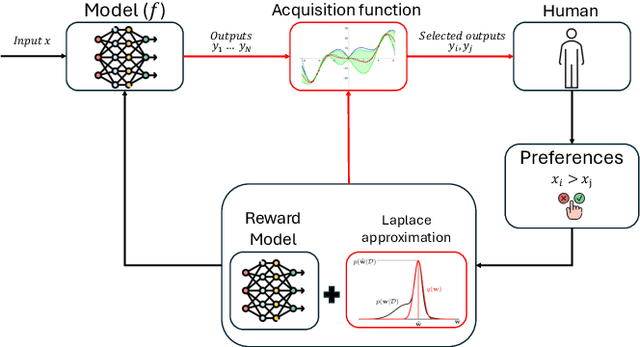
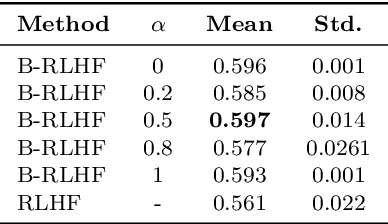
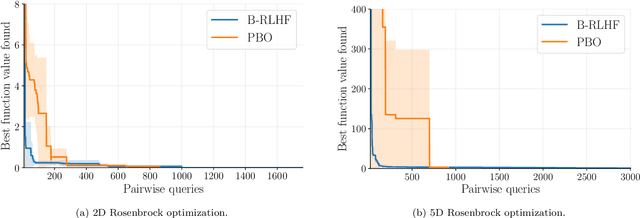
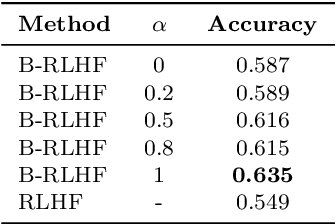
Learning from human preferences is a cornerstone of aligning machine learning models with subjective human judgments. Yet, collecting such preference data is often costly and time-consuming, motivating the need for more efficient learning paradigms. Two established approaches offer complementary advantages: RLHF scales effectively to high-dimensional tasks such as LLM fine-tuning, while PBO achieves greater sample efficiency through active querying. We propose a hybrid framework that unifies RLHF's scalability with PBO's query efficiency by integrating an acquisition-driven module into the RLHF pipeline, thereby enabling active and sample-efficient preference gathering. We validate the proposed approach on two representative domains: (i) high-dimensional preference optimization and (ii) LLM fine-tuning. Experimental results demonstrate consistent improvements in both sample efficiency and overall performance across these tasks.
Automating the loop in traffic incident management on highway
Mar 15, 2025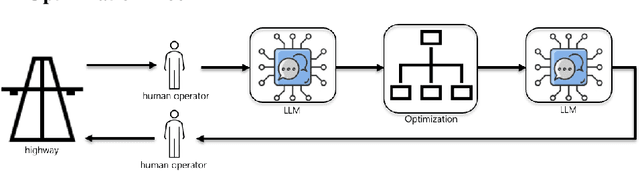
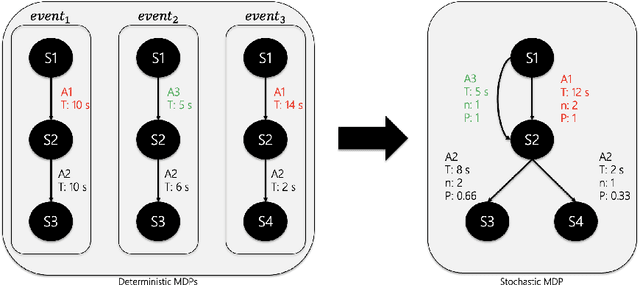
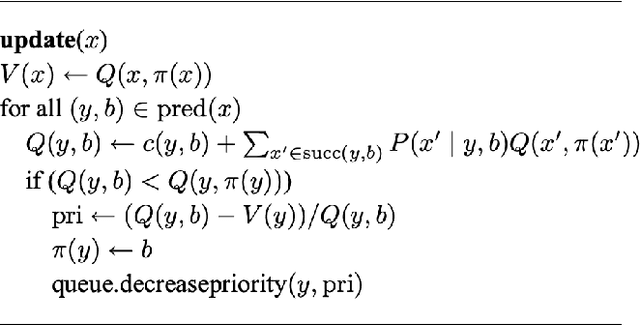
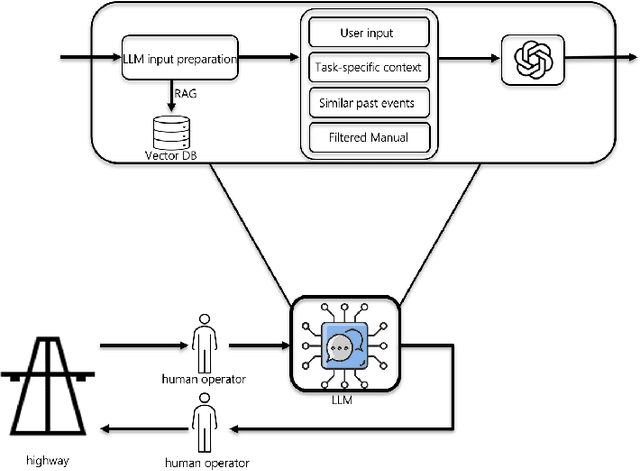
Effective traffic incident management is essential for ensuring safety, minimizing congestion, and reducing response times in emergency situations. Traditional highway incident management relies heavily on radio room operators, who must make rapid, informed decisions in high-stakes environments. This paper proposes an innovative solution to support and enhance these decisions by integrating Large Language Models (LLMs) into a decision-support system for traffic incident management. We introduce two approaches: (1) an LLM + Optimization hybrid that leverages both the flexibility of natural language interaction and the robustness of optimization techniques, and (2) a Full LLM approach that autonomously generates decisions using only LLM capabilities. We tested our solutions using historical event data from Autostrade per l'Italia. Experimental results indicate that while both approaches show promise, the LLM + Optimization solution demonstrates superior reliability, making it particularly suited to critical applications where consistency and accuracy are paramount. This research highlights the potential for LLMs to transform highway incident management by enabling accessible, data-driven decision-making support.