 Add to Chrome
 Add to Firefox
 Add to Edge
Occupation similarity through bipartite graphs
Feb 17, 2022
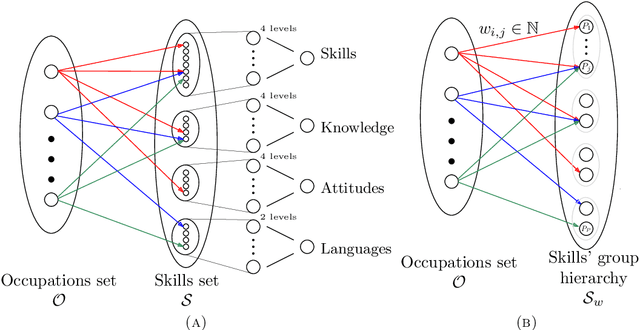


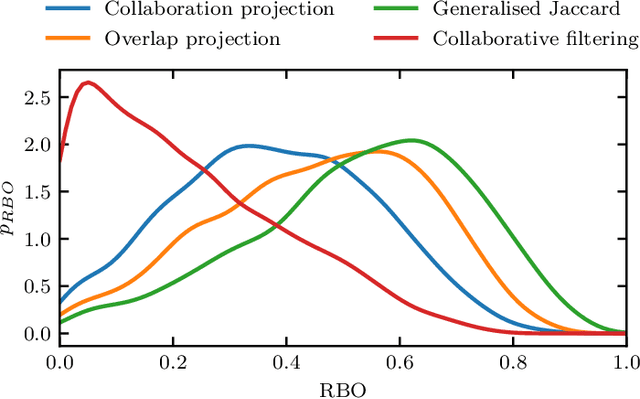
Similarity between occupations is a crucial piece of information when making career decisions. However, the notion of a single and unified occupation similarity measure is more of a limitation than an asset. The goal of the study is to assess multiple explainable occupation similarity measures that can provide different insights into inter-occupation relations. Several such measures are derived using the framework of bipartite graphs. Their viability is assessed on more than 450,000 job transitions occurring in Slovenia in the period between 2012 and 2021. The results support the hypothesis that several similarity measures are plausible and that they present different feasible career paths. The complete implementation and part of the datasets are available at https://repo.ijs.si/pboskoski/bipartite_job_similarity_code.

Variational Bayes survival analysis for unemployment modelling
Feb 03, 2021


Mathematical modelling of unemployment dynamics attempts to predict the probability of a job seeker finding a job as a function of time. This is typically achieved by using information in unemployment records. These records are right censored, making survival analysis a suitable approach for parameter estimation. The proposed model uses a deep artificial neural network (ANN) as a non-linear hazard function. Through embedding, high-cardinality categorical features are analysed efficiently. The posterior distribution of the ANN parameters are estimated using a variational Bayes method. The model is evaluated on a time-to-employment data set spanning from 2011 to 2020 provided by the Slovenian public employment service. It is used to determine the employment probability over time for each individual on the record. Similar models could be applied to other questions with multi-dimensional, high-cardinality categorical data including censored records. Such data is often encountered in personal records, for example in medical records.