 Add to Chrome
 Add to Firefox
 Add to Edge
Block-encodings as programming abstractions: The Eclipse Qrisp BlockEncoding Interface
Apr 20, 2026
Block-encoding is a foundational technique in modern quantum algorithms, enabling the implementation of non-unitary operations by embedding them into larger unitary matrices. While theoretically powerful and essential for advanced protocols like Quantum Singular Value Transformation (QSVT) and Quantum Signal Processing (QSP), the generation of compilable implementations of block-encodings poses a formidable challenge. This work presents the BlockEncoding interface within the Eclipse Qrisp framework, establishing block-encodings as a high-level programming abstraction accessible to a broad scientific audience. Serving as both a technical framework introduction and a hands-on tutorial, this paper explicitly details key underlying concepts abstracted away by the interface, such as block-encoding construction and qubitization, and their practical integration into methods like the Childs-Kothari-Somma (CKS) algorithm. We outline the interface's software architecture, encompassing constructors, core utilities, arithmetic composition, and algorithmic applications such as matrix inversion, polynomial filtering, and Hamiltonian simulation. Through code examples, we demonstrate how this interface simplifies both the practical realization of advanced quantum algorithms and their associated resource estimation.

Solving Drone Routing Problems with Quantum Computing: A Hybrid Approach Combining Quantum Annealing and Gate-Based Paradigms
Jan 30, 2025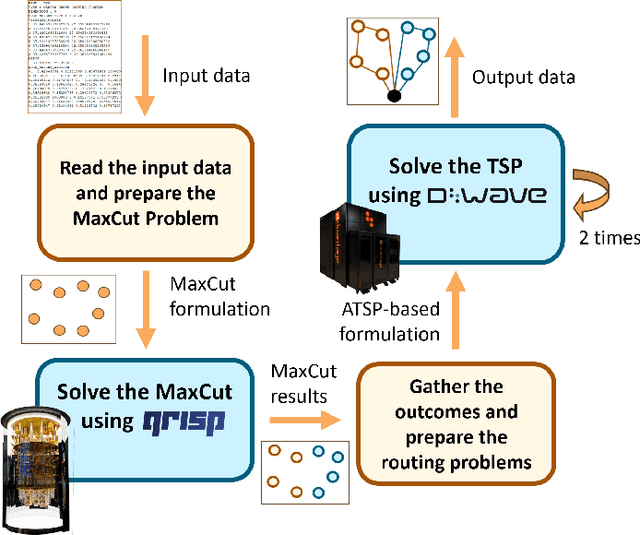
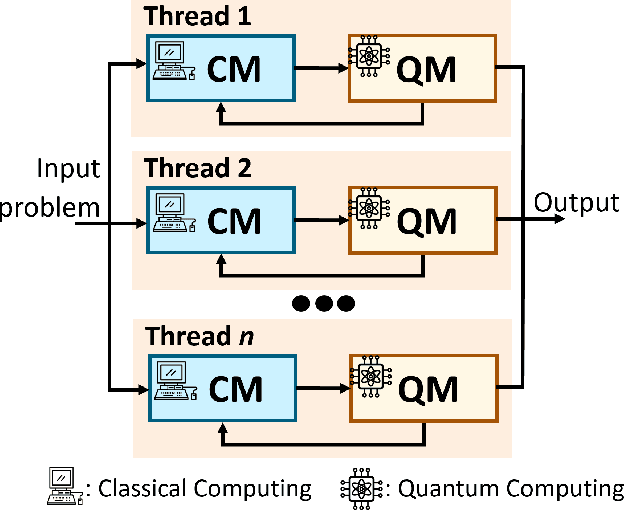
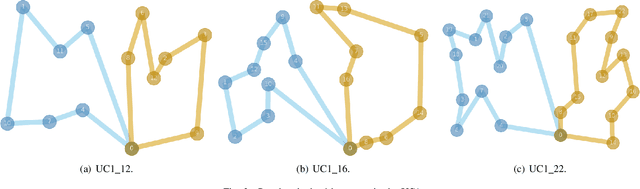
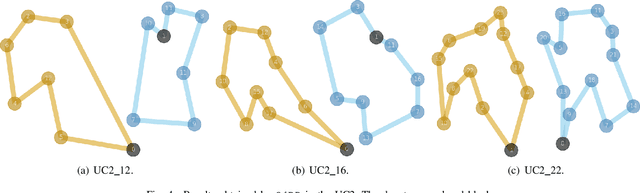
This paper presents a novel hybrid approach to solving real-world drone routing problems by leveraging the capabilities of quantum computing. The proposed method, coined Quantum for Drone Routing (Q4DR), integrates the two most prominent paradigms in the field: quantum gate-based computing, through the Eclipse Qrisp programming language; and quantum annealers, by means of D-Wave System's devices. The algorithm is divided into two different phases: an initial clustering phase executed using a Quantum Approximate Optimization Algorithm (QAOA), and a routing phase employing quantum annealers. The efficacy of Q4DR is demonstrated through three use cases of increasing complexity, each incorporating real-world constraints such as asymmetric costs, forbidden paths, and itinerant charging points. This research contributes to the growing body of work in quantum optimization, showcasing the practical applications of quantum computing in logistics and route planning.