 Add to Chrome
 Add to Firefox
 Add to Edge
Kernel Methods for Refined Prophet Inequalities
Aug 09, 2026
The single-selection prophet inequality is a canonical Bayesian online selection problem in which independent nonnegative values arrive sequentially and the decision-maker must irrevocably select at most one. Classical single-threshold guarantees are tight in the worst case, but the hard instances that prove tightness are highly irregular: the prophet's advantage is driven by rare, very large realizations of the maximum. We refine this worst-case picture by imposing a bound on the relative variance of the prophet's value, $\mathrm{Var}(\max_{i\in[n]}X_i)/\mathbb E[\max_{i\in[n]}X_i]^2$. This yields a nonparametric complexity measure that interpolates between deterministic instances, where the full prophet value can be recovered, and the unrestricted worst-case regime. Our main technical contribution is a general kernel method for single-threshold prophet inequalities. The method represents an instance by the quantile function of the maximum and rewrites the payoff of a threshold as a linear kernel functional of this quantile. This turns the worst-case analysis into an infinite-dimensional convex program, restores strong minimax duality in quantile space, and reduces the bounded-variance adversary's problem to a one-parameter variational family. Applying this framework, we obtain an exact characterization of the IID bounded-variance curve and asymptotically optimal finite-horizon thresholds, a closed-form expression for the fixed-order non-identical model, and a prophet-secretary lower-bound program together with a strict separation from the IID benchmark at every positive finite variance constraint. As a further application of the same kernel viewpoint, we derive an exact formula for IID random horizons under a convexity condition on the horizon pgf, which includes monotone-hazard-rate horizons, highlighting the broad applicability of this new technique for single threshold settings.

Tight $L_\infty$ Sample Complexity for Low-Degree and Sparse Boolean Polynomials
Jun 15, 2026Motivated by the optimization of bounded binary black-box functions, we study the problem of learning polynomial surrogates over the Boolean hypercube. To ensure that optimizing the surrogate yields good solutions for the underlying objective, we require uniform $L_\infty$-error guarantees rather than the usual $L_2$-type guarantees. We characterize the minimax sample complexity of uniform estimation under subgaussian noise for two classes of bounded polynomials. First, for polynomials of degree at most $d$ on $n$ variables, the sample complexity scales as $n^{d+1}$. Second, for $s$-sparse Fourier-Walsh polynomials with $s \leq n$, it scales as $ns^2$. These rates differ structurally from the noiseless setting, where uniform exact recovery scales as $n^d$ and $ns$, respectively. Our lower bounds hold even for arbitrary adaptive learners, showing that the additional factors are intrinsic to the noisy cases. Standard Fourier-analysis tools for the $L_2$-norm do not naturally extend to the $L_\infty$-setting in a way that yields uniform guarantees. Our proofs overcome this difficulty by relying on suitably chosen auxiliary norms that serve as proxies for controlling the $L_\infty$-error. Together, our results provide a tight characterization of the sample complexity of learning optimization-safe polynomial surrogates.
Trading-off price for data quality to achieve fair online allocation
Jun 23, 2023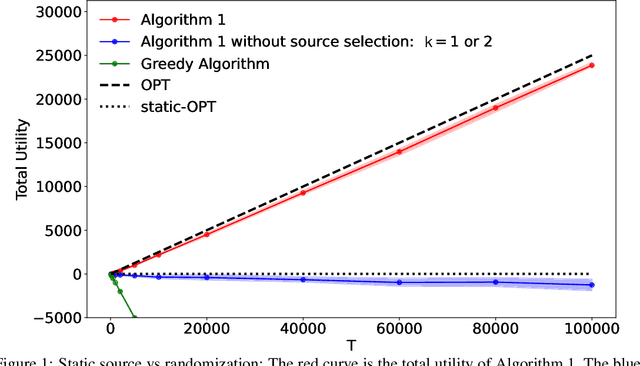
We consider the problem of online allocation subject to a long-term fairness penalty. Contrary to existing works, however, we do not assume that the decision-maker observes the protected attributes -- which is often unrealistic in practice. Instead they can purchase data that help estimate them from sources of different quality; and hence reduce the fairness penalty at some cost. We model this problem as a multi-armed bandit problem where each arm corresponds to the choice of a data source, coupled with the online allocation problem. We propose an algorithm that jointly solves both problems and show that it has a regret bounded by $\mathcal{O}(\sqrt{T})$. A key difficulty is that the rewards received by selecting a source are correlated by the fairness penalty, which leads to a need for randomization (despite a stochastic setting). Our algorithm takes into account contextual information available before the source selection, and can adapt to many different fairness notions. We also show that in some instances, the estimates used can be learned on the fly.
Bounding and Approximating Intersectional Fairness through Marginal Fairness
Jun 12, 2022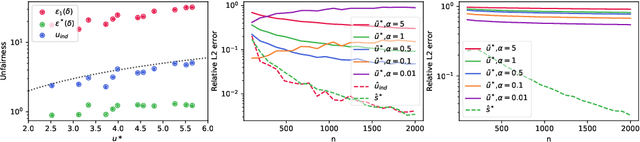
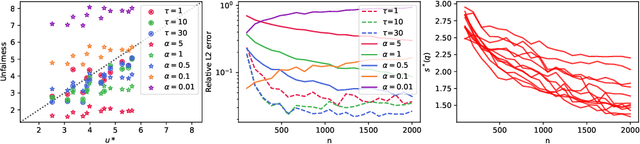
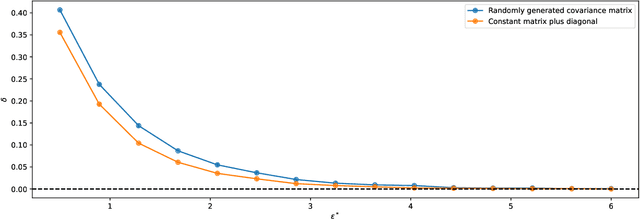
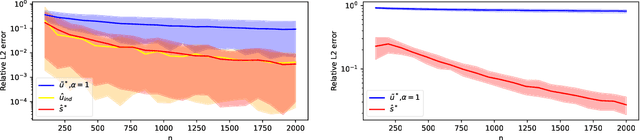
Discrimination in machine learning often arises along multiple dimensions (a.k.a. protected attributes); it is then desirable to ensure \emph{intersectional fairness} -- i.e., that no subgroup is discriminated against. It is known that ensuring \emph{marginal fairness} for every dimension independently is not sufficient in general. Due to the exponential number of subgroups, however, directly measuring intersectional fairness from data is impossible. In this paper, our primary goal is to understand in detail the relationship between marginal and intersectional fairness through statistical analysis. We first identify a set of sufficient conditions under which an exact relationship can be obtained. Then, we prove bounds (easily computable through marginal fairness and other meaningful statistical quantities) in high-probability on intersectional fairness in the general case. Beyond their descriptive value, we show that these theoretical bounds can be leveraged to derive a heuristic improving the approximation and bounds of intersectional fairness by choosing, in a relevant manner, protected attributes for which we describe intersectional subgroups. Finally, we test the performance of our approximations and bounds on real and synthetic data-sets.
Static Scheduling with Predictions Learned through Efficient Exploration
May 31, 2022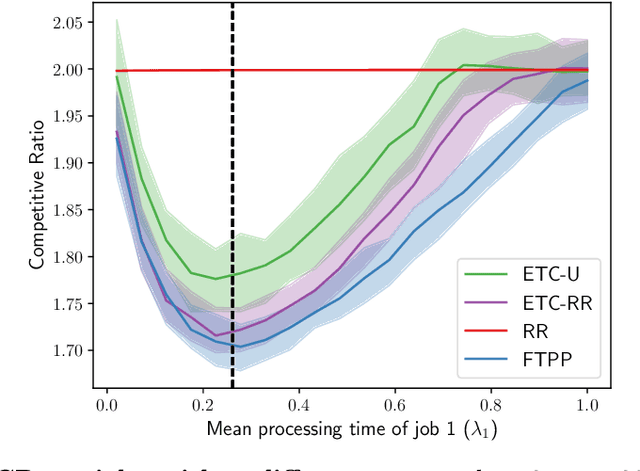
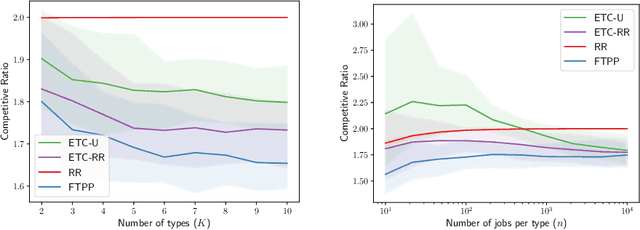
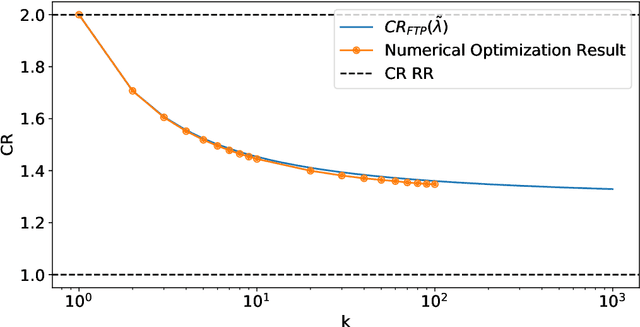
A popular approach to go beyond the worst-case analysis of online algorithms is to assume the existence of predictions that can be leveraged to improve performances. Those predictions are usually given by some external sources that cannot be fully trusted. Instead, we argue that trustful predictions can be built by algorithms, while they run. We investigate this idea in the illustrative context of static scheduling with exponential job sizes. Indeed, we prove that algorithms agnostic to this structure do not perform better than in the worst case. In contrast, when the expected job sizes are known, we show that the best algorithm using this information, called Follow-The-Perfect-Prediction (FTPP), exhibits much better performances. Then, we introduce two adaptive explore-then-commit types of algorithms: they both first (partially) learn expected job sizes and then follow FTPP once their self-predictions are confident enough. On the one hand, ETCU explores in "series", by completing jobs sequentially to acquire information. On the other hand, ETCRR, inspired by the optimal worst-case algorithm Round-Robin (RR), explores efficiently in "parallel". We prove that both of them asymptotically reach the performances of FTPP, with a faster rate for ETCRR. Those findings are empirically evaluated on synthetic data.