 Add to Chrome
 Add to Firefox
 Add to Edge
Accelerating Feedback-based Algorithms for Quantum Optimization Using Gradient Descent
Feb 12, 2026
Feedback-based methods have gained significant attention as an alternative training paradigm for the Quantum Approximate Optimization Algorithm (QAOA) in solving combinatorial optimization problems such as MAX-CUT. In particular, Quantum Lyapunov Control (QLC) employs feedback-driven control laws that guarantee monotonic non-decreasing objective values, can substantially reduce the training overhead of QAOA, and mitigate barren plateaus. However, these methods might require long control sequences, leading to sub-optimal convergence rates. In this work, we propose a hybrid method that incorporates per-layer gradient estimation to accelerate the convergence of QLC while preserving its low training overhead and stability guarantees. By leveraging layer-wise gradient information, the proposed approach selects near-optimal control parameters, resulting in significantly faster convergence and improved robustness. We validate the effectiveness of the method through extensive numerical experiments across a range of problem instances and optimization settings.

Efficient Gradient Estimation of Variational Quantum Circuits with Lie Algebraic Symmetries
Apr 07, 2024
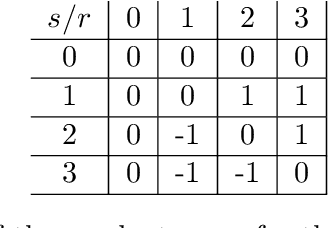
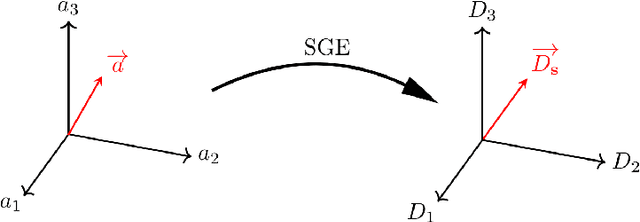
Hybrid quantum-classical optimization and learning strategies are among the most promising approaches to harnessing quantum information or gaining a quantum advantage over classical methods. However, efficient estimation of the gradient of the objective function in such models remains a challenge due to several factors including the exponential dimensionality of the Hilbert spaces, and information loss of quantum measurements. In this work, we study generic parameterized circuits in the context of variational methods. We develop a framework for gradient estimation that exploits the algebraic symmetries of Hamiltonian characterized through Lie algebra or group theory. Particularly, we prove that when the dimension of the dynamical Lie algebra is polynomial in the number of qubits, one can estimate the gradient with polynomial classical and quantum resources. This is done by a series of Hadamard tests applied to the output of the ansatz with no change to its circuit. We show that this approach can be equipped with classical shadow tomography to further reduce the measurement shot complexity to scale logarithmically with the number of parameters.