 Add to Chrome
 Add to Firefox
 Add to Edge
Automatic Labeled LiDAR Data Generation based on Precise Human Model
Feb 14, 2019
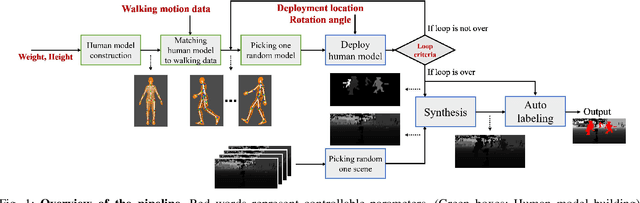
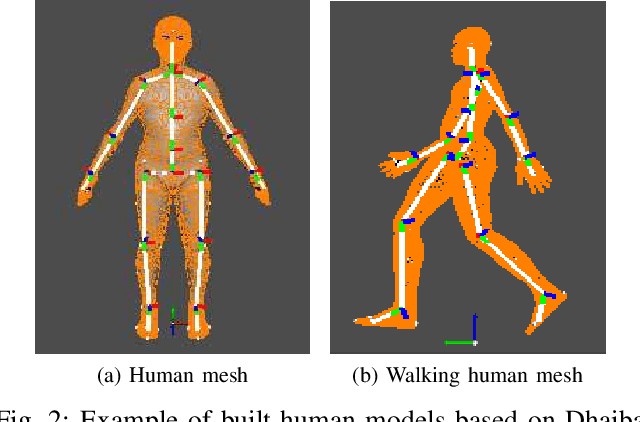
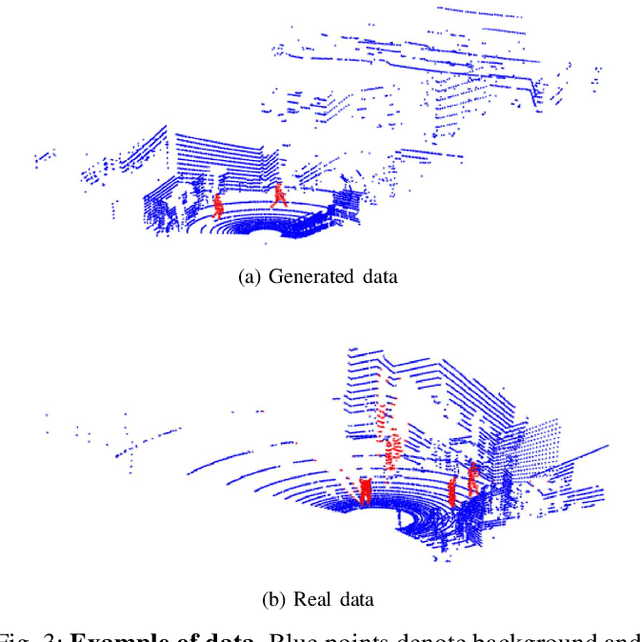
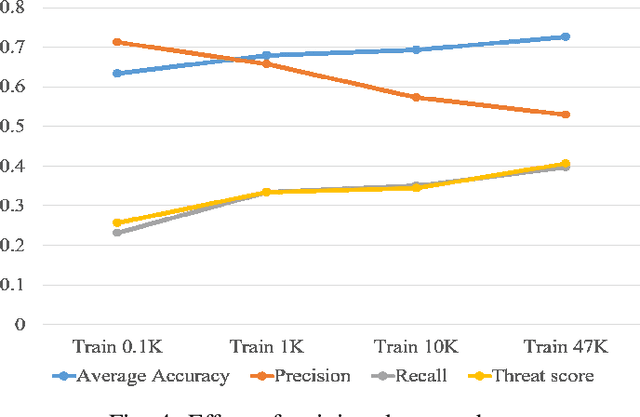
Following improvements in deep neural networks, state-of-the-art networks have been proposed for human recognition using point clouds captured by LiDAR. However, the performance of these networks strongly depends on the training data. An issue with collecting training data is labeling. Labeling by humans is necessary to obtain the ground truth label; however, labeling requires huge costs. Therefore, we propose an automatic labeled data generation pipeline, for which we can change any parameters or data generation environments. Our approach uses a human model named Dhaiba and a background of Miraikan and consequently generated realistic artificial data. We present 500k+ data generated by the proposed pipeline. This paper also describes the specification of the pipeline and data details with evaluations of various approaches.

Estimation and Restoration of Compositional Degradation Using Convolutional Neural Networks
Dec 23, 2018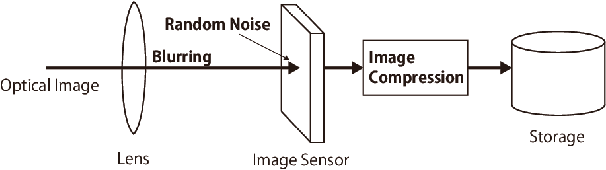
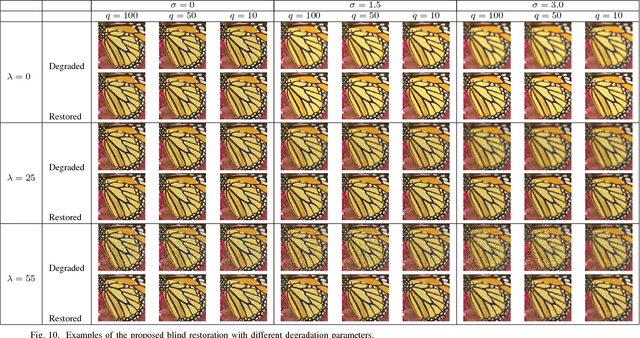
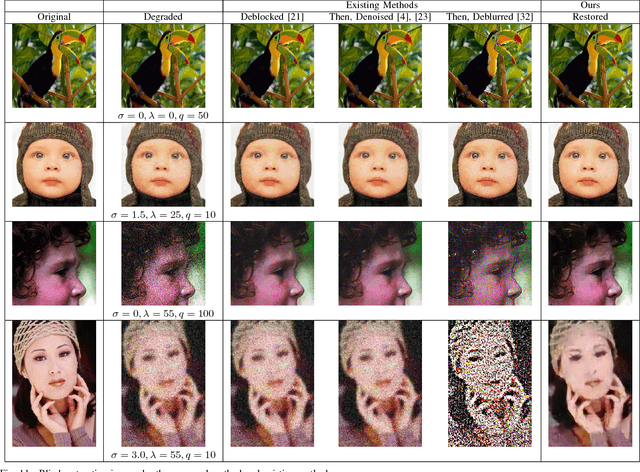
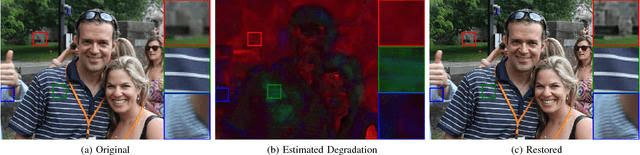
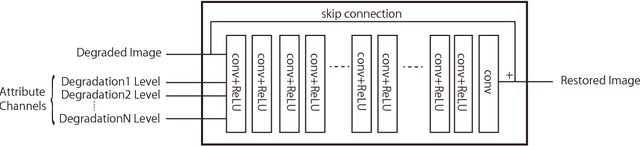
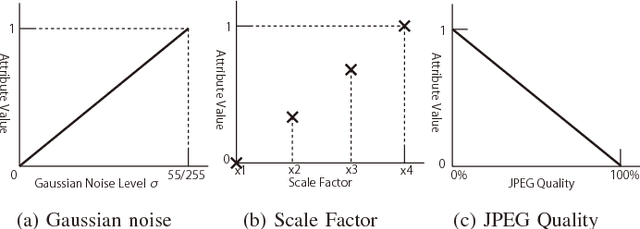
Image restoration from a single image degradation type, such as blurring, hazing, random noise, and compression has been investigated for decades. However, image degradations in practice are often a mixture of several types of degradation. Such compositional degradations complicate restoration because they require the differentiation of different degradation types and levels. In this paper, we propose a convolutional neural network (CNN) model for estimating the degradation properties of a given degraded image. Furthermore, we introduce an image restoration CNN model that adopts the estimated degradation properties as its input. Experimental results show that the proposed degradation estimation model can successfully infer the degradation properties of compositionally degraded images. The proposed restoration model can restore degraded images by exploiting the estimated degradation properties and can achieve both blind and nonblind image restorations.
Weighted Sigmoid Gate Unit for an Activation Function of Deep Neural Network
Oct 03, 2018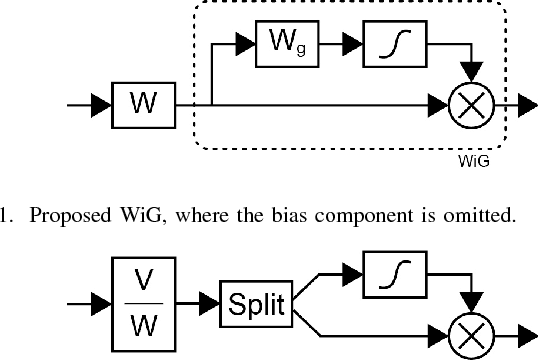
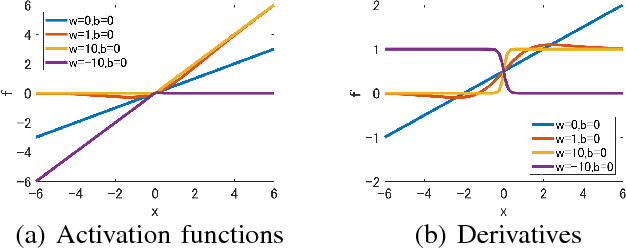
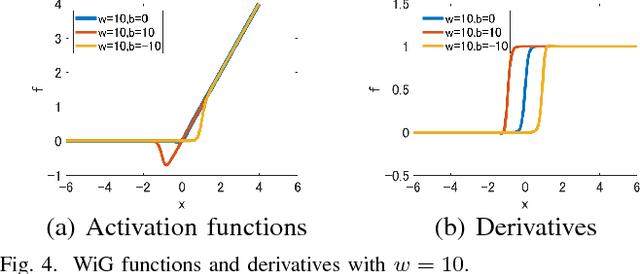
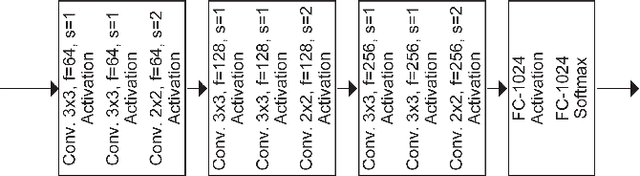
An activation function has crucial role in a deep neural network. A simple rectified linear unit (ReLU) are widely used for the activation function. In this paper, a weighted sigmoid gate unit (WiG) is proposed as the activation function. The proposed WiG consists of a multiplication of inputs and the weighted sigmoid gate. It is shown that the WiG includes the ReLU and same activation functions as a special case. Many activation functions have been proposed to overcome the performance of the ReLU. In the literature, the performance is mainly evaluated with an object recognition task. The proposed WiG is evaluated with the object recognition task and the image restoration task. Then, the expeirmental comparisons demonstrate the proposed WiG overcomes the existing activation functions including the ReLU.
Gradient-Based Low-Light Image Enhancement
Sep 25, 2018
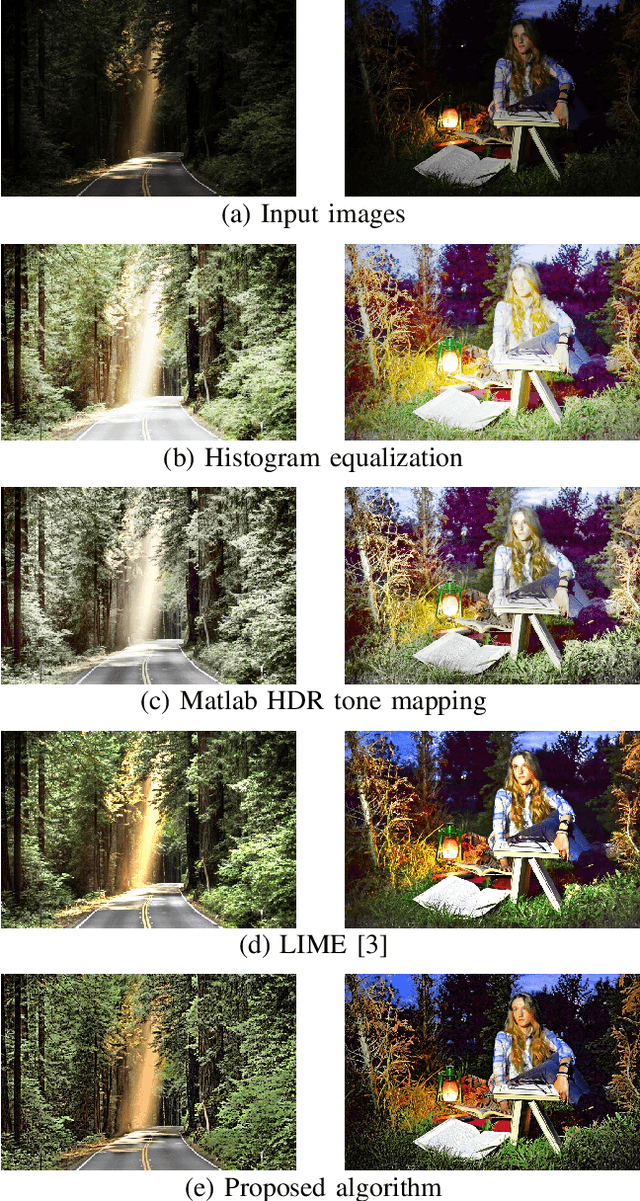
A low-light image enhancement is a highly demanded image processing technique, especially for consumer digital cameras and cameras on mobile phones. In this paper, a gradient-based low-light image enhancement algorithm is proposed. The key is to enhance the gradients of dark region, because the gradients are more sensitive for human visual system than absolute values. In addition, we involve the intensity-range constraints for the image integration. By using the intensity-range constraints, we can integrate the output image with enhanced gradients preserving the given gradient information while enforcing the intensity range of the output image within a certain intensity range. Experiments demonstrate that the proposed gradient-based low-light image enhancement can effectively enhance the low-light images.
Non-blind Image Restoration Based on Convolutional Neural Network
Sep 11, 2018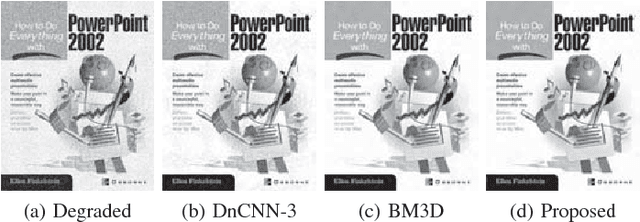
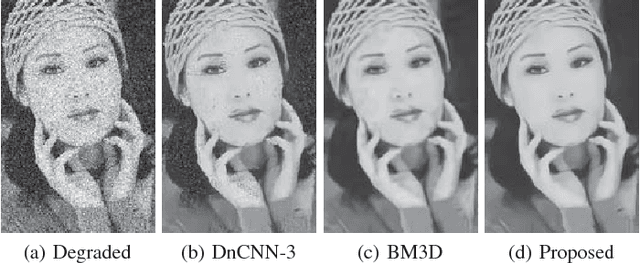
Blind image restoration processors based on convolutional neural network (CNN) are intensively researched because of their high performance. However, they are too sensitive to the perturbation of the degradation model. They easily fail to restore the image whose degradation model is slightly different from the trained degradation model. In this paper, we propose a non-blind CNN-based image restoration processor, aiming to be robust against a perturbation of the degradation model compared to the blind restoration processor. Experimental comparisons demonstrate that the proposed non-blind CNN-based image restoration processor can robustly restore images compared to existing blind CNN-based image restoration processors.
Learnable Image Encryption
Mar 19, 2018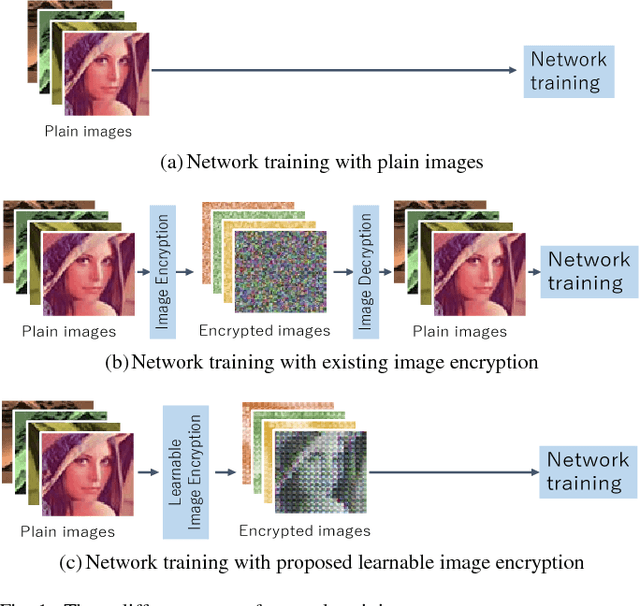
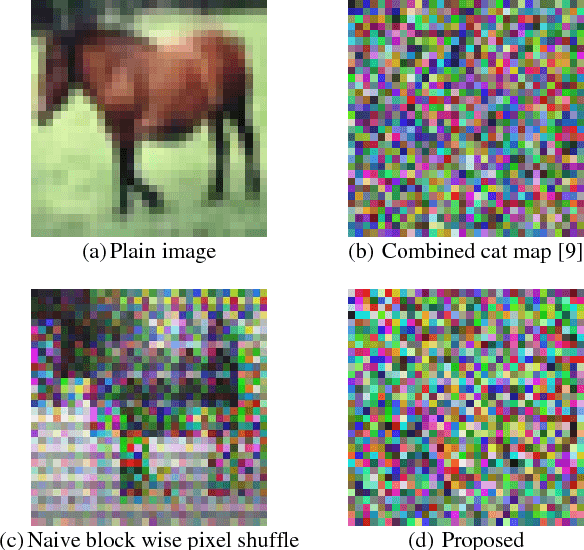
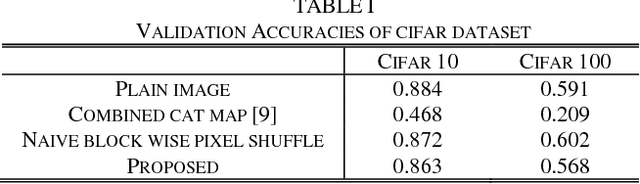
The network-based machine learning algorithm is very powerful tools. However, it requires huge training dataset. Researchers often meet privacy issues when they collect image dataset especially for surveillance applications. A learnable image encryption scheme is introduced. The key idea of this scheme is to encrypt images, so that human cannot understand images but the network can be train with encrypted images. This scheme allows us to train the network without the privacy issues. In this paper, a simple learnable image encryption algorithm is proposed. Then, the proposed algorithm is validated with cifar dataset.
Network Analysis for Explanation
Dec 07, 2017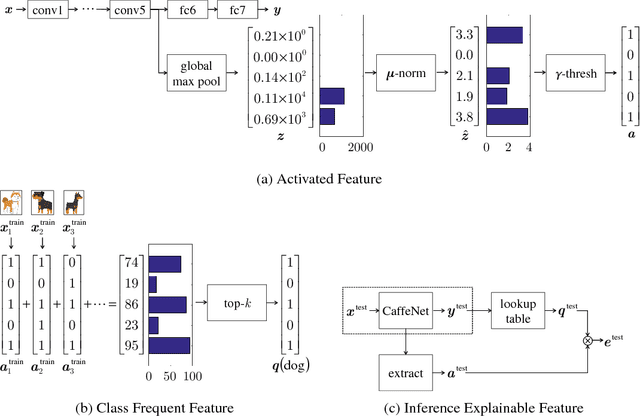
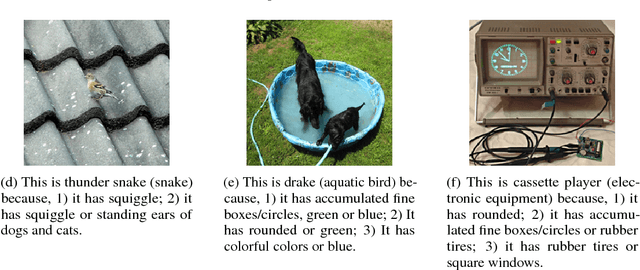
Safety critical systems strongly require the quality aspects of artificial intelligence including explainability. In this paper, we analyzed a trained network to extract features which mainly contribute the inference. Based on the analysis, we developed a simple solution to generate explanations of the inference processes.