 Add to Chrome
 Add to Firefox
 Add to Edge
A Nationwide Japanese Medical Claims Foundation Model: Balancing Model Scaling and Task-Specific Computational Efficiency
Apr 24, 2026
Clinical risk prediction using longitudinal medical data supports individualized care. Self-supervised foundation models have emerged as a promising approach for leveraging large-scale unlabeled healthcare records. In natural language processing, scaling laws suggest that larger models achieve predictably lower pretraining losses, supporting the foundation model paradigm. However, for structured medical data, characterized by a limited vocabulary and sparse observations, whether increasing model size consistently improves downstream predictions is unclear, as most studies evaluate only a single model scale. In this study, we evaluated the relationship between model scale and downstream task performance for structured medical foundation models. Using a random sample (2.3 million patients, 32 hospitals) from a nationwide 519-hospital Japanese claims database, we pretrained encoder-only Transformers at five scales (2.2M-101M parameters) for disease incidence and medication prediction. Downstream performance saturated at task-dependent thresholds: disease prediction benefited from larger models (32M-101M), whereas medication prediction saturated at 11M, reducing pretraining time by 178 h. Across all tasks, the best-performing model consistently outperformed a Light Gradient Boosting Machine baseline in the area under the precision-recall curve. These findings indicate that, unlike the monotonically decreasing pretraining loss, the optimal model size varied depending on task characteristics. This task-dependent saturation provides practical guidance for balancing predictive performance and computational cost in structured medical foundation models.

Electric Vehicle Routing Problem for Emergency Power Supply: Towards Telecom Base Station Relief
Apr 08, 2024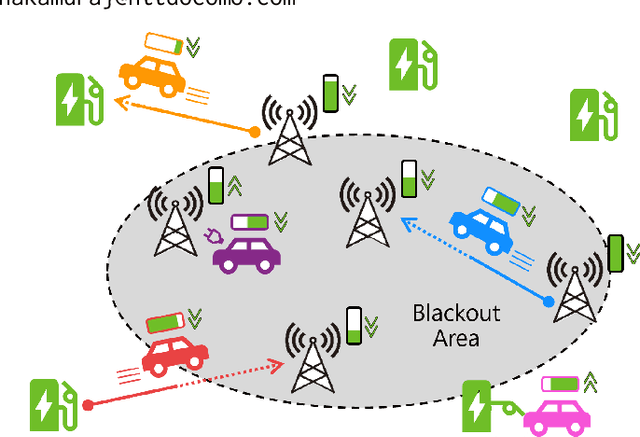
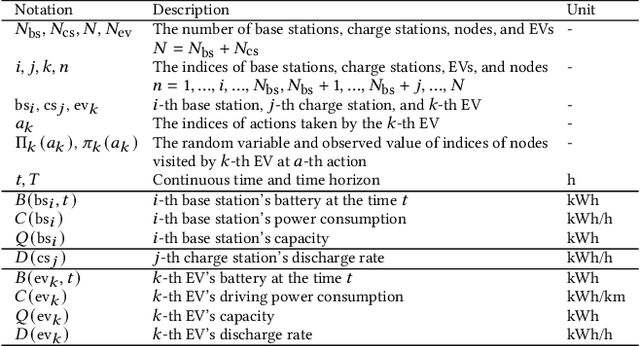
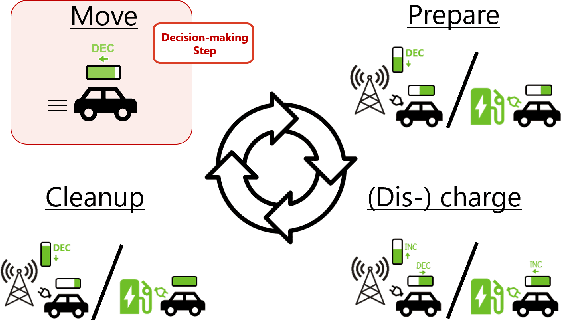
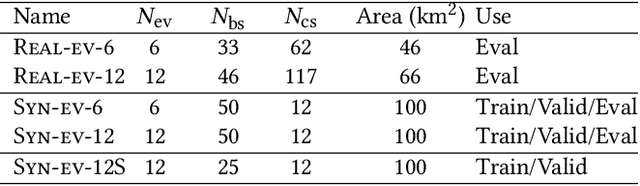
As a telecom provider, our company has a critical mission to maintain telecom services even during power outages. To accomplish the mission, it is essential to maintain the power of the telecom base stations. Here we consider a solution where electric vehicles (EVs) directly supply power to base stations by traveling to their locations. The goal is to find EV routes that minimize both the total travel distance of all EVs and the number of downed base stations. In this paper, we formulate this routing problem as a new variant of the Electric Vehicle Routing Problem (EVRP) and propose a solver that combines a rule-based vehicle selector and a reinforcement learning (RL)-based node selector. The rule of the vehicle selector ensures the exact environmental states when the selected EV starts to move. In addition, the node selection by the RL model enables fast route generation, which is critical in emergencies. We evaluate our solver on both synthetic datasets and real datasets. The results show that our solver outperforms baselines in terms of the objective value and computation time. Moreover, we analyze the generalization and scalability of our solver, demonstrating the capability toward unseen settings and large-scale problems. Check also our project page: https://ntt-dkiku.github.io/rl-evrpeps.