 Add to Chrome
 Add to Firefox
 Add to Edge
Low-power analogue neural networks with trainable nonlinear connections for continuous control
Jun 21, 2026
Physical neural networks promise low-power machine learning by computing directly with analogue device physics, but most architectures force nonlinear device responses to act as scalar weights. Inspired by Kolmogorov-Arnold networks, we place trainable nonlinear functions on the connections, making each physical connection a learnable computational element. Realising these functions as analogue band-pass filters on field-programmable analogue arrays, we find that the benefit is task-dependent and follows from the smoothness of the physical basis: the networks represent smooth, continuously valued targets, including robotic kinematics, continuous control, and photovoltaic maximum-power-point tracking, with far fewer nodes and connections than multilayer perceptrons, but offer no parameter-efficiency advantage on classification-like decision boundaries. Trained networks transfer to hardware across approximately 35,000 connections with quantified fidelity, and a dedicated CMOS implementation is projected to operate at approximately 30 microwatts. A memristive realisation reproduces the same behaviour in simulation, indicating that the advantage comes from placing trainable nonlinearity on connections, rather than from a particular device.

Bridging Biological Hearing and Neuromorphic Computing: End-to-End Time-Domain Audio Signal Processing with Reservoir Computing
Mar 25, 2026Despite the advancements in cutting-edge technologies, audio signal processing continues to pose challenges and lacks the precision of a human speech processing system. To address these challenges, we propose a novel approach to simplify audio signal processing by leveraging time-domain techniques and reservoir computing. Through our research, we have developed a real-time audio signal processing system by simplifying audio signal processing through the utilization of reservoir computers, which are significantly easier to train. Feature extraction is a fundamental step in speech signal processing, with Mel Frequency Cepstral Coefficients (MFCCs) being a dominant choice due to their perceptual relevance to human hearing. However, conventional MFCC extraction relies on computationally intensive time-frequency transformations, limiting efficiency in real-time applications. To address this, we propose a novel approach that leverages reservoir computing to streamline MFCC extraction. By replacing traditional frequency-domain conversions with convolution operations, we eliminate the need for complex transformations while maintaining feature discriminability. We present an end-to-end audio processing framework that integrates this method, demonstrating its potential for efficient and real-time speech analysis. Our results contribute to the advancement of energy-efficient audio processing technologies, enabling seamless deployment in embedded systems and voice-driven applications. This work bridges the gap between biologically inspired feature extraction and modern neuromorphic computing, offering a scalable solution for next-generation speech recognition systems.
Reservoir Computing Benchmarks: a review, a taxonomy, some best practices
May 10, 2024Reservoir Computing is an Unconventional Computation model to perform computation on various different substrates, such as RNNs or physical materials. The method takes a "black-box" approach, training only the outputs of the system it is built on. As such, evaluating the computational capacity of these systems can be challenging. We review and critique the evaluation methods used in the field of Reservoir Computing. We introduce a categorisation of benchmark tasks. We review multiple examples of benchmarks from the literature as applied to reservoir computing, and note their strengths and shortcomings. We suggest ways in which benchmarks and their uses may be improved to the benefit of the reservoir computing community
Reservoir Computing with Thin-film Ferromagnetic Devices
Jan 29, 2021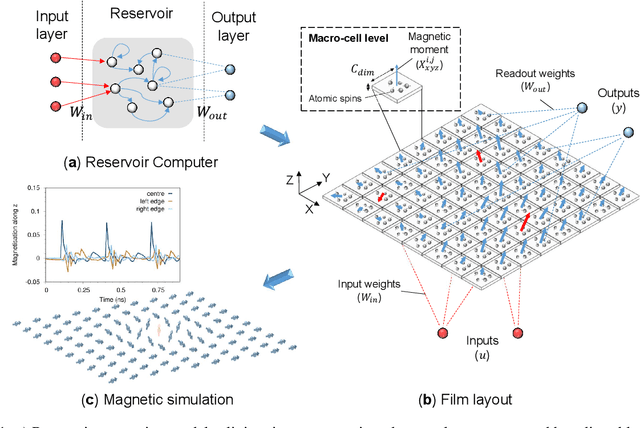
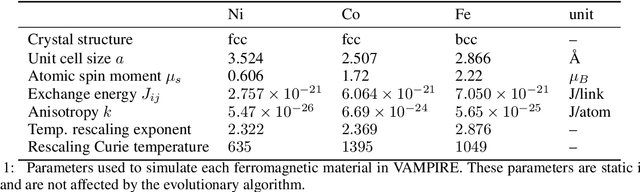
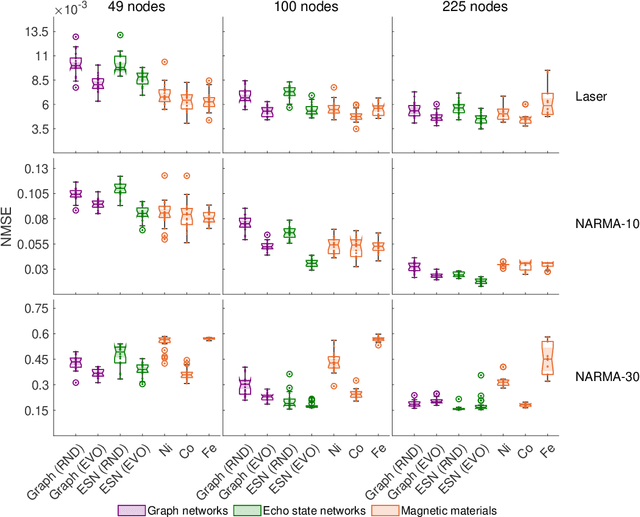
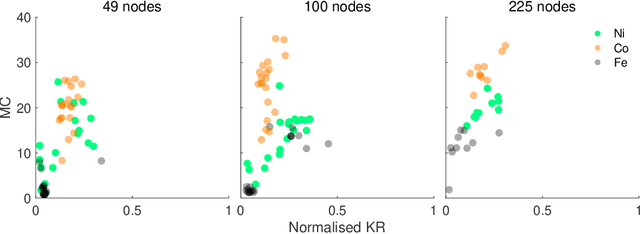
Advances in artificial intelligence are driven by technologies inspired by the brain, but these technologies are orders of magnitude less powerful and energy efficient than biological systems. Inspired by the nonlinear dynamics of neural networks, new unconventional computing hardware has emerged with the potential for extreme parallelism and ultra-low power consumption. Physical reservoir computing demonstrates this with a variety of unconventional systems from optical-based to spintronic. Reservoir computers provide a nonlinear projection of the task input into a high-dimensional feature space by exploiting the system's internal dynamics. A trained readout layer then combines features to perform tasks, such as pattern recognition and time-series analysis. Despite progress, achieving state-of-the-art performance without external signal processing to the reservoir remains challenging. Here we show, through simulation, that magnetic materials in thin-film geometries can realise reservoir computers with greater than or similar accuracy to digital recurrent neural networks. Our results reveal that basic spin properties of magnetic films generate the required nonlinear dynamics and memory to solve machine learning tasks. Furthermore, we show that neuromorphic hardware can be reduced in size by removing the need for discrete neural components and external processing. The natural dynamics and nanoscale size of magnetic thin-films present a new path towards fast energy-efficient computing with the potential to innovate portable smart devices, self driving vehicles, and robotics.