 Add to Chrome
 Add to Firefox
 Add to Edge
From Perception to Action: Can UI Interventions Foster Sustainable LLM Chatbot
Jun 09, 2026
LLM-powered chatbots are increasingly embedded in everyday workflows, raising sustainability concerns due to their energy use. Most mitigation strategies emphasize model or infrastructure efficiency, while the user-interface (UI) layer remains underexplored despite its potential to shape interaction behavior. We investigate whether sustainability-oriented UI interventions can increase users' energy awareness and encourage more energy-responsible chatbot use without reducing usability. We first conducted a baseline survey with 77 participants to assess awareness and receptiveness to intervention concepts. Guided by prior work on persuasive technology and choice architecture, we implemented a web-based chatbot prototype with a three-mode switch (Energy-efficient, Balanced, Performance), per-response energy feedback, pre-send energy estimates, a usage metrics dashboard, and energy analogies. We then evaluated the prototype in a five-day field study with 11 participants. In the baseline survey, 94.8% of respondents reported at least some awareness of AI energy use, yet 88.3% misestimated actual consumption. Although concern about environmental impact was high, only 39.0% indicated willingness to accept a performance trade-off for lower energy use. In the field study, Energy-efficient mode accounted for 55.8% of logged prompts, while 90.9% self-reported actively choosing Eco-mode when high accuracy was not required. Participants did not reduce prompt length, suggesting mode switching as the primary behavioral mechanism. Sustainability-oriented UI interventions can improve awareness and support more energy-responsible interaction patterns in LLM chatbots. These effects are best interpreted as behavioral and model-based estimates that complement backend efficiency work, and the provided prototype and replication package support further research on energy-aware conversational AI design.

Benchmarking Prompt Engineering Techniques for Secure Code Generation with GPT Models
Feb 09, 2025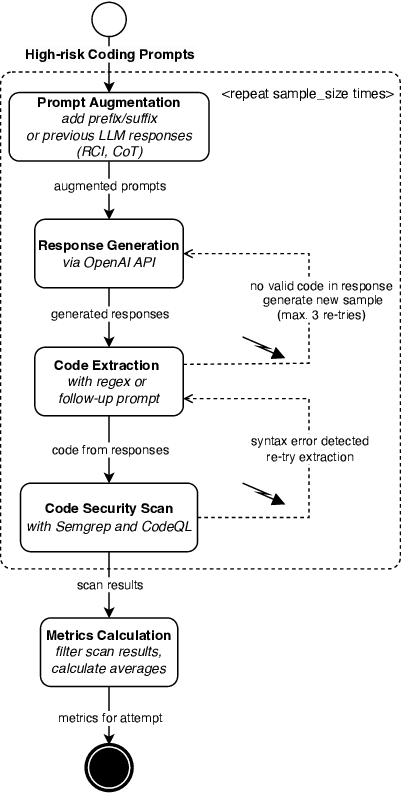
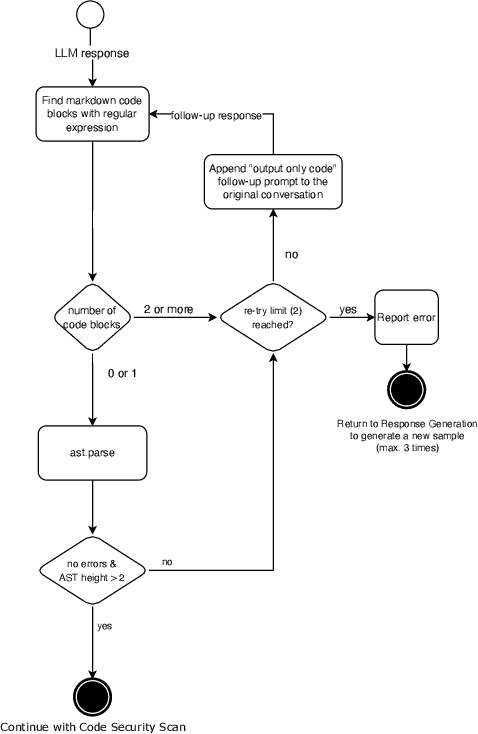
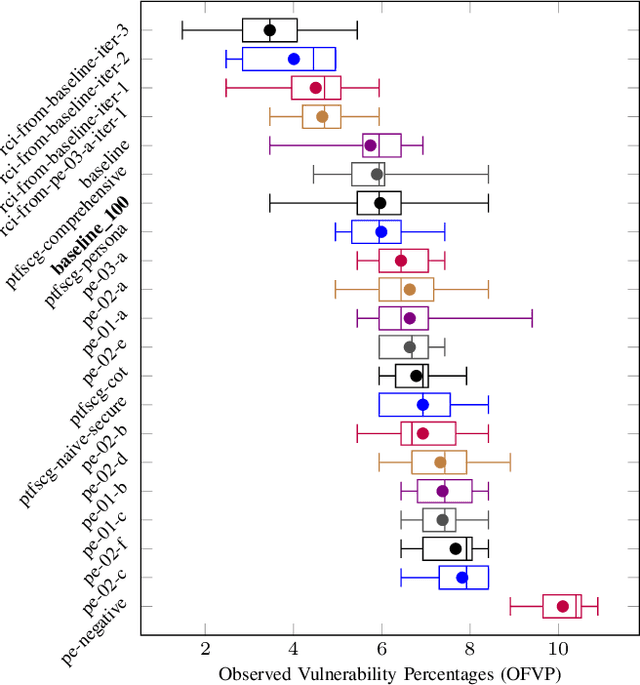
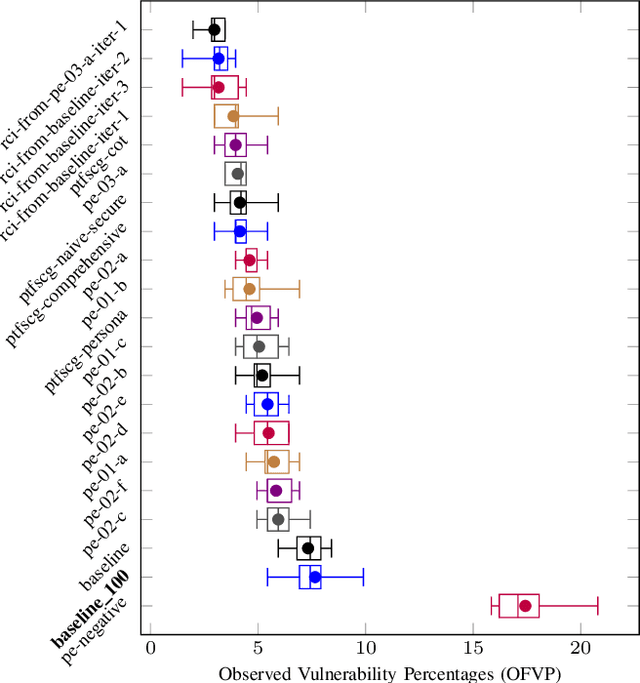
Prompt engineering reduces reasoning mistakes in Large Language Models (LLMs). However, its effectiveness in mitigating vulnerabilities in LLM-generated code remains underexplored. To address this gap, we implemented a benchmark to automatically assess the impact of various prompt engineering strategies on code security. Our benchmark leverages two peer-reviewed prompt datasets and employs static scanners to evaluate code security at scale. We tested multiple prompt engineering techniques on GPT-3.5-turbo, GPT-4o, and GPT-4o-mini. Our results show that for GPT-4o and GPT-4o-mini, a security-focused prompt prefix can reduce the occurrence of security vulnerabilities by up to 56%. Additionally, all tested models demonstrated the ability to detect and repair between 41.9% and 68.7% of vulnerabilities in previously generated code when using iterative prompting techniques. Finally, we introduce a "prompt agent" that demonstrates how the most effective techniques can be applied in real-world development workflows.