 Add to Chrome
 Add to Firefox
 Add to Edge
Emergent Alignment
Jun 17, 2026
Can Large Language Models (LLMs) discern when their own outputs are misaligned with human ethics? And can they self-correct? We endow an LLM with a conscience step that reviews its own reasoning and outputs, and we extend the training loss with an alignment component using Direct Preference Optimization (DPO) to steer the model away from non-ethical outputs. The result is an online technique to align models in a wide range of applications: training, fine-tuning, adversarial prompting, and zero-shot learning. It does not require a weaker or stronger judge, relying instead on a frozen copy of itself. In previous work, the Emergent Misalignment scenario showed a range of emergent unethical behaviors from fine-tuning the model to hack code. Instead, we empirically show how to achieve Emergent Alignment: a single high-level introspective question steers training toward an ethical model under the same code hacking scenario.

Technical Report: Image Captioning with Semantically Similar Images
Jun 12, 2015
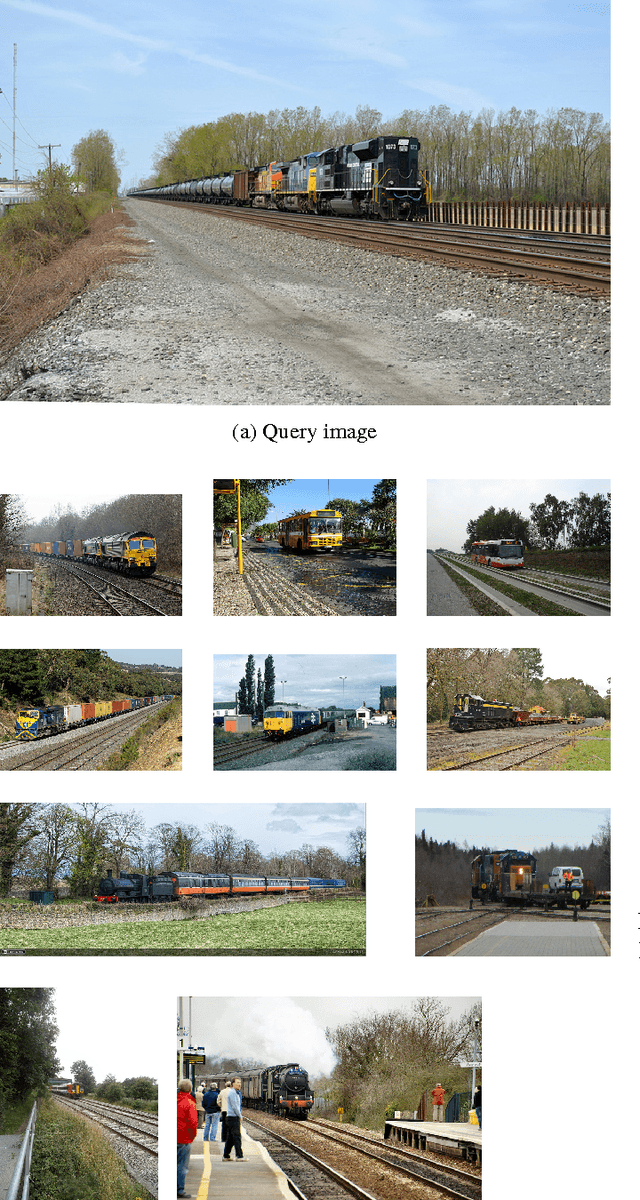
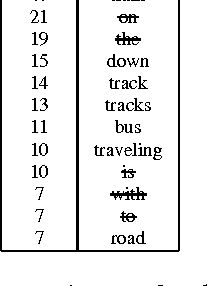
This report presents our submission to the MS COCO Captioning Challenge 2015. The method uses Convolutional Neural Network activations as an embedding to find semantically similar images. From these images, the most typical caption is selected based on unigram frequencies. Although the method received low scores with automated evaluation metrics and in human assessed average correctness, it is competitive in the ratio of captions which pass the Turing test and which are assessed as better or equal to human captions.