 Add to Chrome
 Add to Firefox
 Add to Edge
A Novel Computer Vision Approach for Assessing Fish Responses to Intrusive Objects in Aquaculture
May 28, 2026
The aquaculture industry needs to address several challenges to secure sustainable seafood production that can serve an increasing global demand. One major challenge is to ensure good fish health and acceptable welfare during production since the improvement of fish welfare is of vital importance in current and future production systems. In this study, this is addressed by developing and implementing methods to identify fish behaviors in response to intrusive objects both on individual and on a group basis. A novel approach for detecting, tracking, and estimating the 3D position of individual fish has thus been developed, and specifically designed to track the caudal fins of farmed fish in industrial sea cages. The tracking data was subjected to a novel stereo-vision method adapted to estimate fish positions, velocities, accelerations, and turning and pitch angles. Datasets obtained from industrial-scale fish farms were then analyzed to identify the impact of structures of varying shapes, sizes, and colors on fish behavior. The method was trained using manually labeled caudal fins, and used YOLOv8 with ByteTrack as an object detector and tracker, SuperGlue for matching detections in the left and right frames, and triangulation to reconstruct the 3D positions of the fish. Different image pre-processing and augmentation methods for enhancing object detection accuracy were tested and their performance compared, while RAFT-Stereo was tested for depth estimation purposes. The obtained results both validate the method's performance against previous research efforts, and demonstrate the novelty and potential of this method in providing more insight into behavioral dynamics in sea-cages.

Aquaculture field robotics: Applications, lessons learned and future prospects
Apr 19, 2024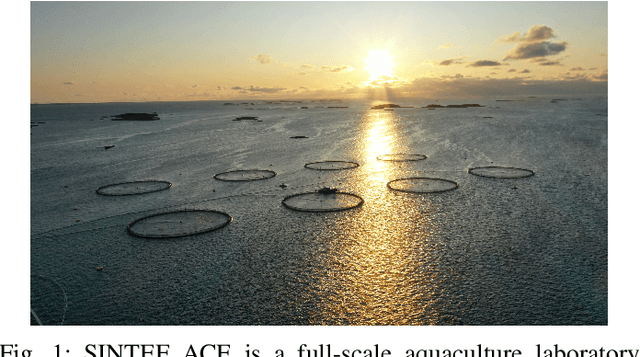
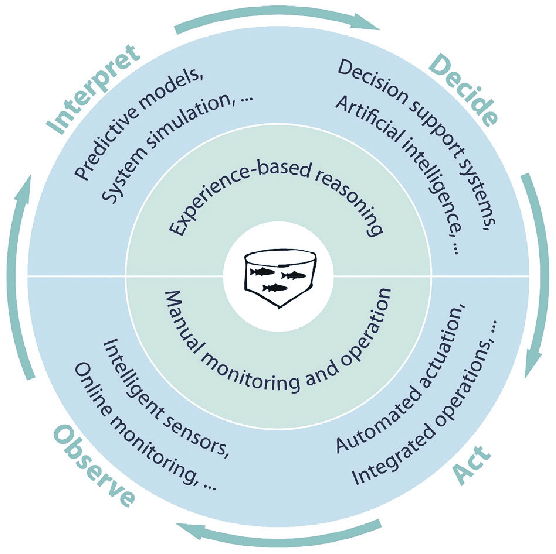
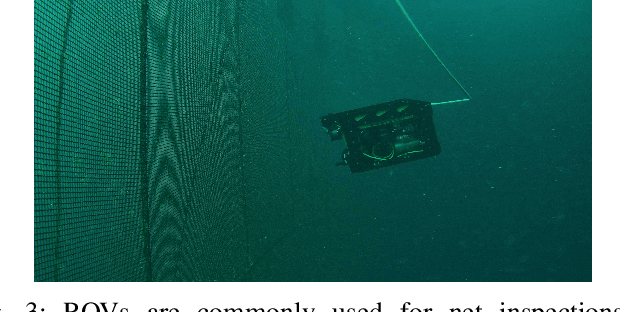
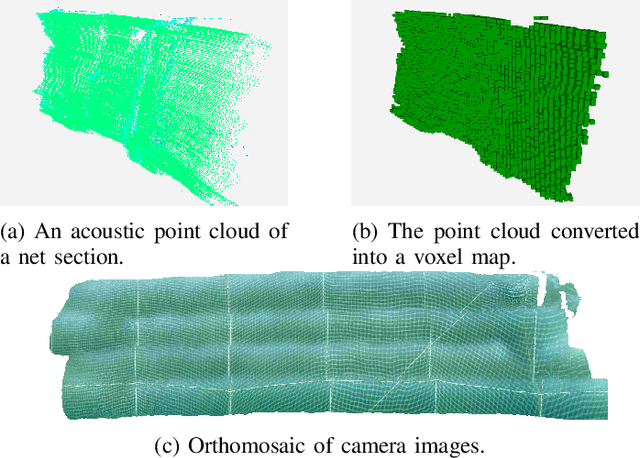
Aquaculture is a big marine industry and contributes to securing global food demands. Underwater vehicles such as remotely operated vehicles (ROVs) are commonly used for inspection, maintenance, and intervention (IMR) tasks in fish farms. However, underwater vehicle operations in aquaculture face several unique and demanding challenges, such as navigation in dynamically changing environments with time-varying sealoads and poor hydroacoustic sensor capabilities, challenges yet to be properly addressed in research. This paper will present various endeavors to address these questions and improve the overall autonomy level in aquaculture robotics, with a focus on field experiments. We will also discuss lessons learned during field trials and potential future prospects in aquaculture robotics.