 Add to Chrome
 Add to Firefox
 Add to Edge
Workload Assessment of Human-Machine Interface: A Simulator Study with Psychophysiological Measures
Jun 13, 2024
Human-machine Interface (HMI) is critical for safety during automated driving, as it serves as the only media between the automated system and human users. To enable a transparent HMI, we first need to know how to evaluate it. However, most of the assessment methods used for HMI designs are subjective and thus not efficient. To bridge the gap, an objective and standardized HMI assessment method is needed, and the first step is to find an objective method for workload measurement for this context. In this study, two psychophysiological measures, electrocardiography (ECG) and electrodermal activity (EDA), were evaluated for their effectiveness in finding differences in mental workload among different HMI designs in a simulator study. Three HMI designs were developed and used. Results showed that both workload measures were able to identify significant differences in objective mental workload when interacting with in-vehicle HMIs. As a first step toward a standardized assessment method, the results could be used as a firm ground for future studies. Marie Sk{\l}odowska-Curie Actions; Innovative Training Network (ITN); SHAPE-IT; Grant number 860410; Publication date: [29 Sep 2023]; DOI: [10.54941/ahfe1004172]

The role of successful human-robot interaction on trust -- Findings of an experiment with an autonomous cooperative robot
Apr 14, 2021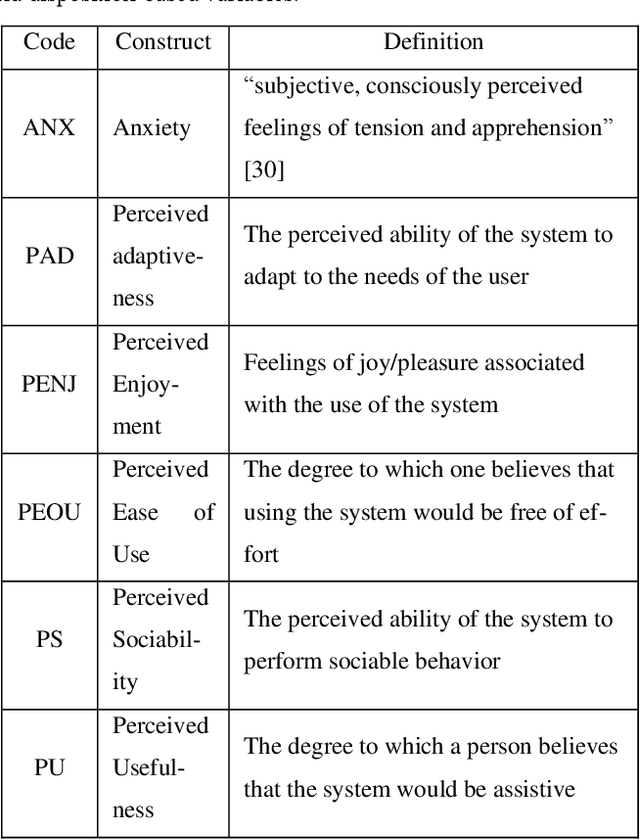

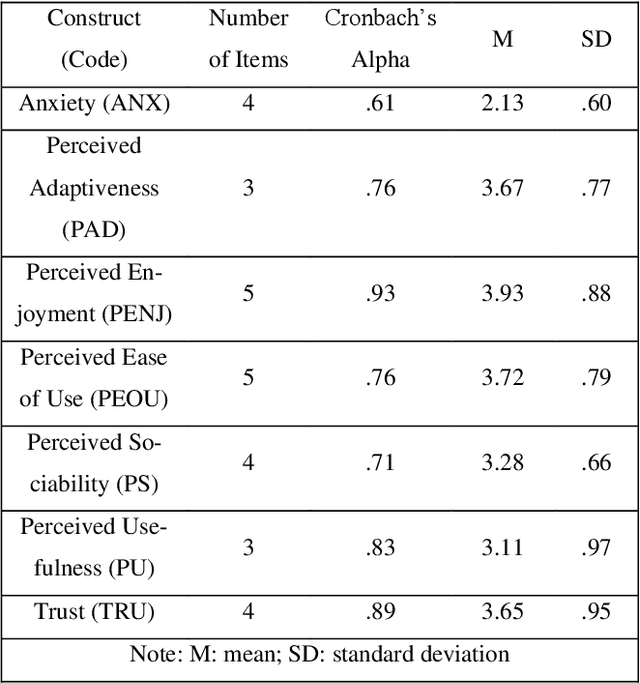
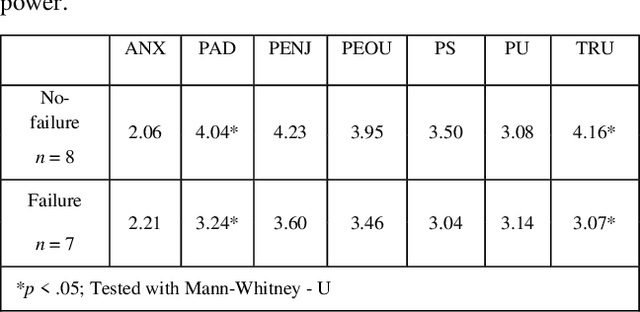
The foundation of this paper is an experiment of fifteen participants interacting directly with an autonomous robot. The task for the participants was to carry a table, in two different setups, together with a robot, which is intended to support older people with heavy lifting tasks. By collecting and analyzing observational, quantitative, and qualitative data the interaction was investigated with a specific emphasis on trust in the robot. The overall aim was a better understanding of people's emotional and evaluative reactions when they engage with a functioning robot in a relatable everyday scenario. This study shows that successful cooperative task completion has a positive effect on trust and other related evaluations, like the perceived adaptiveness regarding the robot's behavior.