 Add to Chrome
 Add to Firefox
 Add to Edge
Early warning signals for loss of control
Dec 24, 2025
Maintaining stability in feedback systems, from aircraft and autonomous robots to biological and physiological systems, relies on monitoring their behavior and continuously adjusting their inputs. Incremental damage can make such control fragile. This tends to go unnoticed until a small perturbation induces instability (i.e. loss of control). Traditional methods in the field of engineering rely on accurate system models to compute a safe set of operating instructions, which become invalid when the, possibly damaged, system diverges from its model. Here we demonstrate that the approach of such a feedback system towards instability can nonetheless be monitored through dynamical indicators of resilience. This holistic system safety monitor does not rely on a system model and is based on the generic phenomenon of critical slowing down, shown to occur in the climate, biology and other complex nonlinear systems approaching criticality. Our findings for engineered devices opens up a wide range of applications involving real-time early warning systems as well as an empirical guidance of resilient system design exploration, or "tinkering". While we demonstrate the validity using drones, the generic nature of the underlying principles suggest that these indicators could apply across a wider class of controlled systems including reactors, aircraft, and self-driving cars.

Universal Early Warning Signals of Phase Transitions in Climate Systems
May 31, 2022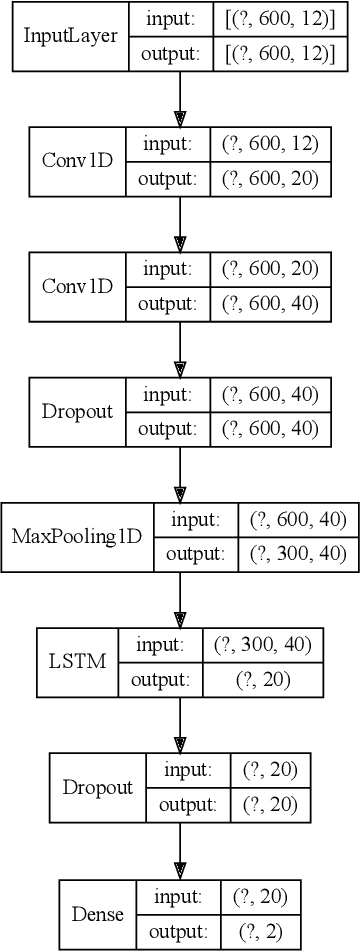
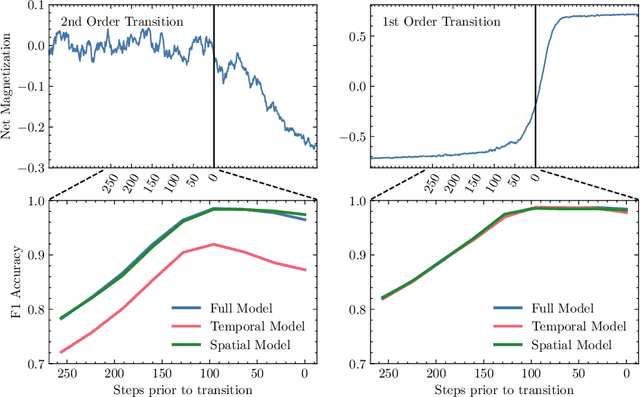
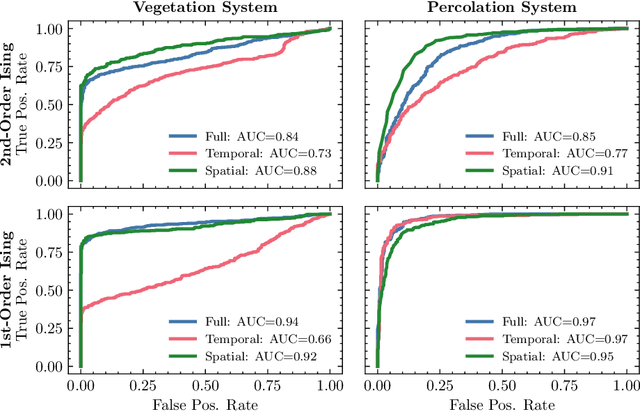
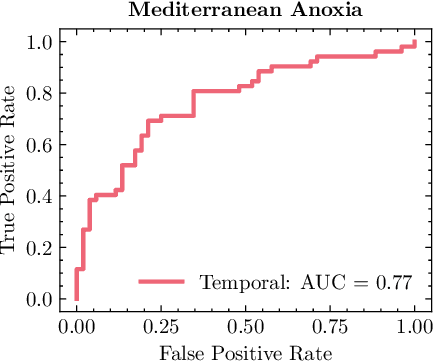
The potential for complex systems to exhibit tipping points in which an equilibrium state undergoes a sudden and potentially irreversible shift is well established, but prediction of these events using standard forecast modeling techniques is quite difficult. This has led to the development of an alternative suite of methods that seek to identify signatures of critical phenomena in data, which are expected to occur in advance of many classes of dynamical bifurcation. Crucially, the manifestations of these critical phenomena are generic across a variety of systems, meaning that data-intensive deep learning methods can be trained on (abundant) synthetic data and plausibly prove effective when transferred to (more limited) empirical data sets. This paper provides a proof of concept for this approach as applied to lattice phase transitions: a deep neural network trained exclusively on 2D Ising model phase transitions is tested on a number of real and simulated climate systems with considerable success. Its accuracy frequently surpasses that of conventional statistical indicators, with performance shown to be consistently improved by the inclusion of spatial indicators. Tools such as this may offer valuable insight into climate tipping events, as remote sensing measurements provide increasingly abundant data on complex geospatially-resolved Earth systems.