 Add to Chrome
 Add to Firefox
 Add to Edge
Non Normalized Shared-Constraint Dynamic Games for Human-Robot Collaboration with Asymmetric Responsibility
Dec 09, 2025
This paper proposes a dynamic game formulation for cooperative human-robot navigation in shared workspaces with obstacles, where the human and robot jointly satisfy shared safety constraints while pursuing a common task. A key contribution is the introduction of a non-normalized equilibrium structure for the shared constraints. This structure allows the two agents to contribute different levels of effort towards enforcing safety requirements such as collision avoidance and inter-players spacing. We embed this non-normalized equilibrium into a receding-horizon optimal control scheme.

Non-Normalized Solutions of Generalized Nash Equilibrium in Autonomous Racing
Mar 15, 2025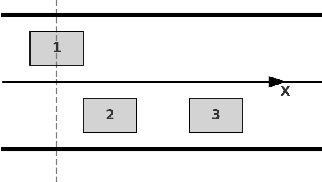
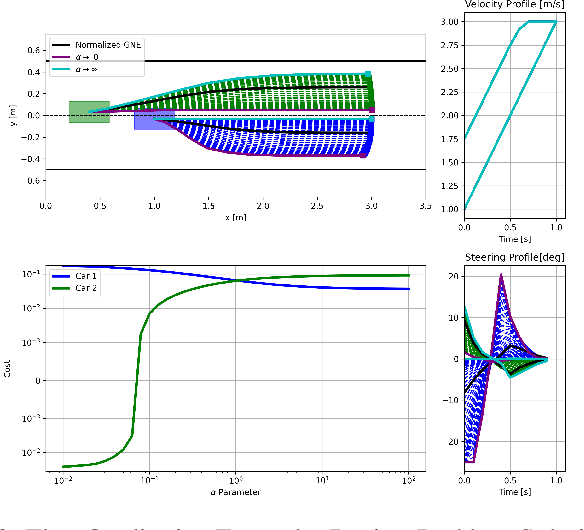
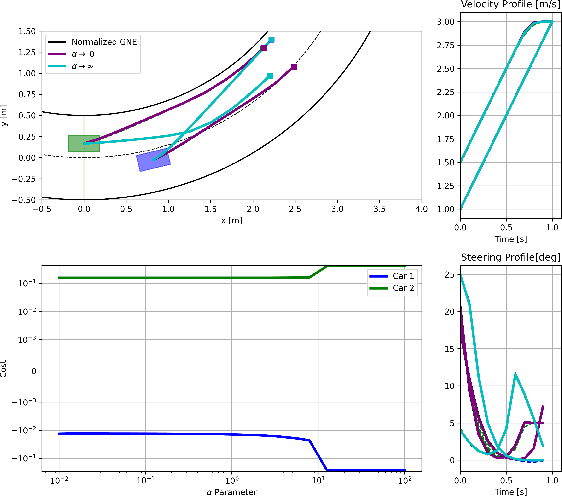
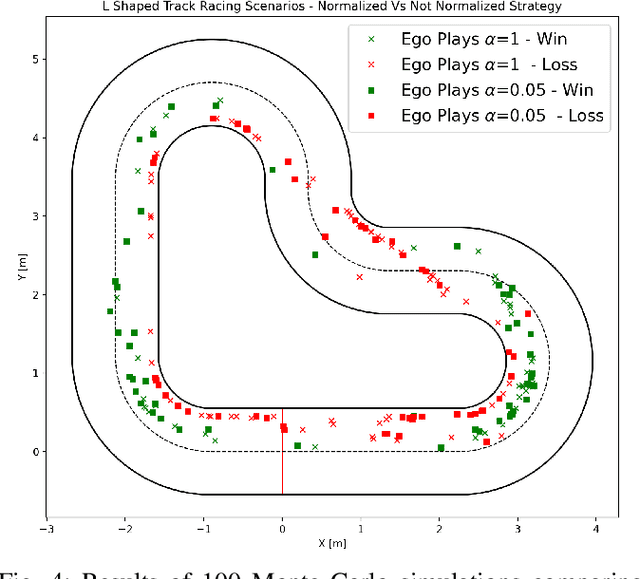
In dynamic games with shared constraints, Generalized Nash Equilibria (GNE) are often computed using the normalized solution concept, which assumes identical Lagrange multipliers for shared constraints across all players. While widely used, this approach excludes other potentially valuable GNE. This paper addresses the limitations of normalized solutions in racing scenarios through three key contributions. First, we highlight the shortcomings of normalized solutions with a simple racing example. Second, we propose a novel method based on the Mixed Complementarity Problem (MCP) formulation to compute non-normalized Generalized Nash Equilibria (GNE). Third, we demonstrate that our proposed method overcomes the limitations of normalized GNE solutions and enables richer multi-modal interactions in realistic racing scenarios.
Generalized Nash Equilibrium Solutions in Dynamic Games With Shared Constraints
Feb 26, 2025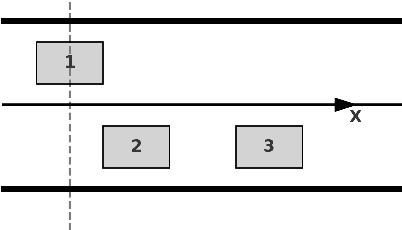
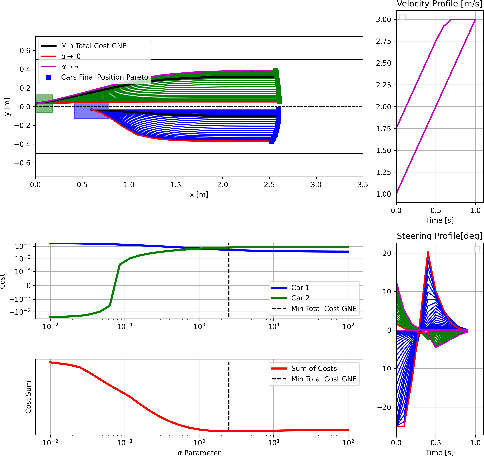
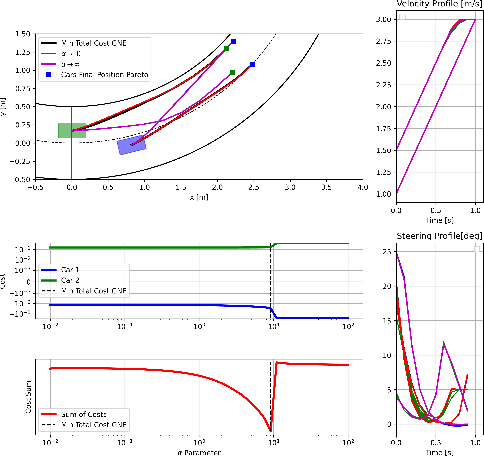
In dynamic games with shared constraints, Generalized Nash Equilibria (GNE) are often computed using the normalized solution concept, which assumes identical Lagrange multipliers for shared constraints across all players. While widely used, this approach excludes other potentially valuable GNE. This paper presents a novel method based on the Mixed Complementarity Problem (MCP) formulation to compute non-normalized GNE, expanding the solution space. We also propose a systematic approach for selecting the optimal GNE based on predefined criteria, enhancing practical flexibility. Numerical examples illustrate the methods effectiveness, offering an alternative to traditional normalized solutions.