 Add to Chrome
 Add to Firefox
 Add to Edge
When Low CER is Not Enough: An Analysis of Hallucinations in Vision-Language OCR Systems on Historical Uruguayan Documents
Jul 27, 2026
Optical Character Recognition (OCR) is a key component in the digitization of historical archives. Recently, Vision-Language Models (VLMs) have emerged as strong alternatives to traditional OCR systems, achieving state-of-the-art performance on standard benchmarks. However, their suitability for archival transcription remains insufficiently understood. In this work, we benchmark traditional OCR systems and VLM-based approaches on the Berrutti dataset, a challenging collection of Uruguayan dictatorship-era documents derived from microfilm scans. While VLMs consistently outperform traditional methods in terms of Character Error Rate (CER) and Word Error Rate (WER), we show that these improvements hide a more complex picture. Through a detailed qualitative analysis, we uncover systematic failure modes that are invisible to standard metrics, including orthographic normalization, spurious content generation, and semantic substitutions that preserve fluency while altering meaning. Errors affecting named entities are particularly critical, as they can introduce substantial semantic distortions with minimal impact on CER and WER. These findings reveal a critical gap between quantitative OCR performance and transcription fidelity in real-world archival settings, and highlight the need for evaluation frameworks that go beyond character-level accuracy to capture the semantic reliability of generated transcriptions.

CHROMA: Detecting AI-Generated Images through Inter-Channel Color-Space Correlations
Jun 07, 2026The rapid adoption of diffusion and large-scale generative models has made it increasingly challenging to distinguish synthetic imagery from real photographs. While automated detectors have been proposed, their generalization to unseen generators remains brittle. To address this limitation, we investigate inter-channel color correlations, a lightweight and underexploited forensic cue. We first demonstrate that LPIPS, a widely used perceptual metric, exhibits inconsistent responses to perturbations that selectively alter channel dependence across different color-space parameterizations, indicating that cross-channel statistics are not uniformly constrained by common perceptual training objectives. Motivated by this, we analyze the distributions of pairwise inter-channel correlation features across multiple color spaces. Our analysis reveals systematic, generator-specific differences in these distributions, with RGB and Lab color spaces providing the most apparent separation between real and generated images. Building on this, we introduce Chroma, a detector of AI-generated images which augments standard RGB inputs with inter-channel correlation maps and employs a fixed CNN backbone trained with a modest computational budget. We assess its robustness under both single-generator training and a limited multi-generator supervision regime, where only a few samples from additional generators are available. Across a standard benchmark protocol, correlation-augmented inputs improve real-vs-generated discrimination and robustness, yielding performance competitive with recent detectors while maintaining a simple architecture and training procedure. Code is available at https://github.com/JPSoteloSilva/CHROMA
Improving OCR using internal document redundancy
Aug 20, 2025Current OCR systems are based on deep learning models trained on large amounts of data. Although they have shown some ability to generalize to unseen data, especially in detection tasks, they can struggle with recognizing low-quality data. This is particularly evident for printed documents, where intra-domain data variability is typically low, but inter-domain data variability is high. In that context, current OCR methods do not fully exploit each document's redundancy. We propose an unsupervised method by leveraging the redundancy of character shapes within a document to correct imperfect outputs of a given OCR system and suggest better clustering. To this aim, we introduce an extended Gaussian Mixture Model (GMM) by alternating an Expectation-Maximization (EM) algorithm with an intra-cluster realignment process and normality statistical testing. We demonstrate improvements in documents with various levels of degradation, including recovered Uruguayan military archives and 17th to mid-20th century European newspapers.
PhotoHolmes: a Python library for forgery detection in digital images
Dec 19, 2024In this paper, we introduce PhotoHolmes, an open-source Python library designed to easily run and benchmark forgery detection methods on digital images. The library includes implementations of popular and state-of-the-art methods, dataset integration tools, and evaluation metrics. Utilizing the Benchmark tool in PhotoHolmes, users can effortlessly compare various methods. This facilitates an accurate and reproducible comparison between their own methods and those in the existing literature. Furthermore, PhotoHolmes includes a command-line interface (CLI) to easily run the methods implemented in the library on any suspicious image. As such, image forgery methods become more accessible to the community. The library has been built with extensibility and modularity in mind, which makes adding new methods, datasets and metrics to the library a straightforward process. The source code is available at https://github.com/photoholmes/photoholmes.
Diffusion models meet image counter-forensics
Nov 22, 2023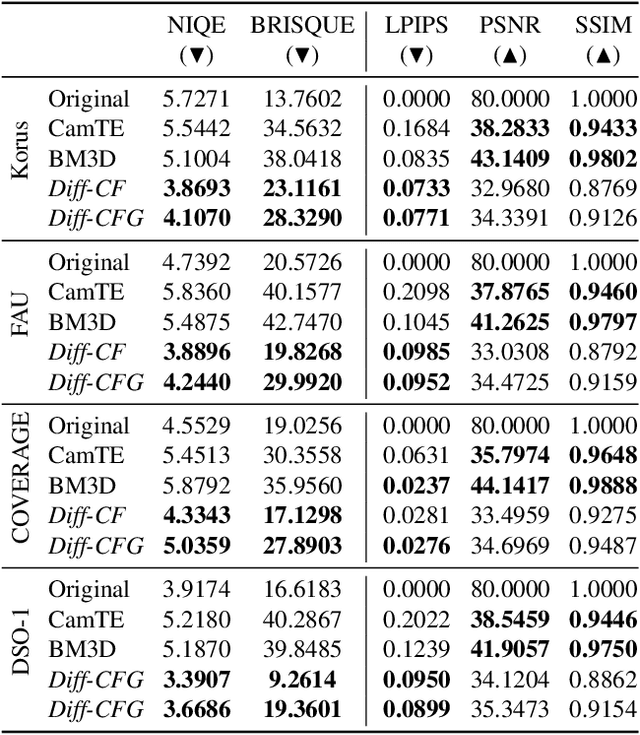
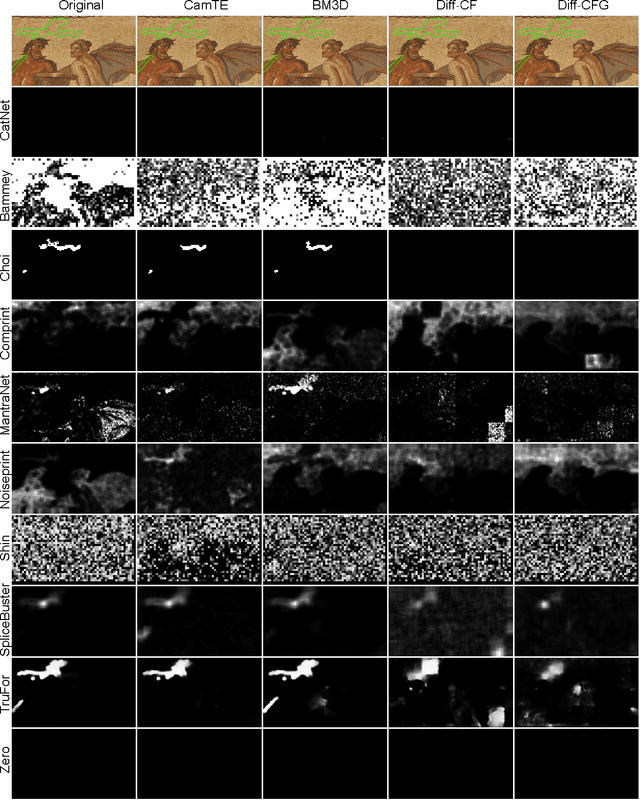
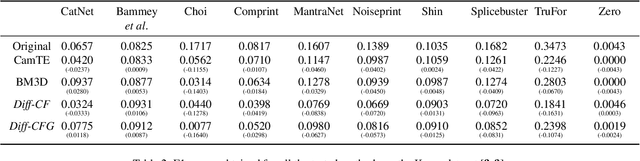

From its acquisition in the camera sensors to its storage, different operations are performed to generate the final image. This pipeline imprints specific traces into the image to form a natural watermark. Tampering with an image disturbs these traces; these disruptions are clues that are used by most methods to detect and locate forgeries. In this article, we assess the capabilities of diffusion models to erase the traces left by forgers and, therefore, deceive forensics methods. Such an approach has been recently introduced for adversarial purification, achieving significant performance. We show that diffusion purification methods are well suited for counter-forensics tasks. Such approaches outperform already existing counter-forensics techniques both in deceiving forensics methods and in preserving the natural look of the purified images. The source code is publicly available at https://github.com/mtailanian/diff-cf.
Non-Semantic Evaluation of Image Forensics Tools: Methodology and Database
May 04, 2021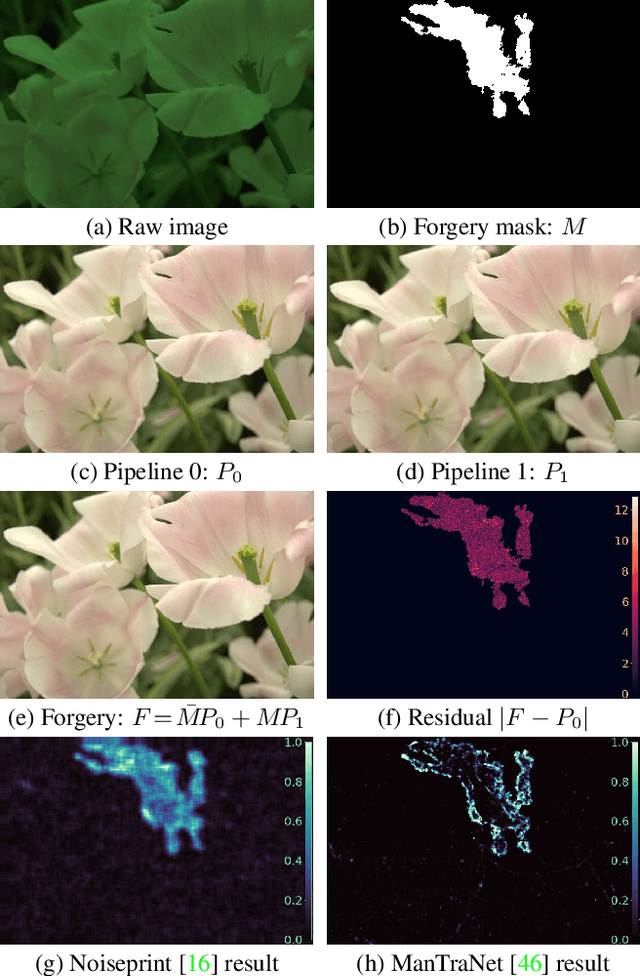
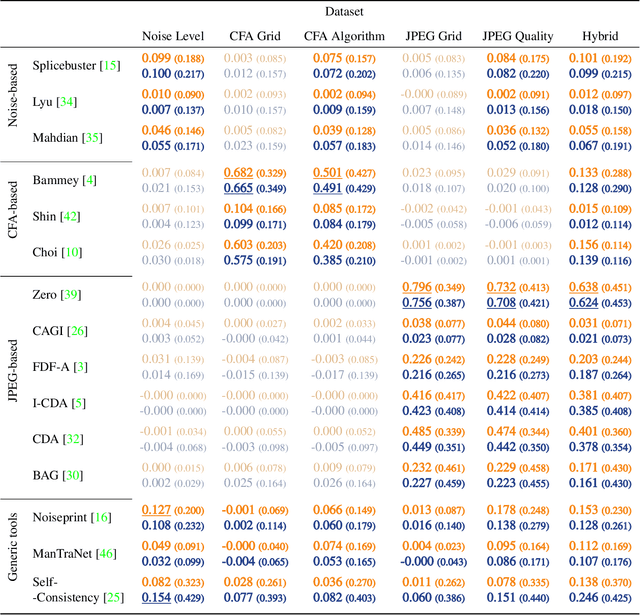

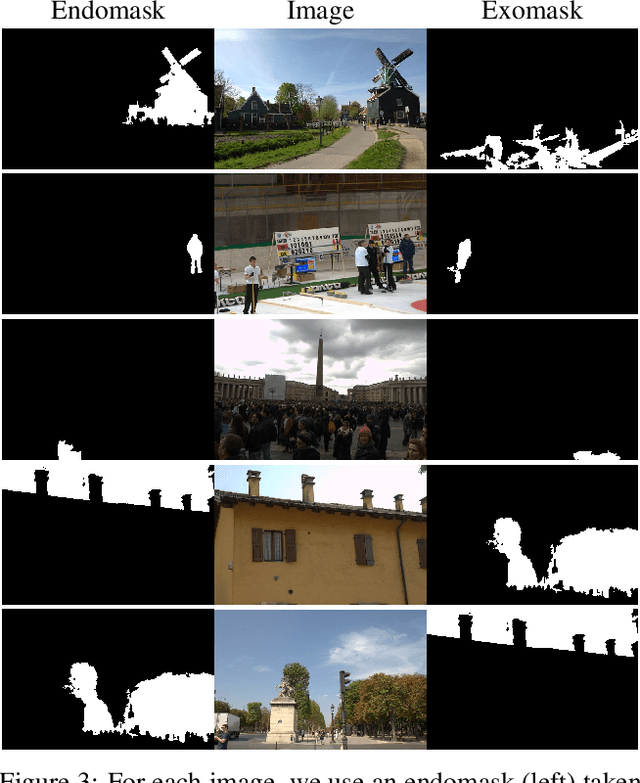
With the aim of evaluating image forensics tools, we propose a methodology to create forgeries traces, leaving intact the semantics of the image. Thus, the only forgery cues left are the specific alterations of one or several aspects of the image formation pipeline. This methodology creates automatically forged images that are challenging to detect for forensic tools and overcomes the problem of creating convincing semantic forgeries. Based on this methodology, we create the Trace database and conduct an evaluation of the main state-of-the-art image forensics tools.