 Add to Chrome
 Add to Firefox
 Add to Edge
Automated Grading of Handwritten Mathematics Using Vision-Capable LLMs
May 18, 2026
Automated grading systems have enabled scalable assessment for many response types, but handwritten mathematics remains a barrier due to the complexity of multi-step solutions. Vision-capable large language models (LLMs) offer new opportunities here, yet their reliability in authentic instructional settings remains poorly understood. We present an empirical evaluation of an LLM-based grader for handwritten mathematical work using instructor-defined rubrics. Extending a prior pipeline for typed responses, we integrate transcription and rubric-based evaluation of photographic submissions within a single LLM call, evaluating on student work from two university STEM courses. Comparing AI grading decisions against human-assigned ground truth at the rubric-item level, we observe high overall accuracy, with most errors -- 87\% in the best model -- attributable to transcription failures rather than rubric misapplication. We categorize common error modes, including image quality issues, hallucinated content, and incorrect handling of equivalent expressions. These findings highlight both the promise and limitations of LLM-based grading for handwritten mathematics, providing guidance for system design, prompt refinement, and deployment in educational settings.

Language Models are Few-Shot Graders
Feb 18, 2025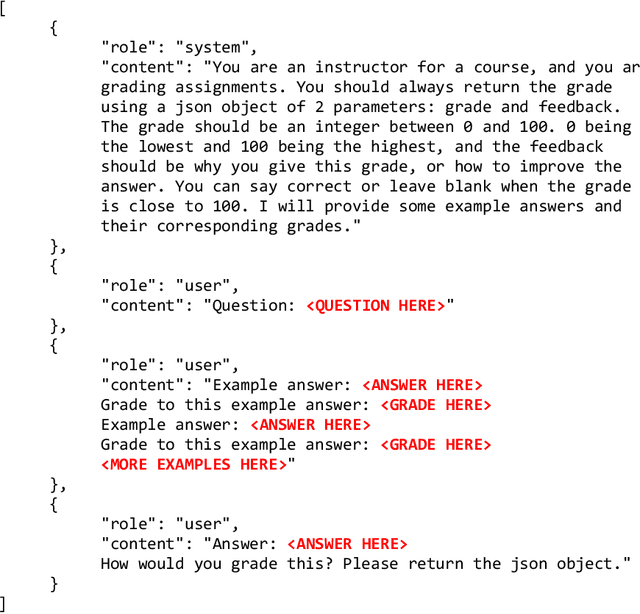
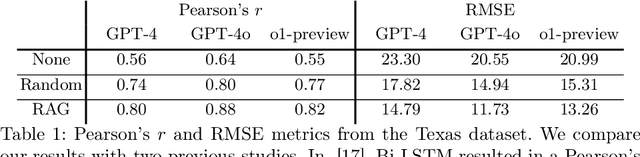
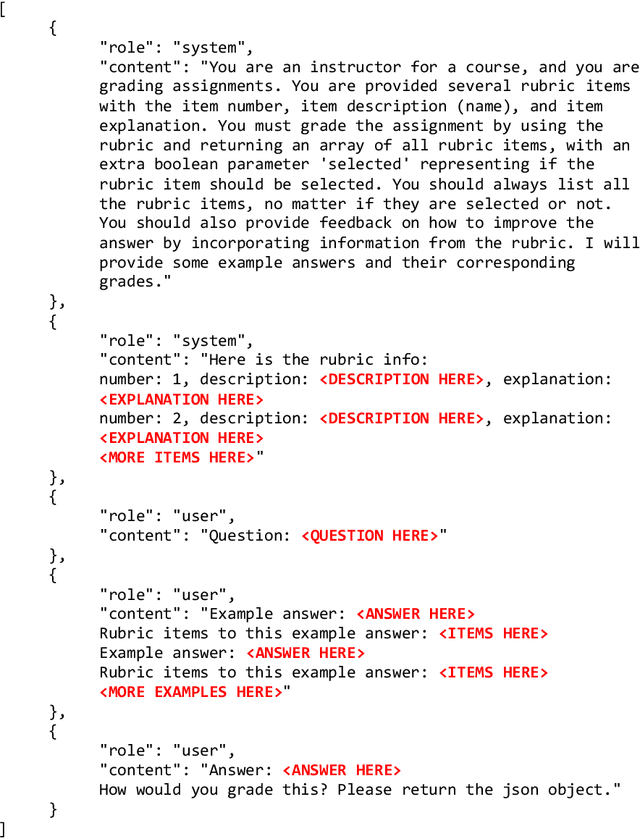
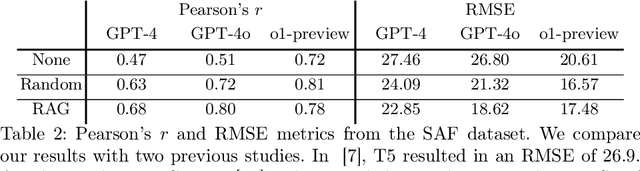
Providing evaluations to student work is a critical component of effective student learning, and automating its process can significantly reduce the workload on human graders. Automatic Short Answer Grading (ASAG) systems, enabled by advancements in Large Language Models (LLMs), offer a promising solution for assessing and providing instant feedback for open-ended student responses. In this paper, we present an ASAG pipeline leveraging state-of-the-art LLMs. Our new LLM-based ASAG pipeline achieves better performances than existing custom-built models on the same datasets. We also compare the grading performance of three OpenAI models: GPT-4, GPT-4o, and o1-preview. Our results demonstrate that GPT-4o achieves the best balance between accuracy and cost-effectiveness. On the other hand, o1-preview, despite higher accuracy, exhibits a larger variance in error that makes it less practical for classroom use. We investigate the effects of incorporating instructor-graded examples into prompts using no examples, random selection, and Retrieval-Augmented Generation (RAG)-based selection strategies. Our findings indicate that providing graded examples enhances grading accuracy, with RAG-based selection outperforming random selection. Additionally, integrating grading rubrics improves accuracy by offering a structured standard for evaluation.
Autograding Mathematical Induction Proofs with Natural Language Processing
Jun 11, 2024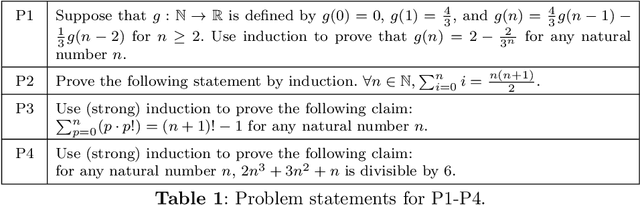
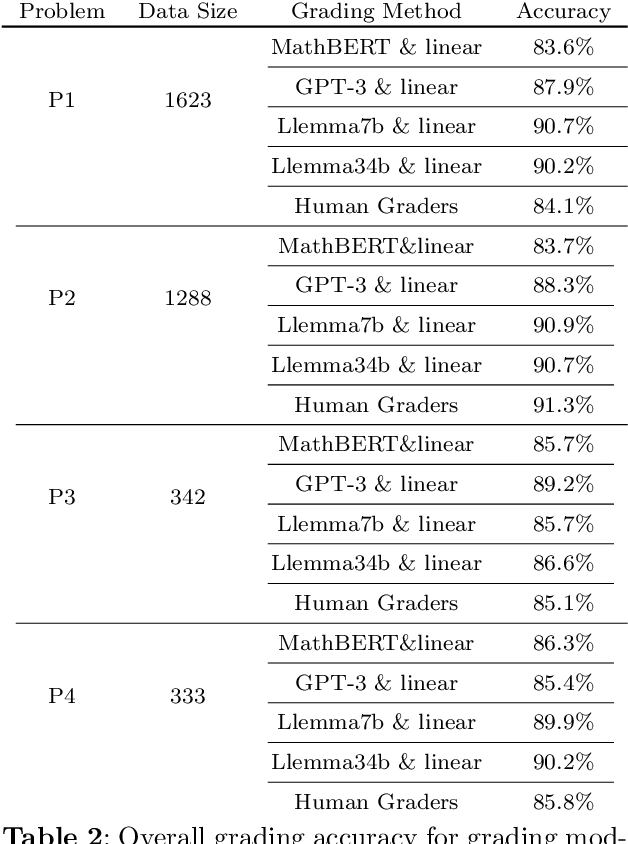
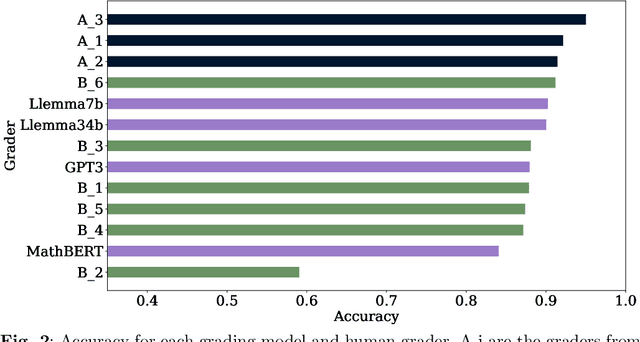
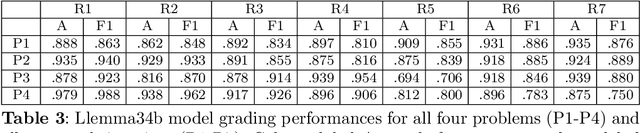
In mathematical proof education, there remains a need for interventions that help students learn to write mathematical proofs. Research has shown that timely feedback can be very helpful to students learning new skills. While for many years natural language processing models have struggled to perform well on tasks related to mathematical texts, recent developments in natural language processing have created the opportunity to complete the task of giving students instant feedback on their mathematical proofs. In this paper, we present a set of training methods and models capable of autograding freeform mathematical proofs by leveraging existing large language models and other machine learning techniques. The models are trained using proof data collected from four different proof by induction problems. We use four different robust large language models to compare their performances, and all achieve satisfactory performances to various degrees. Additionally, we recruit human graders to grade the same proofs as the training data, and find that the best grading model is also more accurate than most human graders. With the development of these grading models, we create and deploy an autograder for proof by induction problems and perform a user study with students. Results from the study shows that students are able to make significant improvements to their proofs using the feedback from the autograder, but students still do not trust the AI autograders as much as they trust human graders. Future work can improve on the autograder feedback and figure out ways to help students trust AI autograders.