 Add to Chrome
 Add to Firefox
 Add to Edge
Detecting Basic Values in A Noisy Russian Social Media Text Data: A Multi-Stage Classification Framework
Mar 19, 2026
This study presents a multi-stage classification framework for detecting human values in noisy Russian language social media, validated on a random sample of 7.5 million public text posts. Drawing on Schwartz's theory of basic human values, we design a multi-stage pipeline that includes spam and nonpersonal content filtering, targeted selection of value relevant and politically relevant posts, LLM based annotation, and multi-label classification. Particular attention is given to verifying the quality of LLM annotations and model predictions against human experts. We treat human expert annotations not as ground truth but as an interpretative benchmark with its own uncertainty. To account for annotation subjectivity, we aggregate multiple LLM generated judgments into soft labels that reflect varying levels of agreement. These labels are then used to train transformer based models capable of predicting the probability of each of the ten basic values. The best performing model, XLM RoBERTa large, achieves an F1 macro of 0.83 and an F1 of 0.71 on held out test data. By treating value detection as a multi perspective interpretive task, where expert labels, GPT annotations, and model predictions represent coherent but not identical readings of the same texts, we show that the model generally aligns with human judgments but systematically overestimates the Openness to Change value domain. Empirically, the study reveals distinct patterns of value expression and their co-occurrence in Russian social networks, contributing to a broader research agenda on cultural variation, communicative framing, and value based interpretation in digital environments. All models are released publicly.

Detecting value-expressive text posts in Russian social media
Dec 14, 2023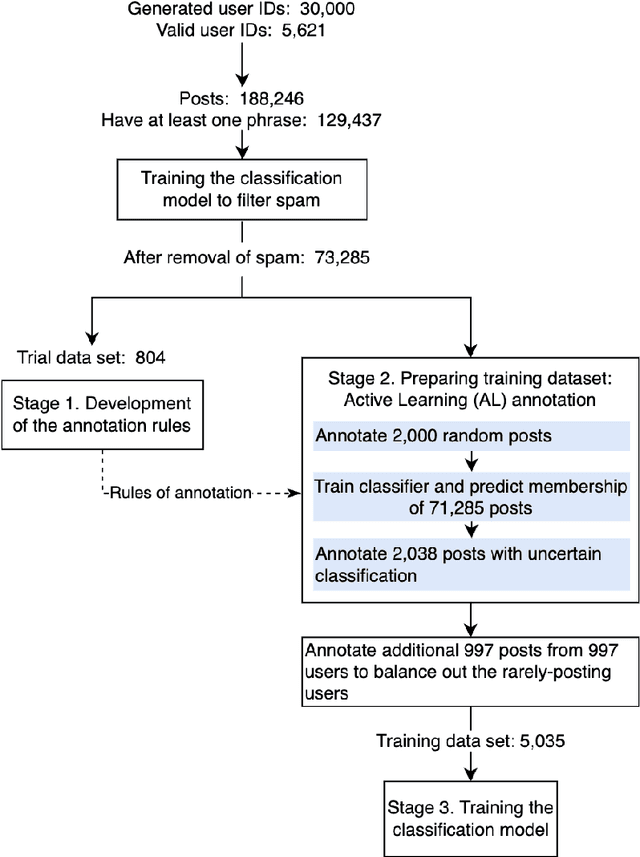
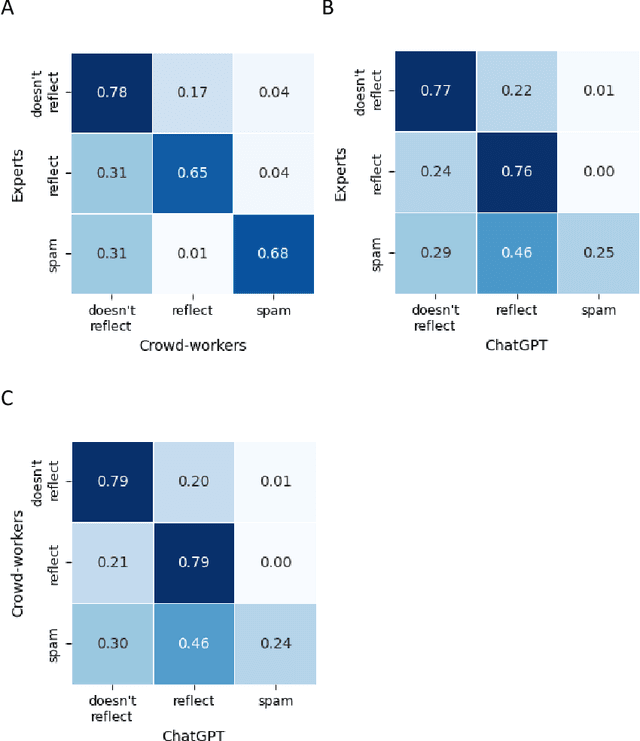
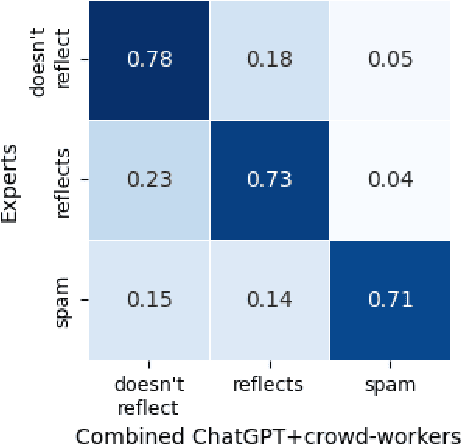
Basic values are concepts or beliefs which pertain to desirable end-states and transcend specific situations. Studying personal values in social media can illuminate how and why societal values evolve especially when the stimuli-based methods, such as surveys, are inefficient, for instance, in hard-to-reach populations. On the other hand, user-generated content is driven by the massive use of stereotyped, culturally defined speech constructions rather than authentic expressions of personal values. We aimed to find a model that can accurately detect value-expressive posts in Russian social media VKontakte. A training dataset of 5,035 posts was annotated by three experts, 304 crowd-workers and ChatGPT. Crowd-workers and experts showed only moderate agreement in categorizing posts. ChatGPT was more consistent but struggled with spam detection. We applied an ensemble of human- and AI-assisted annotation involving active learning approach, subsequently trained several LLMs and selected a model based on embeddings from pre-trained fine-tuned rubert-tiny2, and reached a high quality of value detection with F1 = 0.75 (F1-macro = 0.80). This model provides a crucial step to a study of values within and between Russian social media users.