 Add to Chrome
 Add to Firefox
 Add to Edge
Construct, Merge, Solve & Adapt with Reinforcement Learning for the min-max Multiple Traveling Salesman Problem
Feb 27, 2026
The Multiple Traveling Salesman Problem (mTSP) extends the Traveling Salesman Problem to m tours that start and end at a common depot and jointly visit all customers exactly once. In the min-max variant, the objective is to minimize the longest tour, reflecting workload balance. We propose a hybrid approach, Construct, Merge, Solve & Adapt with Reinforcement Learning (RL-CMSA), for the symmetric single-depot min-max mTSP. The method iteratively constructs diverse solutions using probabilistic clustering guided by learned pairwise q-values, merges routes into a compact pool, solves a restricted set-covering MILP, and refines solutions via inter-route remove, shift, and swap moves. The q-values are updated by reinforcing city-pair co-occurrences in high-quality solutions, while the pool is adapted through ageing and pruning. This combination of exact optimization and reinforcement-guided construction balances exploration and exploitation. Computational results on random and TSPLIB instances show that RL-CMSA consistently finds (near-)best solutions and outperforms a state-of-the-art hybrid genetic algorithm under comparable time limits, especially as instance size and the number of salesmen increase.

Accelerating the k-means++ Algorithm by Using Geometric Information
Aug 23, 2024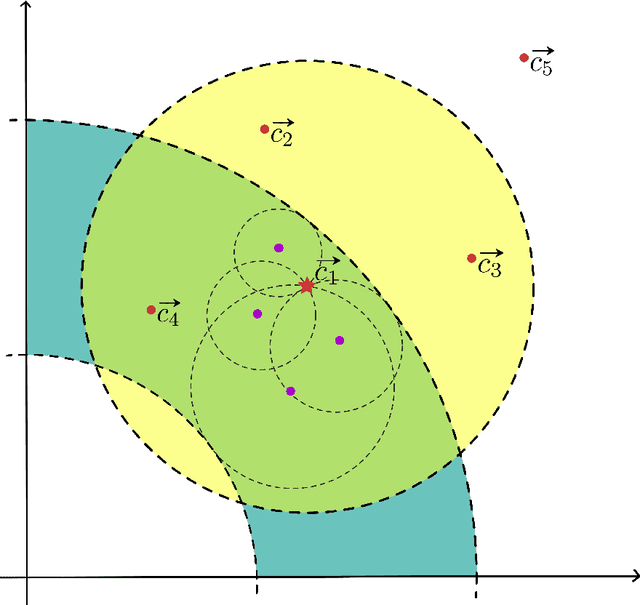
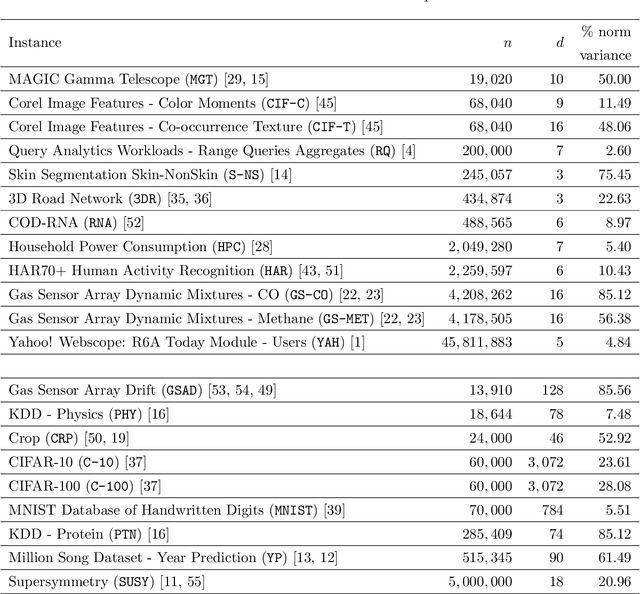
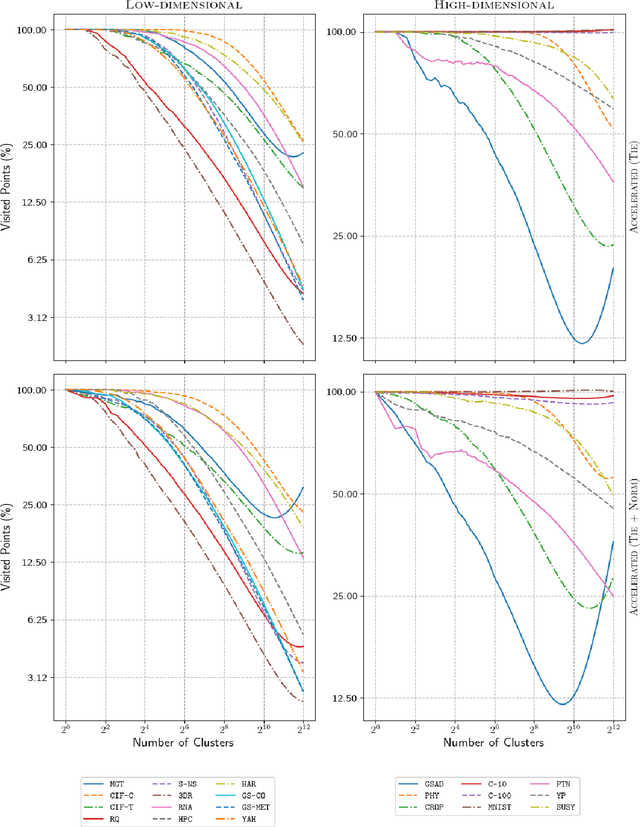
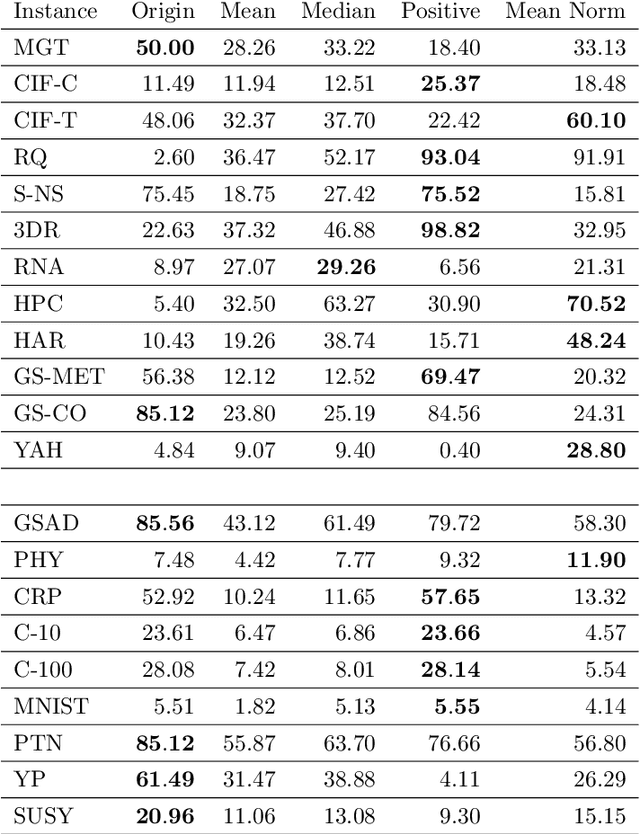
In this paper, we propose an acceleration of the exact k-means++ algorithm using geometric information, specifically the Triangle Inequality and additional norm filters, along with a two-step sampling procedure. Our experiments demonstrate that the accelerated version outperforms the standard k-means++ version in terms of the number of visited points and distance calculations, achieving greater speedup as the number of clusters increases. The version utilizing the Triangle Inequality is particularly effective for low-dimensional data, while the additional norm-based filter enhances performance in high-dimensional instances with greater norm variance among points. Additional experiments show the behavior of our algorithms when executed concurrently across multiple jobs and examine how memory performance impacts practical speedup.
A Hybrid Evolutionary Algorithm Based on Solution Merging for the Longest Arc-Preserving Common Subsequence Problem
Feb 01, 2017


The longest arc-preserving common subsequence problem is an NP-hard combinatorial optimization problem from the field of computational biology. This problem finds applications, in particular, in the comparison of arc-annotated Ribonucleic acid (RNA) sequences. In this work we propose a simple, hybrid evolutionary algorithm to tackle this problem. The most important feature of this algorithm concerns a crossover operator based on solution merging. In solution merging, two or more solutions to the problem are merged, and an exact technique is used to find the best solution within this union. It is experimentally shown that the proposed algorithm outperforms a heuristic from the literature.
A Protocol for Self-Synchronized Duty-Cycling in Sensor Networks: Generic Implementation in Wiselib
Oct 21, 2010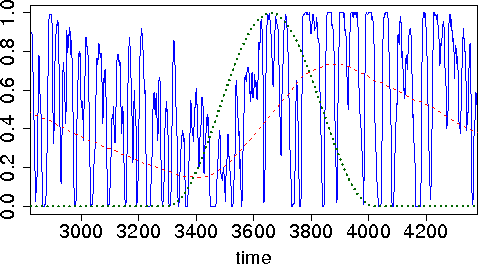

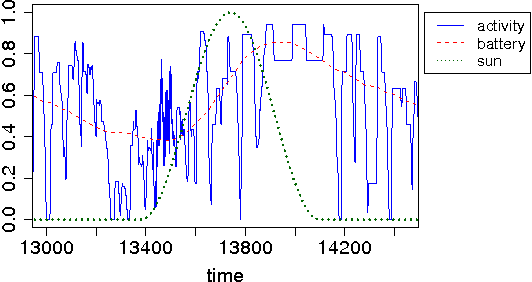
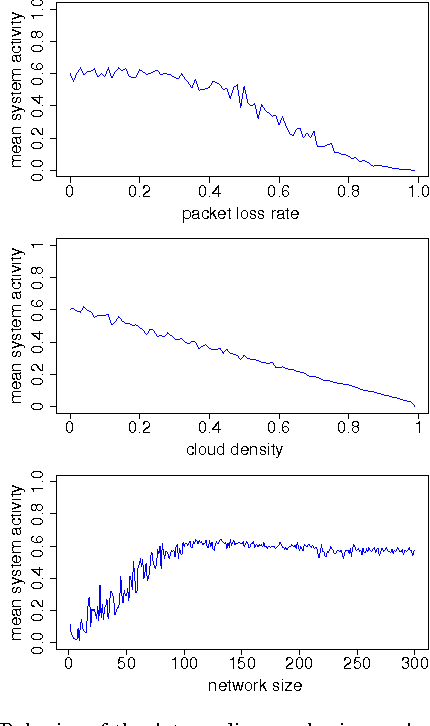
In this work we present a protocol for self-synchronized duty-cycling in wireless sensor networks with energy harvesting capabilities. The protocol is implemented in Wiselib, a library of generic algorithms for sensor networks. Simulations are conducted with the sensor network simulator Shawn. They are based on the specifications of real hardware known as iSense sensor nodes. The experimental results show that the proposed mechanism is able to adapt to changing energy availabilities. Moreover, it is shown that the system is very robust against packet loss.