 Add to Chrome
 Add to Firefox
 Add to Edge
An Alternative Trajectory for Generative AI
Mar 14, 2026
The generative artificial intelligence (AI) ecosystem is undergoing rapid transformations that threaten its sustainability. As models transition from research prototypes to high-traffic products, the energetic burden has shifted from one-time training to recurring, unbounded inference. This is exacerbated by reasoning models that inflate compute costs by orders of magnitude per query. The prevailing pursuit of artificial general intelligence through scaling of monolithic models is colliding with hard physical constraints: grid failures, water consumption, and diminishing returns on data scaling. This trajectory yields models with impressive factual recall but struggles in domains requiring in-depth reasoning, possibly due to insufficient abstractions in training data. Current large language models (LLMs) exhibit genuine reasoning depth only in domains like mathematics and coding, where rigorous, pre-existing abstractions provide structural grounding. In other fields, the current approach fails to generalize well. We propose an alternative trajectory based on domain-specific superintelligence (DSS). We argue for first constructing explicit symbolic abstractions (knowledge graphs, ontologies, and formal logic) to underpin synthetic curricula enabling small language models to master domain-specific reasoning without the model collapse problem typical of LLM-based synthetic data methods. Rather than a single generalist giant model, we envision "societies of DSS models": dynamic ecosystems where orchestration agents route tasks to distinct DSS back-ends. This paradigm shift decouples capability from size, enabling intelligence to migrate from energy-intensive data centers to secure, on-device experts. By aligning algorithmic progress with physical constraints, DSS societies move generative AI from an environmental liability to a sustainable force for economic empowerment.

GraphMERT: Efficient and Scalable Distillation of Reliable Knowledge Graphs from Unstructured Data
Oct 10, 2025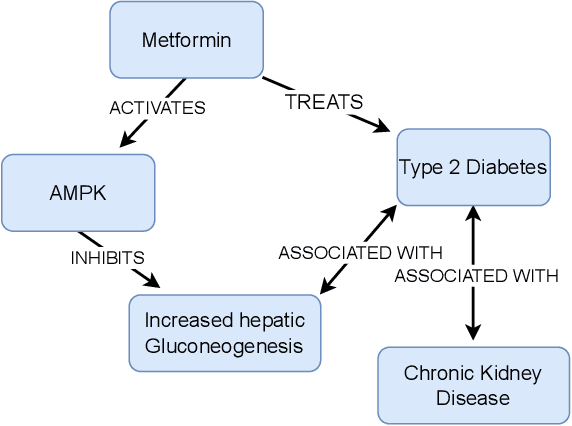
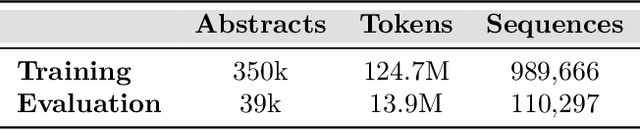
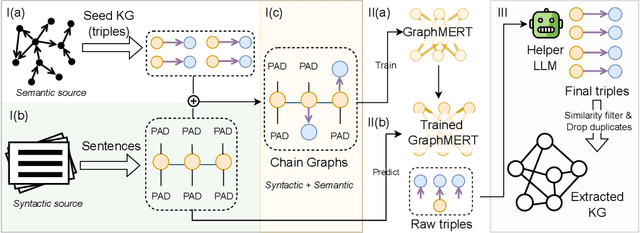

Researchers have pursued neurosymbolic artificial intelligence (AI) applications for nearly three decades because symbolic components provide abstraction while neural components provide generalization. Thus, a marriage of the two components can lead to rapid advancements in AI. Yet, the field has not realized this promise since most neurosymbolic AI frameworks fail to scale. In addition, the implicit representations and approximate reasoning of neural approaches limit interpretability and trust. Knowledge graphs (KGs), a gold-standard representation of explicit semantic knowledge, can address the symbolic side. However, automatically deriving reliable KGs from text corpora has remained an open problem. We address these challenges by introducing GraphMERT, a tiny graphical encoder-only model that distills high-quality KGs from unstructured text corpora and its own internal representations. GraphMERT and its equivalent KG form a modular neurosymbolic stack: neural learning of abstractions; symbolic KGs for verifiable reasoning. GraphMERT + KG is the first efficient and scalable neurosymbolic model to achieve state-of-the-art benchmark accuracy along with superior symbolic representations relative to baselines. Concretely, we target reliable domain-specific KGs that are both (1) factual (with provenance) and (2) valid (ontology-consistent relations with domain-appropriate semantics). When a large language model (LLM), e.g., Qwen3-32B, generates domain-specific KGs, it falls short on reliability due to prompt sensitivity, shallow domain expertise, and hallucinated relations. On text obtained from PubMed papers on diabetes, our 80M-parameter GraphMERT yields a KG with a 69.8% FActScore; a 32B-parameter baseline LLM yields a KG that achieves only 40.2% FActScore. The GraphMERT KG also attains a higher ValidityScore of 68.8%, versus 43.0% for the LLM baseline.