 Add to Chrome
 Add to Firefox
 Add to Edge
Metric Hedonic Games on the Line
Feb 05, 2026
Hedonic games are fundamental models for investigating the formation of coalitions among a set of strategic agents, where every agent has a certain utility for every possible coalition of agents it can be part of. To avoid the intractability of defining exponentially many utilities for all possible coalitions, many variants with succinct representations of the agents' utility functions have been devised and analyzed, e.g., modified fractional hedonic games by Monaco et al. [JAAMAS 2020]. We extend this by studying a novel succinct variant that is related to modified fractional hedonic games. In our model, each agent has a fixed type-value and an agent's cost for some given coalition is based on the differences between its value and those of the other members of its coalition. This allows to model natural situations like athletes forming training groups with similar performance levels or voters that partition themselves along a political spectrum. In particular, we investigate natural variants where an agent's cost is defined by distance thresholds, or by the maximum or average value difference to the other agents in its coalition. For these settings, we study the existence of stable coalition structures, their properties, and their quality in terms of the price of anarchy and the price of stability. Further, we investigate the impact of limiting the maximum number of coalitions. Despite the simple setting with metric distances on a line, we uncover a rich landscape of models, partially with counter-intuitive behavior. Also, our focus on both swap stability and jump stability allows us to study the influence of fixing the number and the size of the coalitions. Overall, we find that stable coalition structures always exist but that their properties and quality can vary widely.

Optimal Welfare in Noncooperative Network Formation under Attack
Nov 13, 2025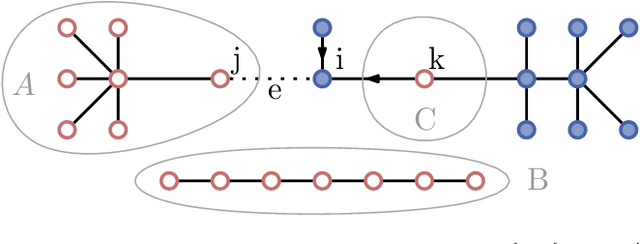
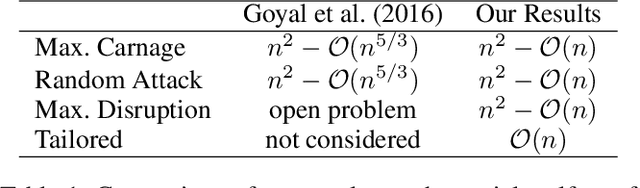
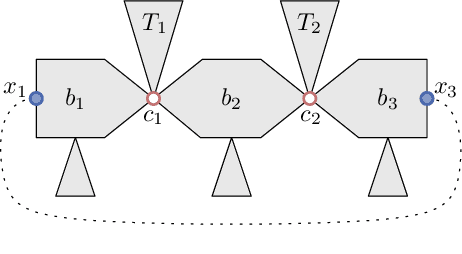

Communication networks are essential for our economy and our everyday lives. This makes them lucrative targets for attacks. Today, we see an ongoing battle between criminals that try to disrupt our key communication networks and security professionals that try to mitigate these attacks. However, today's networks, like the Internet or peer-to-peer networks among smart devices, are not controlled by a single authority, but instead consist of many independently administrated entities that are interconnected. Thus, both the decisions of how to interconnect and how to secure against potential attacks are taken in a decentralized way by selfish agents. This strategic setting, with agents that want to interconnect and potential attackers that want to disrupt the network, was captured via an influential game-theoretic model by Goyal, Jabbari, Kearns, Khanna, and Morgenstern (WINE 2016). We revisit this model and show improved tight bounds on the achieved robustness of networks created by selfish agents. As our main result, we show that such networks can resist attacks of a large class of potential attackers, i.e., these networks maintain asymptotically optimal welfare post attack. This improves several bounds and resolves an open problem. Along the way, we show the counter-intuitive result, that attackers that aim at minimizing the social welfare post attack do not actually inflict the greatest possible damage.