 Add to Chrome
 Add to Firefox
 Add to Edge
Automatic analysis of Categorical Verbal Fluency for Mild Cognitive Impartment detection: a non-linear language independent approach
Mar 18, 2022
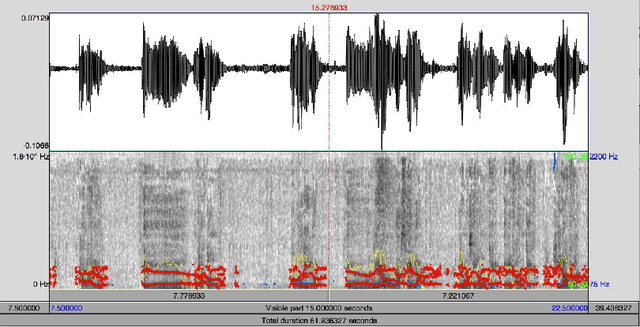
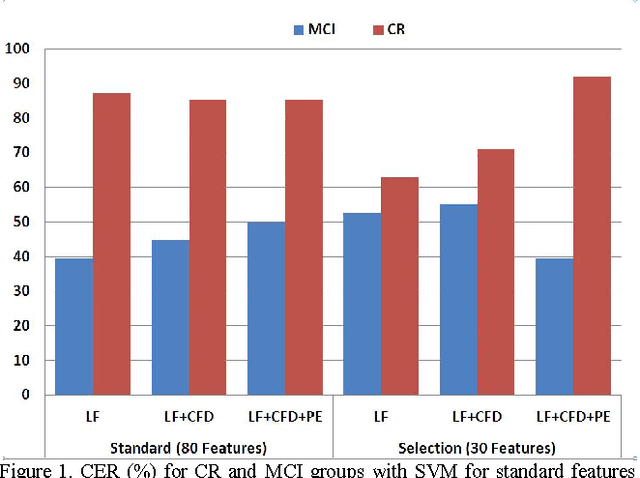
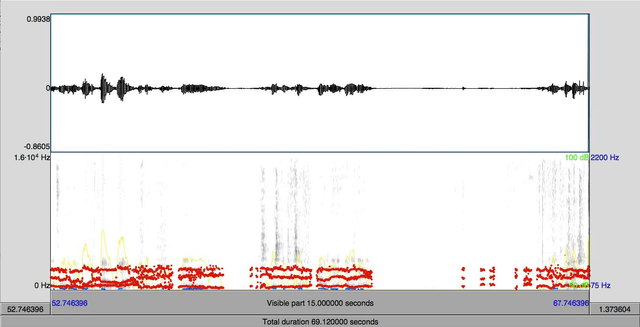
Alzheimer's disease (AD) is one the main causes of dementia in the world and the patients develop severe disability and sometime full dependence. In previous stages Mild Cognitive Impairment (MCI) produces cognitive loss but not severe enough to interfere with daily life. This work, on selection of biomarkers from speech for the detection of AD, is part of a wide-ranging cross study for the diagnosis of Alzheimer. Specifically in this work a task for detection of MCI has been used. The task analyzes Categorical Verbal Fluency. The automatic classification is carried out by SVM over classical linear features, Castiglioni fractal dimension and Permutation Entropy. Finally the most relevant features are selected by ANOVA test. The promising results are over 50% for MCI
* 4 pages, published in 2015 4th International Work Conference on Bioinspired Intelligence (IWOBI), pp. 101-104

Selection of entropy based features for the analysis of the Archimedes' spiral applied to essential tremor
Mar 18, 2022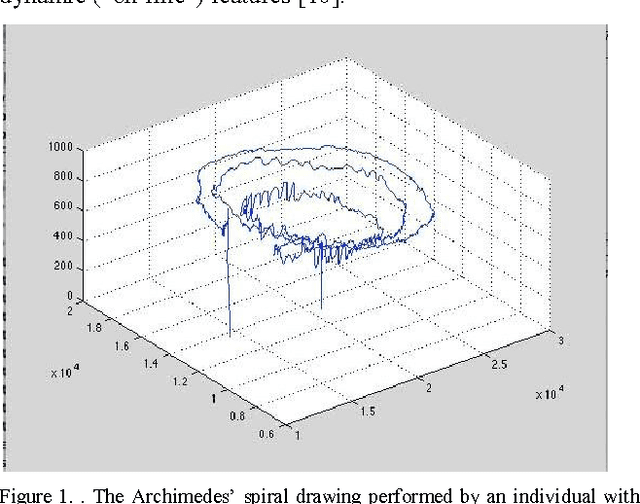
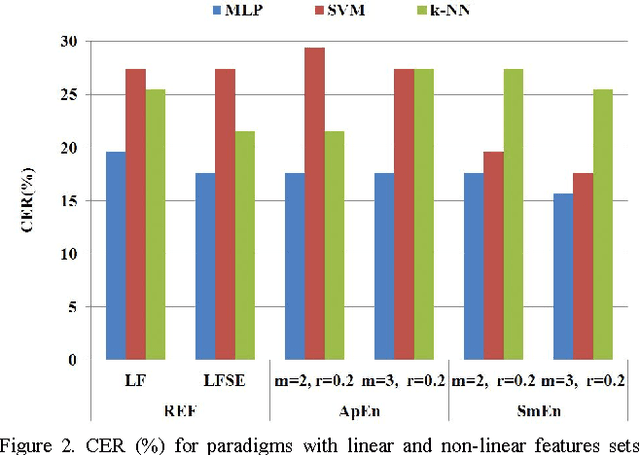
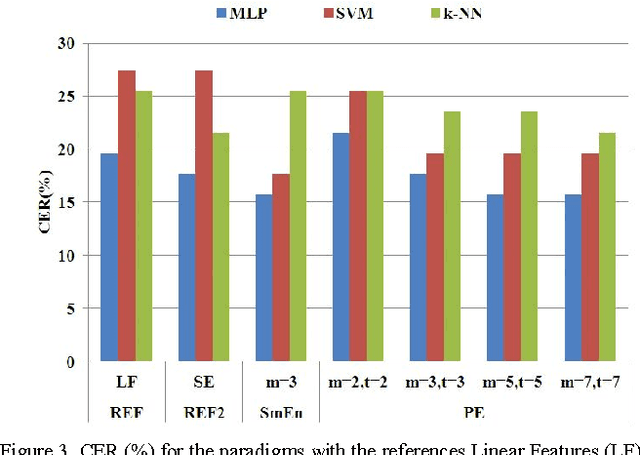
Biomedical systems are regulated by interacting mechanisms that operate across multiple spatial and temporal scales and produce biosignals with linear and non-linear information inside. In this sense entropy could provide a useful measure about disorder in the system, lack of information in time-series and/or irregularity of the signals. Essential tremor (ET) is the most common movement disorder, being 20 times more common than Parkinson's disease, and 50-70% of this disease cases are estimated to be genetic in origin. Archimedes spiral drawing is one of the most used standard tests for clinical diagnosis. This work, on selection of nonlinear biomarkers from drawings and handwriting, is part of a wide-ranging cross study for the diagnosis of essential tremor in BioDonostia Health Institute. Several entropy algorithms are used to generate nonlinear feayures. The automatic analysis system consists of several Machine Learning paradigms.
* 5 pages, published in 2015 4th International Work Conference on Bioinspired Intelligence ,IWOBI, 2015, pp. 157-162
Contribution of Different Handwriting Modalities to Differential Diagnosis of Parkinson's Disease
Mar 18, 2022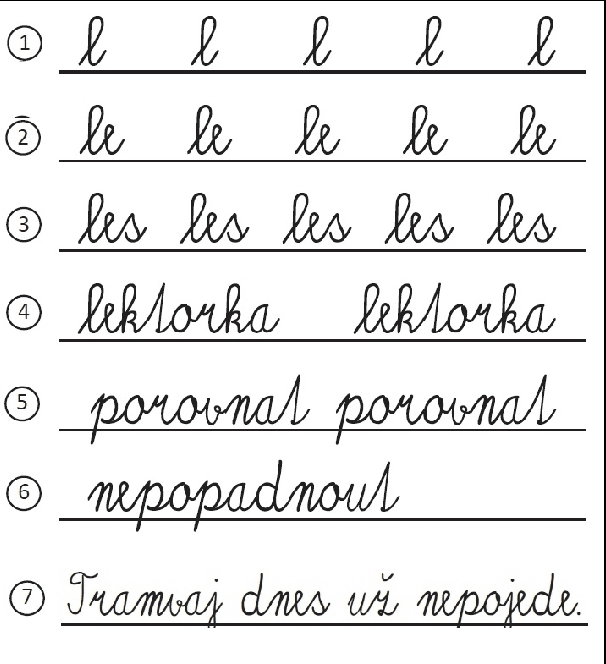
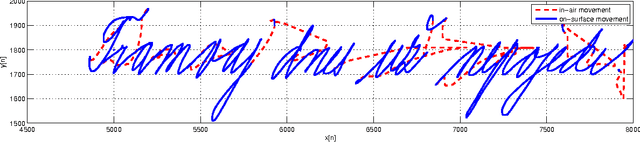
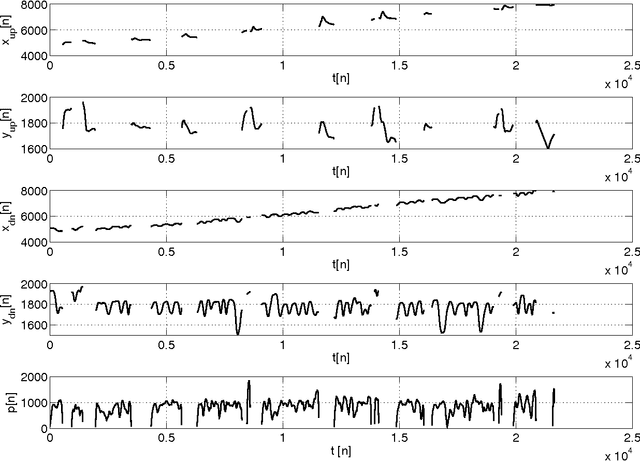
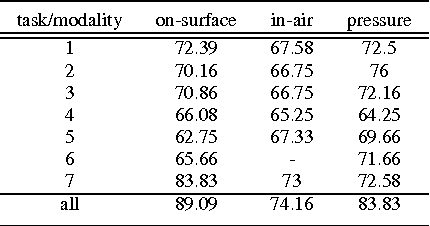
In this paper, we evaluate the contribution of different handwriting modalities to the diagnosis of Parkinson's disease. We analyse on-surface movement, in-air movement and pressure exerted on the tablet surface. Especially in-air movement and pressure-based features have been rarely taken into account in previous studies. We show that pressure and in-air movement also possess information that is relevant for the diagnosis of Parkinson's Disease (PD) from handwriting. In addition to the conventional kinematic and spatio-temporal features, we present a group of the novel features based on entropy and empirical mode decomposition of the handwriting signal. The presented results indicate that handwriting can be used as biomarker for PD providing classification performance around 89% area under the ROC curve (AUC) for PD classification.
* The work was published by IEEE
Gender classification by means of online uppercase handwriting: A text-dependent allographic approach
Mar 18, 2022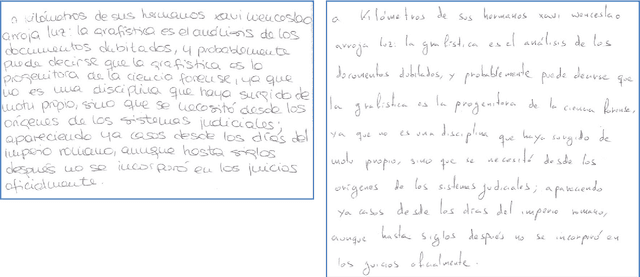
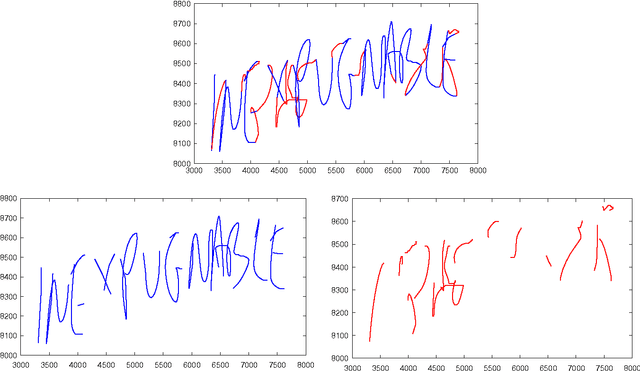
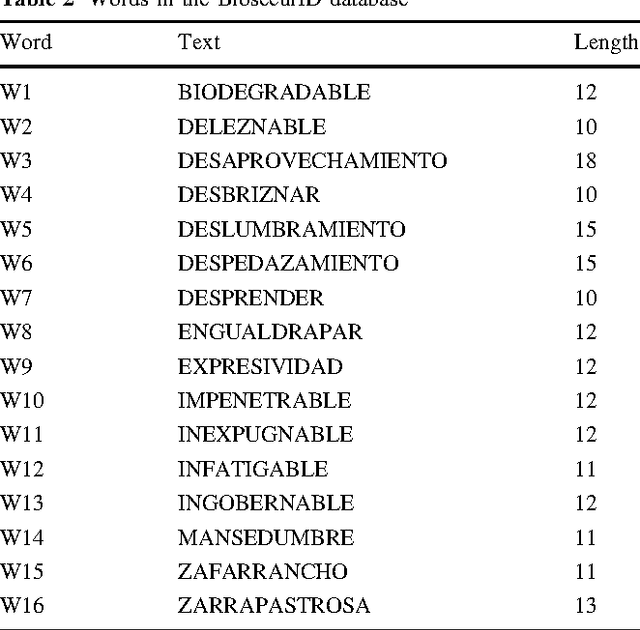
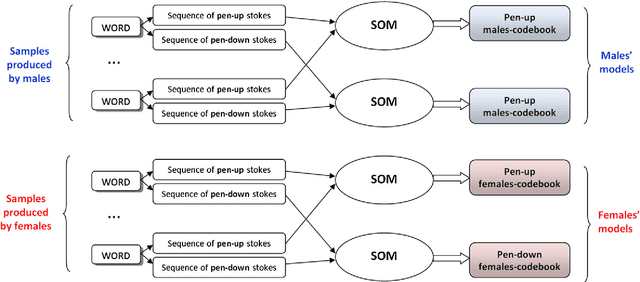
This paper presents a gender classification schema based on online handwriting. Using samples acquired with a digital tablet that captures the dynamics of the writing, it classifies the writer as a male or a female. The method proposed is allographic, regarding strokes as the structural units of handwriting. Strokes performed while the writing device is not exerting any pressure on the writing surface, pen-up (in-air) strokes, are also taken into account. The method is also text-dependent meaning that training and testing is done with exactly the same text. Text-dependency allows classification be performed with very small amounts of text. Experimentation, performed with samples from the BiosecurID database, yields results that fall in the range of the classification averages expected from human judges. With only four repetitions of a single uppercase word, the average rate of well classified writers is 68%; with sixteen words, the rate rises to an average 72.6%. Statistical analysis reveals that the aforementioned rates are highly significant. In order to explore the classification potential of the pen-up strokes, these are also considered. Although in this case results are not conclusive, an outstanding average of 74% of well classified writers is obtained when information from pen-up strokes is combined with information from pen-down ones.
* 25 pages, published in Cogn Comput 8, pages 15 to 29, year 2016
Robust and Complex Approach of Pathological Speech Signal Analysis
Mar 17, 2022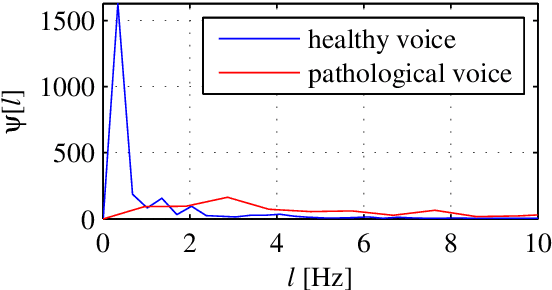
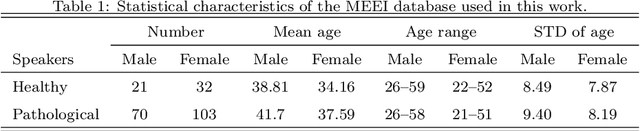
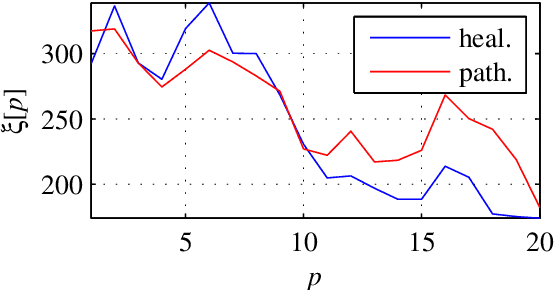
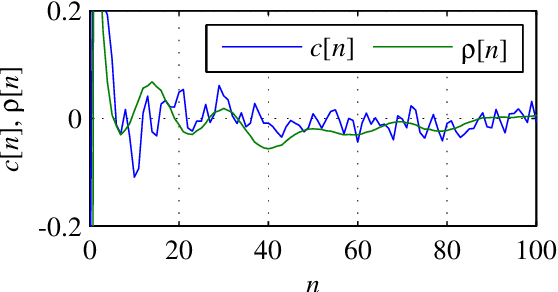
This paper presents a study of the approaches in the state-of-the-art in the field of pathological speech signal analysis with a special focus on parametrization techniques. It provides a description of 92 speech features where some of them are already widely used in this field of science and some of them have not been tried yet (they come from different areas of speech signal processing like speech recognition or coding). As an original contribution, this work introduces 36 completely new pathological voice measures based on modulation spectra, inferior colliculus coefficients, bicepstrum, sample and approximate entropy and empirical mode decomposition. The significance of these features was tested on 3 (English, Spanish and Czech) pathological voice databases with respect to classification accuracy, sensitivity and specificity.
* 41 pages, published in Neurocomputing, Volume 167, 2015, Pages 94-111, ISSN 0925-2312
Assessing Progress of Parkinson s Disease Using Acoustic Analysis of Phonation
Mar 17, 2022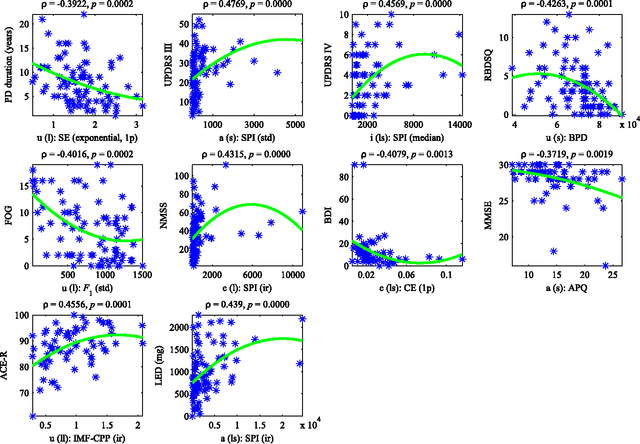
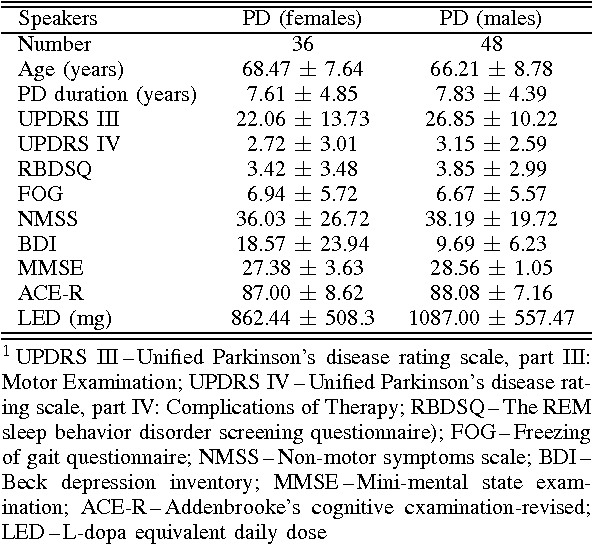
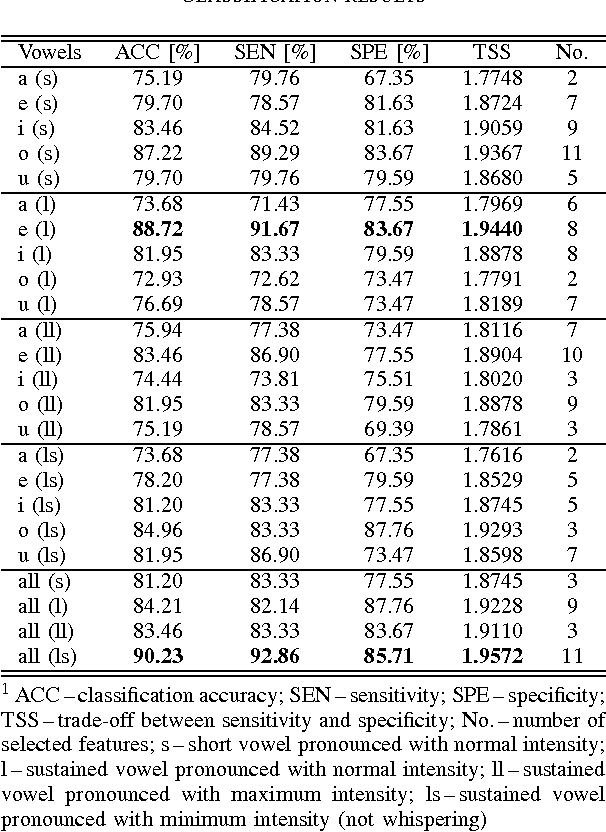
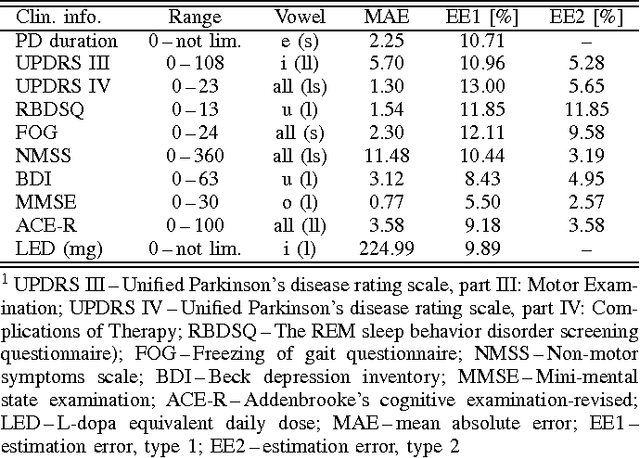
This paper deals with a complex acoustic analysis of phonation in patients with Parkinson's disease (PD) with a special focus on estimation of disease progress that is described by 7 different clinical scales ,e. g. Unified Parkinson's disease rating scale or Beck depression inventory. The analysis is based on parametrization of 5 Czech vowels pronounced by 84 PD patients. Using classification and regression trees we estimated all clinical scores with maximal error lower or equal to 13 %. Best estimation was observed in the case of Mini-mental state examination (MAE = 0.77, estimation error 5.50 %. Finally, we proposed a binary classification based on random forests that is able to identify Parkinson's disease with sensitivity SEN = 92.86 % (SPE = 85.71 %). The parametrization process was based on extraction of 107 speech features quantifying different clinical signs of hypokinetic dysarthria present in PD.
* 8 pages published in the 4th IEEE IWOBI 2015, pp. 115-122, 10-12 June, 2015 Donostia-San Sebastian. ISBN: 978-84-606-8733-7
Speaker recognition using residual signal of linear and nonlinear prediction models
Mar 17, 2022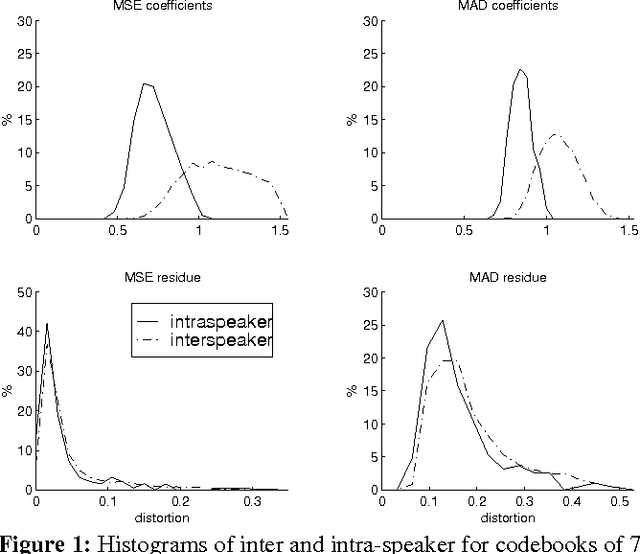
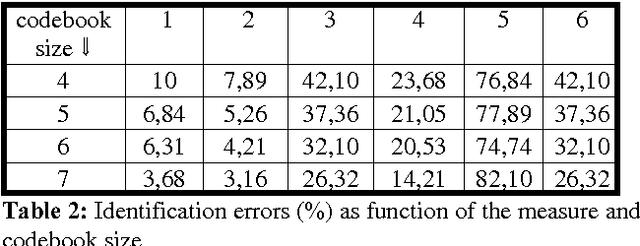
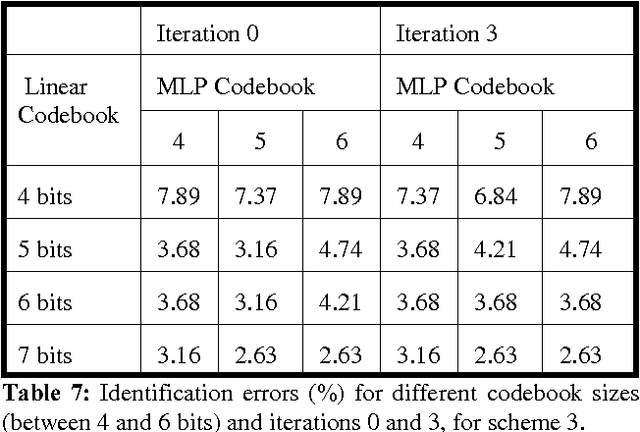
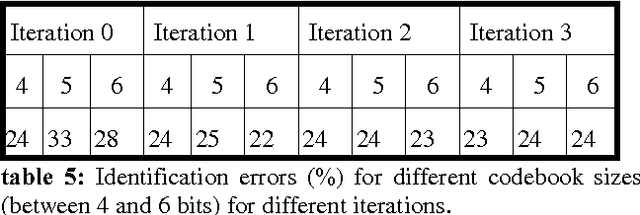
This Paper discusses the usefulness of the residual signal for speaker recognition. It is shown that the combination of both a measure defined over LPCC coefficients and a measure defined over the energy of the residual signal gives rise to an improvement over the classical method which considers only the LPCC coefficients. If the residual signal is obtained from a linear prediction analysis, the improvement is 2.63% (error rate drops from 6.31% to 3.68%) and if it is computed through a nonlinear predictive neural nets based model, the improvement is 3.68%.
* 4 pages, published in 5th International Conference on spoken language processing. Vol.2 pp.121-124. ICSLP 1998. ISBN 1-876346-17-5
Multi-focus thermal image fusion
Mar 16, 2022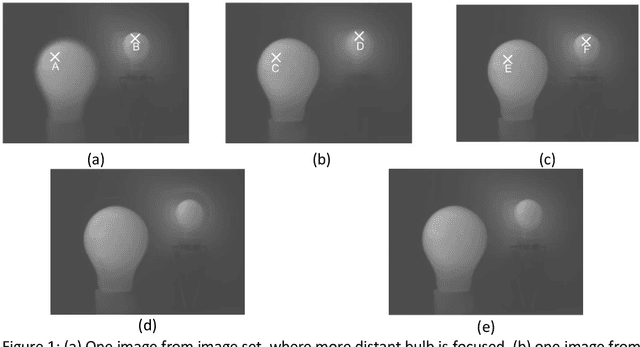
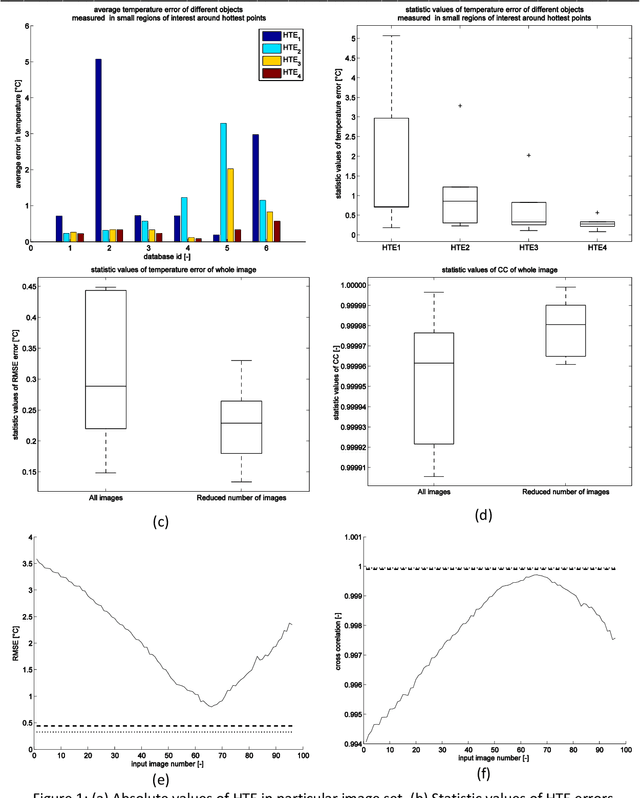
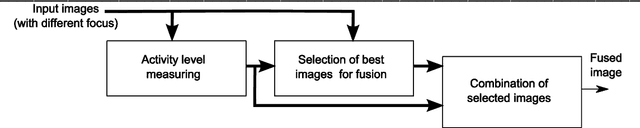
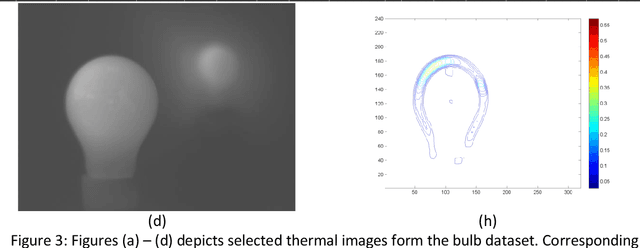
This paper proposes a novel algorithm for multi-focus thermal image fusion. The algorithm is based on local activity analysis and advanced pre-selection of images into fusion process. The algorithm improves the object temperature measurement error up to 5 Celsius degrees. The proposed algorithm is evaluated by half total error rate, root mean squared error, cross correlation and visual inspection. To the best of our knowledge, this is the first work devoted to multi-focus thermal image fusion. For testing of proposed algorithm we acquire six thermal image set with objects at different focal depth.
* 16 pages, published in Pattern Recognition Letters, Volume 34, Issue 5, 2013, Pages 536-544, ISSN 0167-8655
On the focusing of thermal images
Mar 15, 2022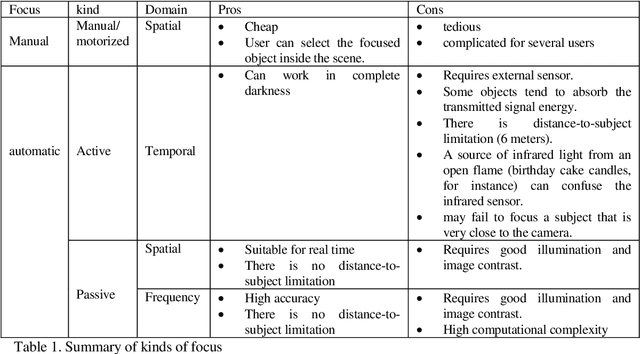
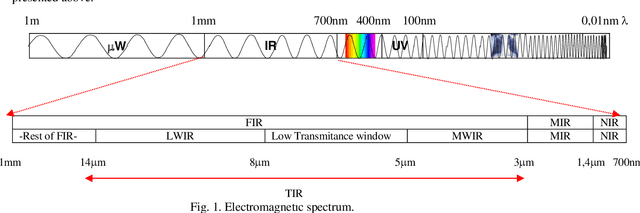
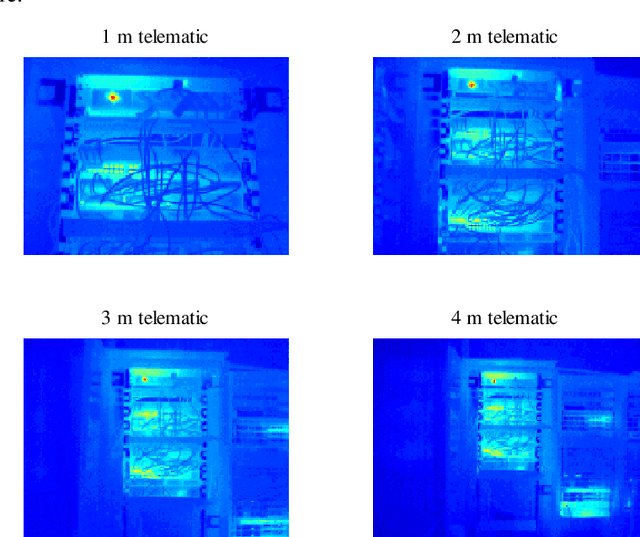
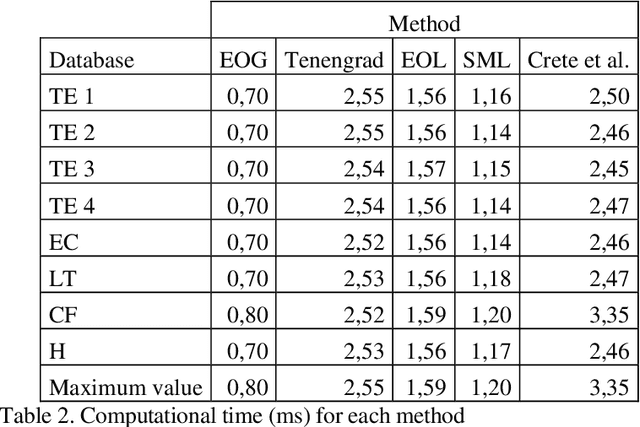
In this paper we present a new thermographic image database suitable for the analysis of automatic focus measures. This database consists of 8 different sets of scenes, where each scene contains one image for 96 different focus positions. Using this database we evaluate the usefulness of six focus measures with the goal to determine the optimal focus position. Experimental results reveal that an accurate automatic detection of optimal focus position is possible, even with a low computational burden. We also present an acquisition tool able to help the acquisition of thermal images. To the best of our knowledge, this is the first study about automatic focus of thermal images.
* 11 pages, published in Pattern Recognition Letters, Volume 32, Issue 11, 2011, Pages 1548-1557
Speech watermarking: an approach for the forensic analysis of digital telephonic recordings
Mar 12, 2022
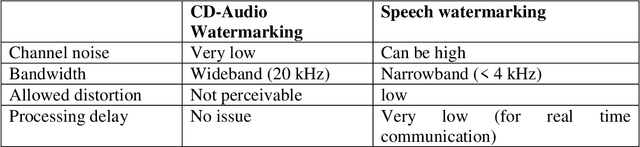
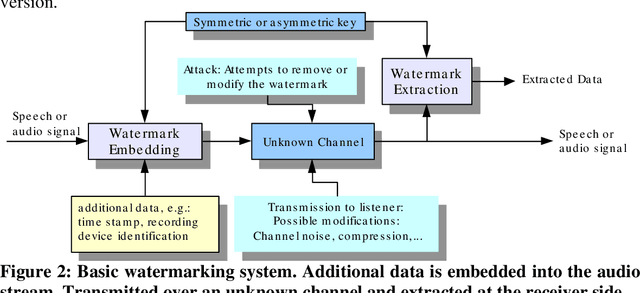
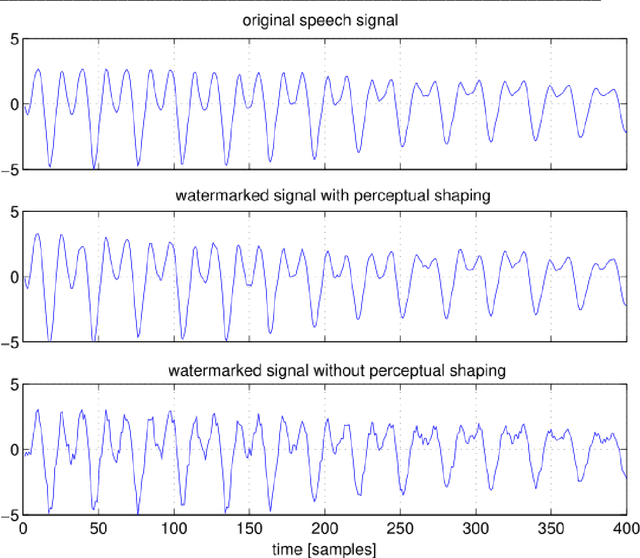
In this article, the authors discuss the problem of forensic authentication of digital audio recordings. Although forensic audio has been addressed in several articles, the existing approaches are focused on analog magnetic recordings, which are less prevalent because of the large amount of digital recorders available on the market (optical, solid state, hard disks, etc.). An approach based on digital signal processing that consists of spread spectrum techniques for speech watermarking is presented. This approach presents the advantage that the authentication is based on the signal itself rather than the recording format. Thus, it is valid for usual recording devices in police-controlled telephone intercepts. In addition, our proposal allows for the introduction of relevant information such as the recording date and time and all the relevant data (this is not always possible with classical systems). Our experimental results reveal that the speech watermarking procedure does not interfere in a significant way with the posterior forensic speaker identification.
* 15 pages