 Add to Chrome
 Add to Firefox
 Add to Edge
Dynamics of information flow and engaging power of narratives in the polarised debate on vaccines
Jul 25, 2022
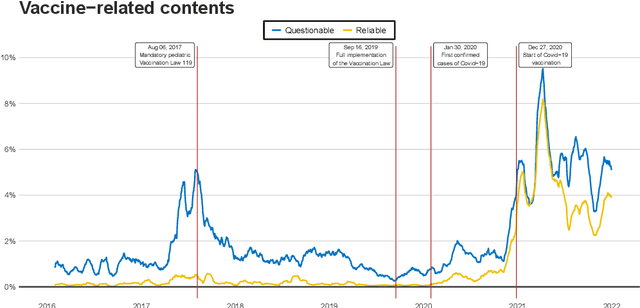
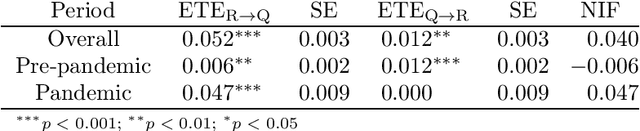
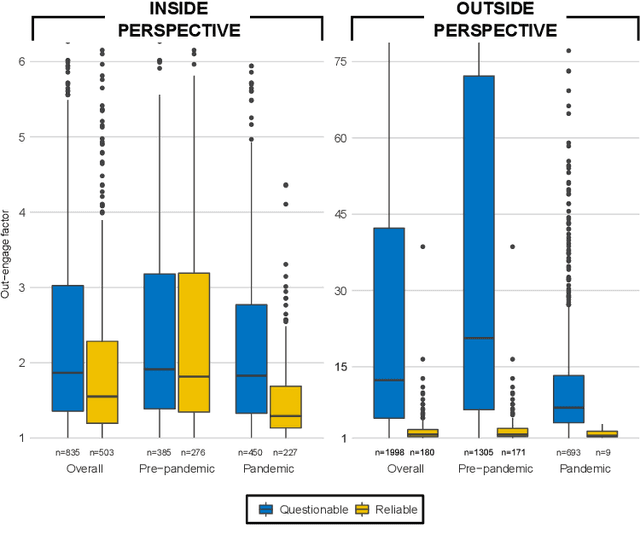
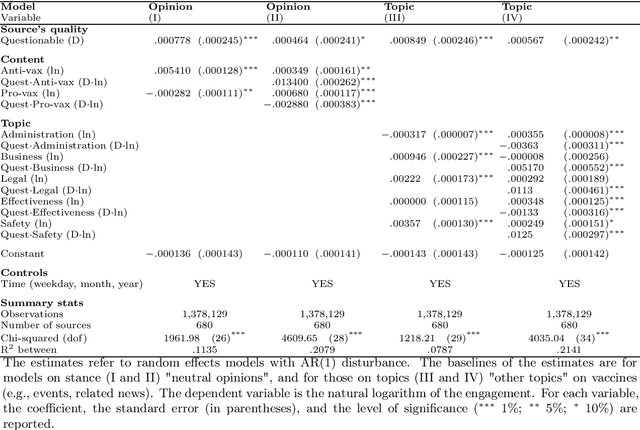
In this study we approach the complexity of the vaccine debate from a new and comprehensive perspective. Focusing on the Italian context, we examine almost all the online information produced in the 2016-2021 timeframe by both sources that have a reputation for misinformation and those that do not. Although reliable sources can rely on larger newsrooms and cover more news than misinformation ones, the transfer entropy analysis of the corresponding time series reveals that the former have not always informationally dominated the latter on the vaccine subject. Indeed, the pre-pandemic period sees misinformation establish itself as leader of the process, even in causal terms, and gain dramatically more user engagement than news from reliable sources. Despite this information gap was filled during the Covid-19 outbreak, the newfound leading role of reliable sources as drivers of the information ecosystem has only partially had a beneficial effect in reducing user engagement with misinformation on vaccines. Our results indeed show that, except for effectiveness of vaccination, reliable sources have never adequately countered the anti-vax narrative, specially in the pre-pandemic period, thus contributing to exacerbate science denial and belief in conspiracy theories. At the same time, however, they confirm the efficacy of assiduously proposing a convincing counter-narrative to misinformation spread. Indeed, effectiveness of vaccination turns out to be the least engaging topic discussed by misinformation during the pandemic period, when compared to other polarising arguments such as safety concerns, legal issues and vaccine business. By highlighting the strengths and weaknesses of institutional and mainstream communication, our findings can be a valuable asset for improving and better targeting campaigns against misinformation on vaccines.

Gender stereotypes in the mediated personalization of politics: Empirical evidence from a lexical, syntactic and sentiment analysis
Feb 07, 2022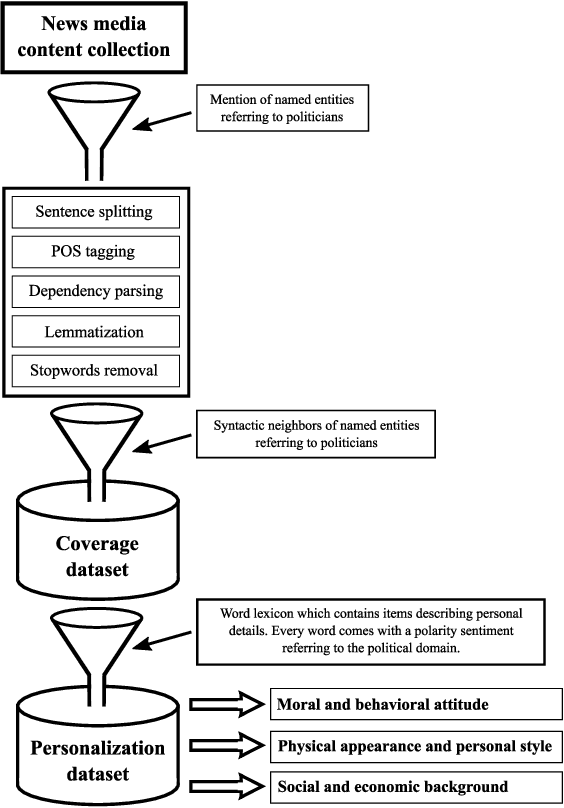
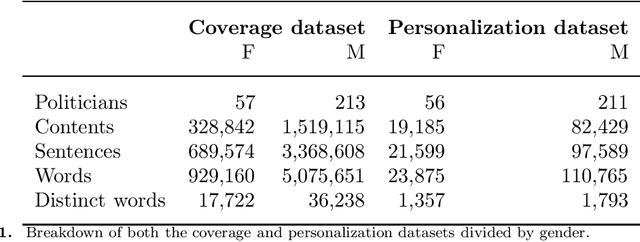
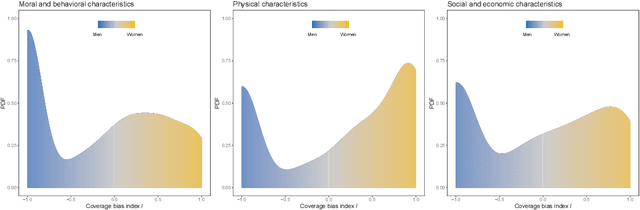
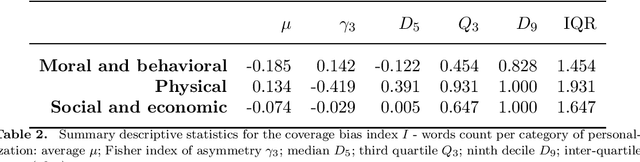
The media attention to the personal sphere of famous and important individuals has become a key element of the gender narrative. Here we combine lexical, syntactic and sentiment analysis to investigate the role of gender in the personalization of a wide range of political office holders in Italy during the period 2017-2020. On the basis of a score for words that is introduced to account for gender unbalance in both representative and news coverage, we show that the political personalization in Italy is more detrimental for women than men, with the persistence of entrenched stereotypes including a masculine connotation of leadership, the resulting women's unsuitability to hold political functions, and a greater deal of focus on their attractiveness and body parts. In addition, women politicians are covered with a more negative tone than their men counterpart when personal details are reported. Further, the major contribution to the observed gender differences comes from online news rather than print news, suggesting that the expression of certain stereotypes may be better conveyed when click baiting and personal targeting have a major impact.
Regulating AI: do we need new tools?
Apr 27, 2019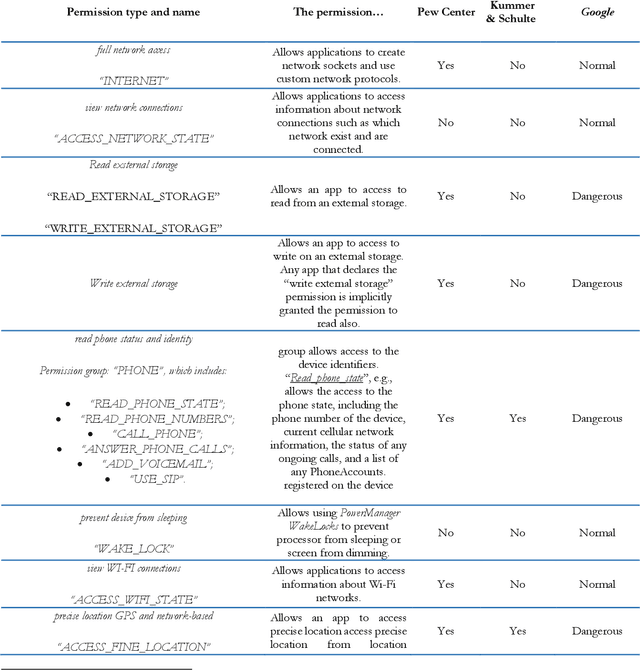
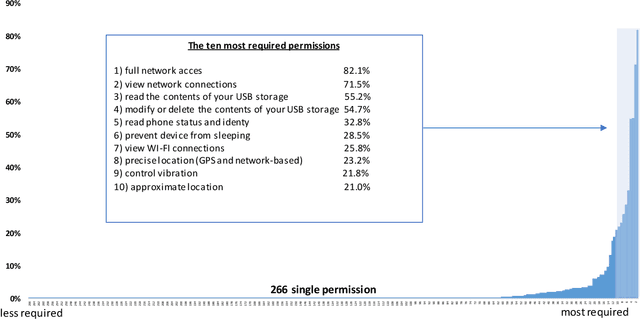


The Artificial Intelligence paradigm (hereinafter referred to as "AI") builds on the analysis of data able, among other things, to snap pictures of the individuals' behaviors and preferences. Such data represent the most valuable currency in the digital ecosystem, where their value derives from their being a fundamental asset in order to train machines with a view to developing AI applications. In this environment, online providers attract users by offering them services for free and getting in exchange data generated right through the usage of such services. This swap, characterized by an implicit nature, constitutes the focus of the present paper, in the light of the disequilibria, as well as market failures, that it may bring about. We use mobile apps and the related permission system as an ideal environment to explore, via econometric tools, those issues. The results, stemming from a dataset of over one million observations, show that both buyers and sellers are aware that access to digital services implicitly implies an exchange of data, although this does not have a considerable impact neither on the level of downloads (demand), nor on the level of the prices (supply). In other words, the implicit nature of this exchange does not allow market indicators to work efficiently. We conclude that current policies (e.g. transparency rules) may be inherently biased and we put forward suggestions for a new approach.