 Add to Chrome
 Add to Firefox
 Add to Edge
The Many-Body Problem of the Data Centre
Jun 29, 2026
Modern Artificial Intelligence is often framed as limited by its own disembodiment, as if giving it a body would unlock its true potential. We argue to the contrary that it is the Data Centre that is, in many cases, the body of the AI. At the same time, the Data Centre is part of the labouring body of Capital and possesses staggering organismic qualities when seen through a biological lens. We elucidate the organic analogy and identify the many-body problem that stems from the Data Centre being a non-unique, universal form of embodiment. We identify the intimate connection between computation and human desires in how the Data Centre archives, serves, and computes on data born to the desires of humans. Strikingly, while the Data Centre echoes the ghosts of human desires, it acts without desire of its own. The organismic analogy begins to split at its seams, but Capital does not care. Automata and human labour are priced into the market much the same. We argue that through the pricing of artificial intelligence Capital distils most clearly the value of intelligence and allows for its comparison across the organism - mechanism divide.

LLM Voting: Human Choices and AI Collective Decision Making
Jan 31, 2024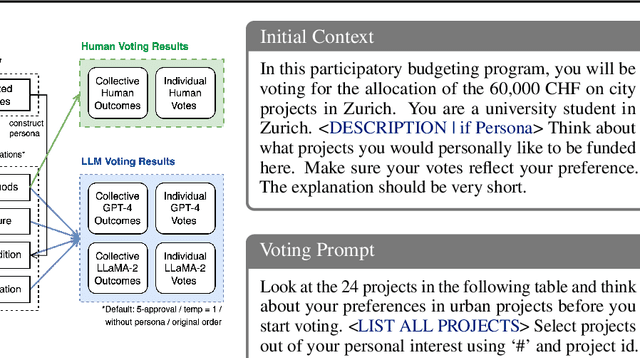
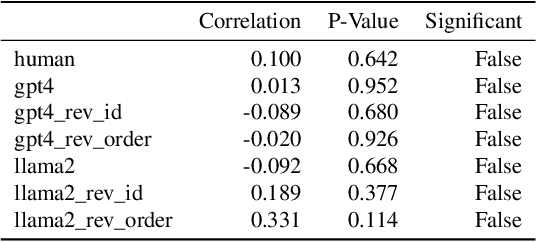
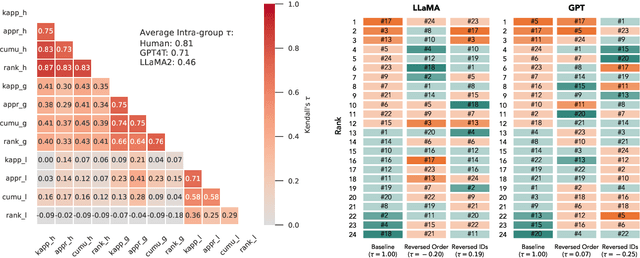
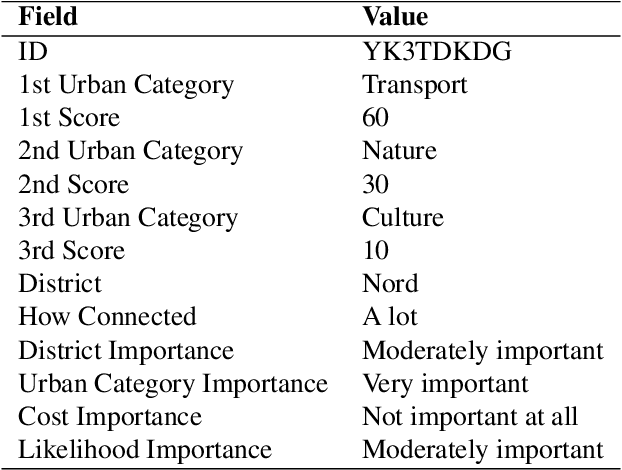
This paper investigates the voting behaviors of Large Language Models (LLMs), particularly OpenAI's GPT4 and LLaMA2, and their alignment with human voting patterns. Our approach included a human voting experiment to establish a baseline for human preferences and a parallel experiment with LLM agents. The study focused on both collective outcomes and individual preferences, revealing differences in decision-making and inherent biases between humans and LLMs. We observed a trade-off between preference diversity and alignment in LLMs, with a tendency towards more uniform choices as compared to the diverse preferences of human voters. This finding indicates that LLMs could lead to more homogenized collective outcomes when used in voting assistance, underscoring the need for cautious integration of LLMs into democratic processes.
Biospheric AI
Jan 31, 2024The dominant paradigm in AI ethics and value alignment is highly anthropocentric. The focus of these disciplines is strictly on human values which limits the depth and breadth of their insights. Recently, attempts to expand to a sentientist perspective have been initiated. We argue that neither of these outlooks is sufficient to capture the actual complexity of the biosphere and ensure that AI does not damage it. Thus, we propose a new paradigm -- Biospheric AI that assumes an ecocentric perspective. We discuss hypothetical ways in which such an AI might be designed. Moreover, we give directions for research and application of the modern AI models that would be consistent with the biospheric interests. All in all, this work attempts to take first steps towards a comprehensive program of research that focuses on the interactions between AI and the biosphere.
Dynamic value alignment through preference aggregation of multiple objectives
Oct 09, 2023The development of ethical AI systems is currently geared toward setting objective functions that align with human objectives. However, finding such functions remains a research challenge, while in RL, setting rewards by hand is a fairly standard approach. We present a methodology for dynamic value alignment, where the values that are to be aligned with are dynamically changing, using a multiple-objective approach. We apply this approach to extend Deep $Q$-Learning to accommodate multiple objectives and evaluate this method on a simplified two-leg intersection controlled by a switching agent.Our approach dynamically accommodates the preferences of drivers on the system and achieves better overall performance across three metrics (speeds, stops, and waits) while integrating objectives that have competing or conflicting actions.