 Add to Chrome
 Add to Firefox
 Add to Edge
PAIChecker: Uncovering and Checking PR-Issue Misalignment in SWE-Bench-Like Benchmarks
Jul 30, 2026
SWE-bench-like benchmarks are widely used for evaluating LLM's issue resolution capability. They typically follow a common construction pipeline: each PR (Pull Request) is paired with its linked issue by extracting issue references from the PR description; the issue description is used as the problem statement, and the PR patch serves as the test oracle. However, due to the inherent complexity of developing and maintaining large repositories, such PR-Issue pairings are often misaligned in practice. In this work, we systematically study SWE-bench Verified instances, finding that 13.6% exhibit misalignment across five patterns in eleven fine-grained scenarios. To enable reliable and scalable construction of those benchmarks in the future, we propose PAIChecker, a multi-agent system for checking PR-Issue misalignment in SWE-bench-like benchmarks. Specifically, PAIChecker adopts a three-phase design that combines specific pattern identification, cross-agent label synthesis, and code-level validation, thereby enabling more accurate, generalizable, and progressively verified detection. Experiments on SWE-Gym and SWE-bench Multilingual show that PAIchecker achieves the best performance across all four LLM backbones, reaching up to 92.12% and 91.67% binary accuracy, respectively.

Three-Dimensional Dynamic Modeling and Motion Analysis for an Active-Tail-Actuated Robotic Fish with Barycentre Regulating Mechanism
Jun 23, 2020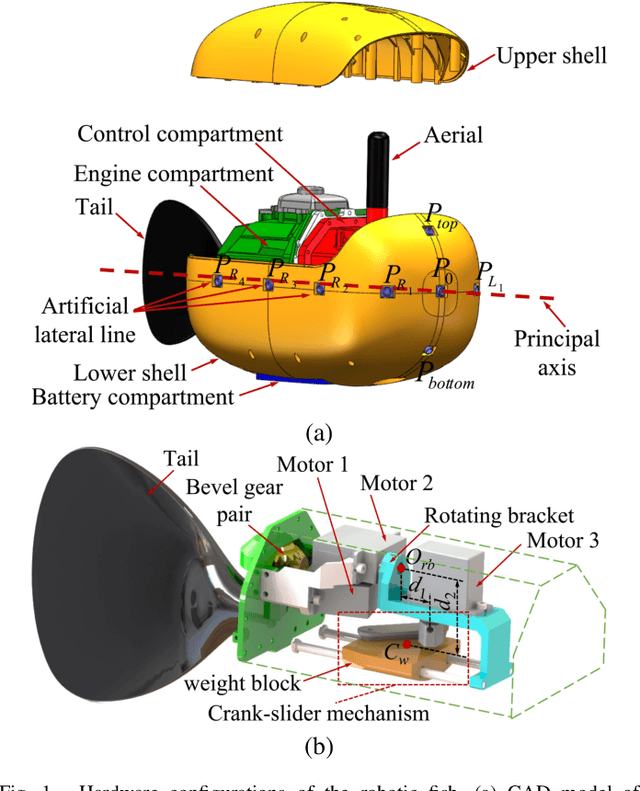
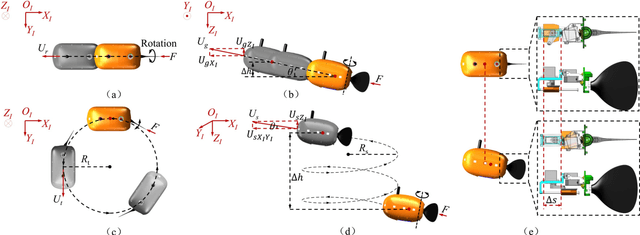
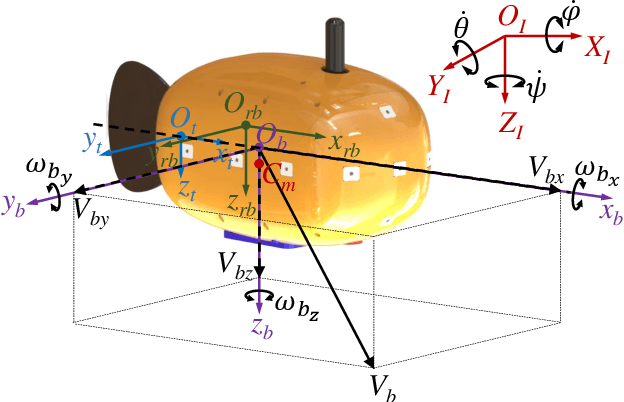
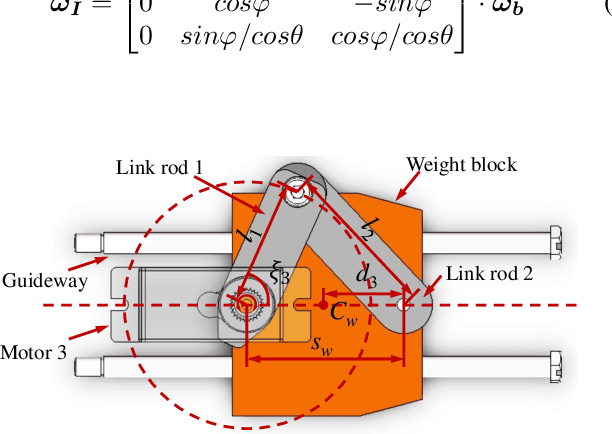
Dynamic modeling has been capturing attention for its fundamentality in precise locomotion analyses and control of underwater robots. However, the existing researches have mainly focused on investigating two-dimensional motion of underwater robots, and little attention has been paid to three-dimensional dynamic modeling, which is just what we focus on. In this article, a three-dimensional dynamic model of an active-tail-actuated robotic fish with a barycentre regulating mechanism is built by combining Newton's second law for linear motion and Euler's equation for angular motion. The model parameters are determined by three-dimensional computer-aided design (CAD) software SolidWorks, HyperFlow-based computational fluid dynamics (CFD) simulation, and grey-box model estimation method. Both kinematic experiments with a prototype and numerical simulations are applied to validate the accuracy of the dynamic model mutually. Based on the dynamic model, multiple three-dimensional motions, including rectilinear motion, turning motion, gliding motion, and spiral motion, are analyzed. The experimental and simulation results demonstrate the effectiveness of the proposed model in evaluating the trajectory, attitude, and motion parameters, including the velocity, turning radius, angular velocity, etc., of the robotic fish.