 Add to Chrome
 Add to Firefox
 Add to Edge
Where Do Your Citations Come From? Citation-Constellation: A Free, Open-Source, No-Code, and Auditable Tool for Citation Network Decomposition with Complementary BARON and HEROCON Scores
Mar 25, 2026
Standard citation metrics treat all citations as equal, obscuring the social and structural pathways through which scholarly influence propagates. I introduce Citation-Constellation, a freely available no-code tool for citation network analysis with two complementary bibliometric scores that decompose a researcher's citation profile by network proximity between citing and cited authors. BARON (Boundary-Anchored Research Outreach Network score) is a strict binary metric counting only citations from outside the detected collaborative network. HEROCON (Holistic Equilibrated Research Outreach CONstellation score) applies graduated weights assigning partial credit to in-group citations based on relationship proximity. The gap between scores serves as a diagnostic of inner-circle dependence. An extended abstract with full details appears in the paper. The tool implements this through a phased architecture: (1) self-citation analysis, (2) co-authorship graph traversal, (3) temporal institutional affiliation matching via ROR, and (4) AI-agent-driven venue governance extraction using a local LLM. Phases 1-3 are fully operational; Phase 4 is under development. Key design choices include ORCID-validated author identity resolution, an UNKNOWN classification for citations with insufficient metadata, and comprehensive audit trails documenting every classification decision. A no-code web interface enables researchers to compute scores without programming, installation, or registration. I present these scores as structural diagnostics, not quality indicators. BARON and HEROCON describe where in the social graph citations originate. They should not be used for hiring, promotion, or funding decisions. HEROCON weights are experimental and require empirical calibration.

SHAMSUL: Simultaneous Heatmap-Analysis to investigate Medical Significance Utilizing Local interpretability methods
Jul 16, 2023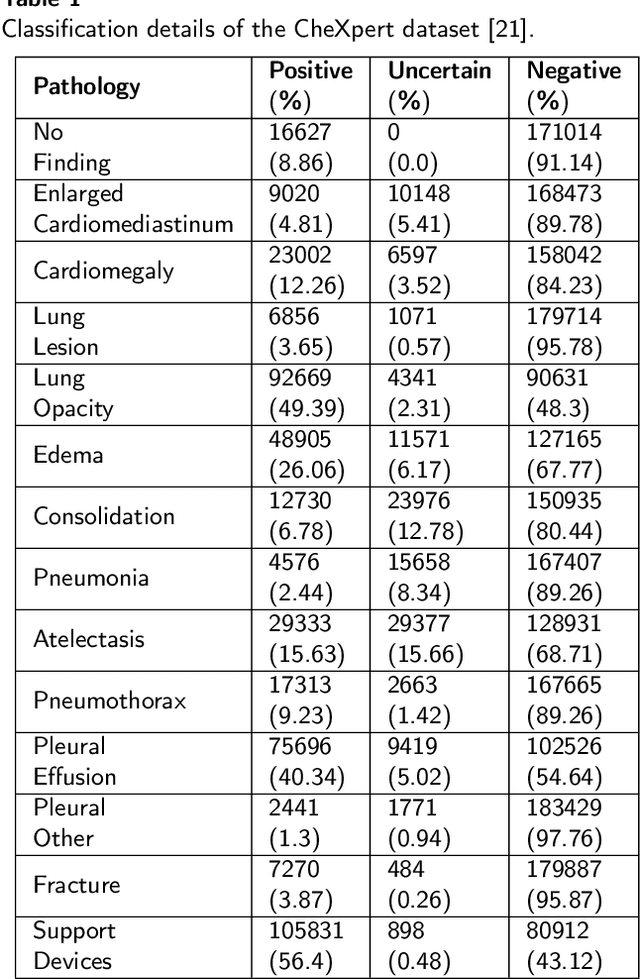
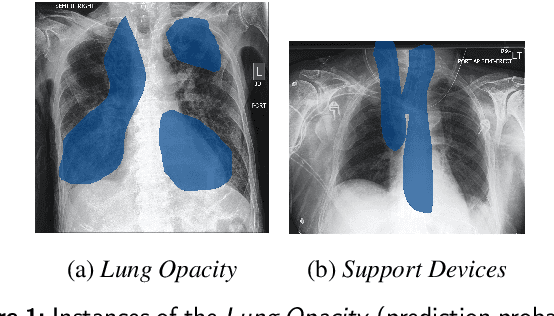


The interpretability of deep neural networks has become a subject of great interest within the medical and healthcare domain. This attention stems from concerns regarding transparency, legal and ethical considerations, and the medical significance of predictions generated by these deep neural networks in clinical decision support systems. To address this matter, our study delves into the application of four well-established interpretability methods: Local Interpretable Model-agnostic Explanations (LIME), Shapley Additive exPlanations (SHAP), Gradient-weighted Class Activation Mapping (Grad-CAM), and Layer-wise Relevance Propagation (LRP). Leveraging the approach of transfer learning with a multi-label-multi-class chest radiography dataset, we aim to interpret predictions pertaining to specific pathology classes. Our analysis encompasses both single-label and multi-label predictions, providing a comprehensive and unbiased assessment through quantitative and qualitative investigations, which are compared against human expert annotation. Notably, Grad-CAM demonstrates the most favorable performance in quantitative evaluation, while the LIME heatmap segmentation visualization exhibits the highest level of medical significance. Our research highlights the strengths and limitations of these interpretability methods and suggests that a multimodal-based approach, incorporating diverse sources of information beyond chest radiography images, could offer additional insights for enhancing interpretability in the medical domain.