 Add to Chrome
 Add to Firefox
 Add to Edge
Blasto-Net: An Explainable Multi-Task Learning for Blastocyst Segmentation, Grading, and Implantation Prediction
Jun 24, 2026
This study introduces Blasto-Net, a multi-task deep learning model for comprehensive blastocyst analysis. The proposed model performs three tasks simultaneously in a single forward pass: segmentation of the ZP, TE, and ICM compartments, morphological grading, and implantation outcome prediction. Accurate blastocyst analysis in in vitro fertilization (IVF) is challenging. The compartments often have similar textures but very different structures. To address these challenges, Blasto-Net employs an EfficientNet-B3 encoder with a UNet-style decoder enhanced by the Convolutional Block Attention Module (CBAM) and a novel Edge-Aware Attention Module (EAAM) to effectively capture both semantic and boundary information. To handle distinct compartment topologies, the network employs specialized segmentation heads and a composite region- and boundary-based loss. Additionally, Grad-CAM++ visualizations are used to verify the anatomical consistency of the model's predictions. Evaluated on a public HMC blastocyst dataset, Blasto-Net achieves Dice scores of 94.93%, 91.60%, and 88.82% for ICM, ZP, and TE, respectively, alongside an implantation F1-score of 80.0%. These results demonstrate that Blasto-Net offers an accurate, interpretable, and efficient solution for automated blastocyst assessment, with strong potential to support clinical decision-making in IVF.

Online Recognition of Actions Involving Objects
Apr 13, 2021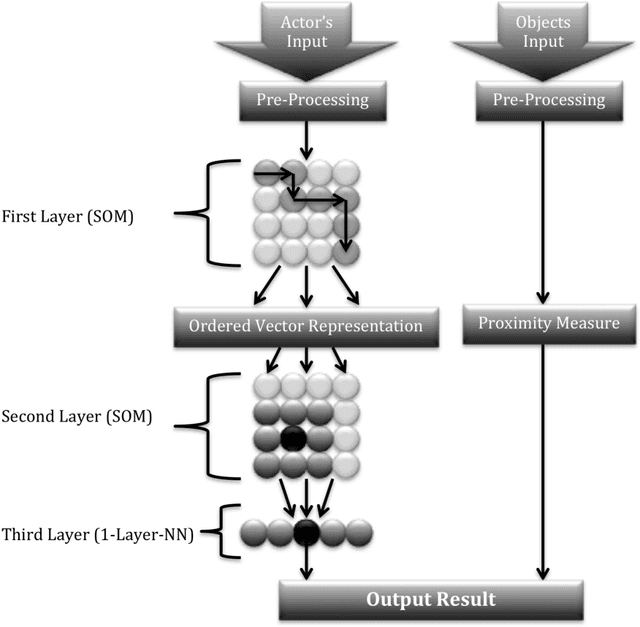
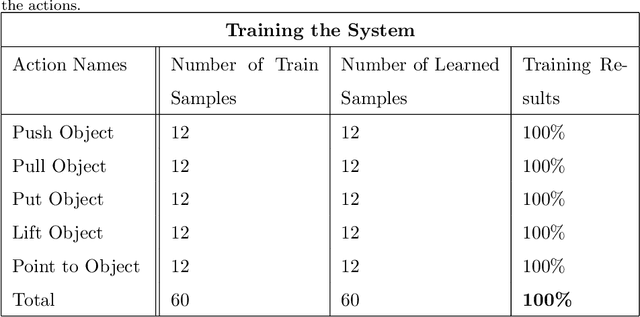
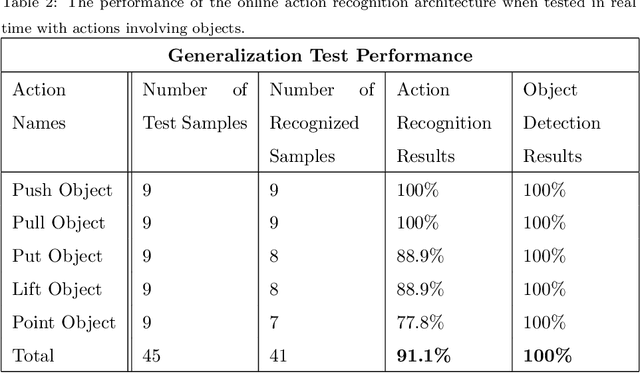
We present an online system for real time recognition of actions involving objects working in online mode. The system merges two streams of information processing running in parallel. One is carried out by a hierarchical self-organizing map (SOM) system that recognizes the performed actions by analysing the spatial trajectories of the agent's movements. It consists of two layers of SOMs and a custom made supervised neural network. The activation sequences in the first layer SOM represent the sequences of significant postures of the agent during the performance of actions. These activation sequences are subsequently recoded and clustered in the second layer SOM, and then labeled by the activity in the third layer custom made supervised neural network. The second information processing stream is carried out by a second system that determines which object among several in the agent's vicinity the action is applied to. This is achieved by applying a proximity measure. The presented method combines the two information processing streams to determine what action the agent performed and on what object. The action recognition system has been tested with excellent performance.
First and Second Order Dynamics in a Hierarchical SOM system for Action Recognition
Apr 13, 2021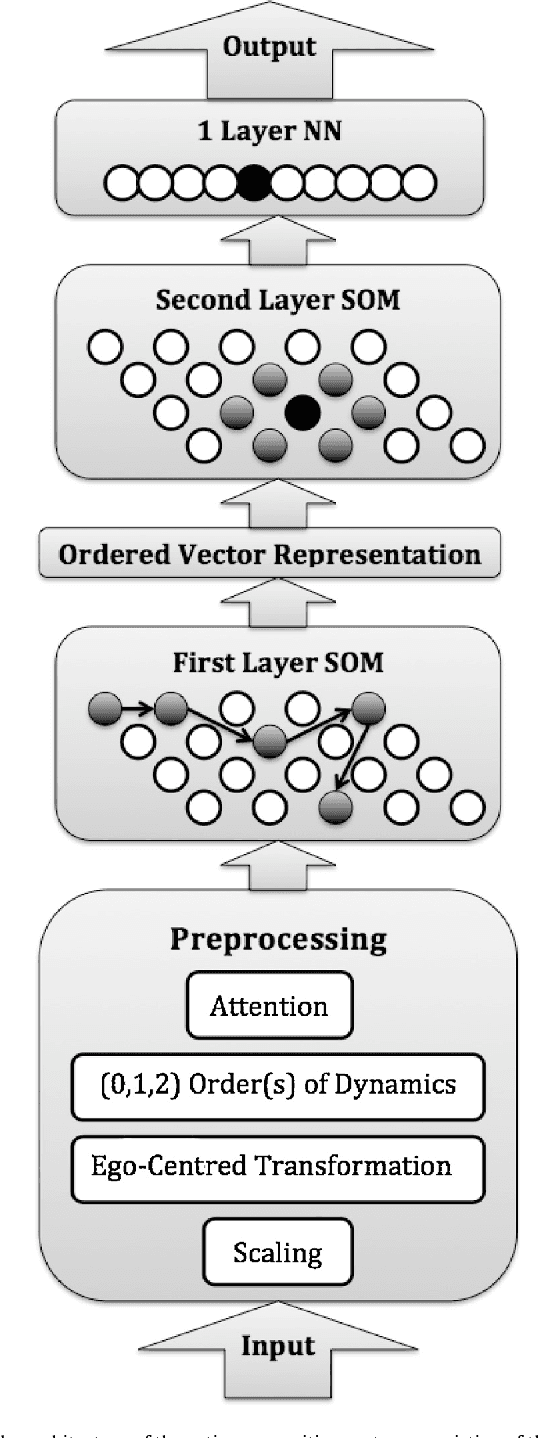
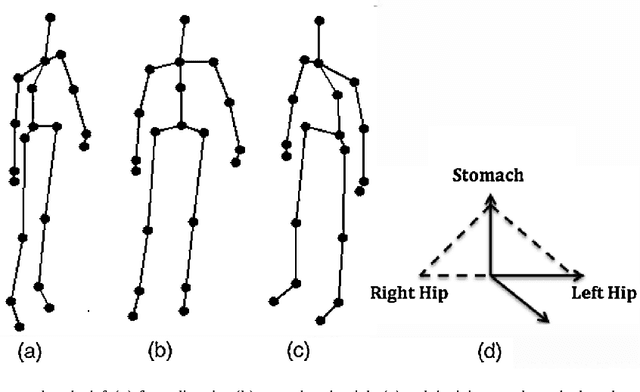
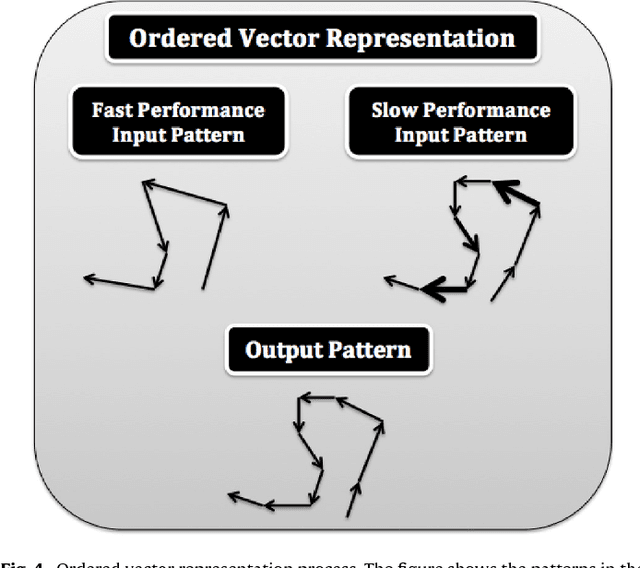
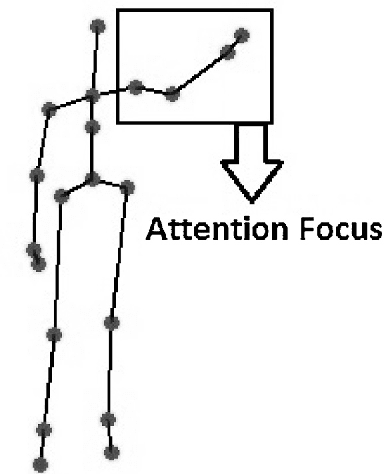
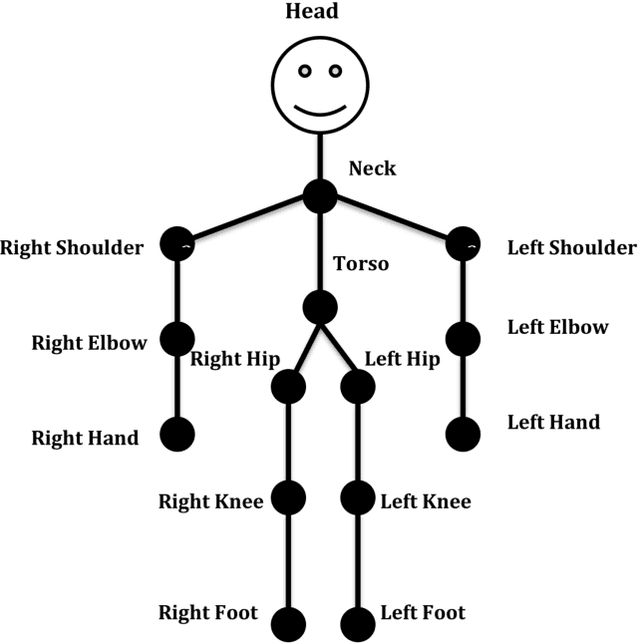
Human recognition of the actions of other humans is very efficient and is based on patterns of movements. Our theoretical starting point is that the dynamics of the joint movements is important to action categorization. On the basis of this theory, we present a novel action recognition system that employs a hierarchy of Self-Organizing Maps together with a custom supervised neural network that learns to categorize actions. The system preprocesses the input from a Kinect like 3D camera to exploit the information not only about joint positions, but also their first and second order dynamics. We evaluate our system in two experiments with publicly available data sets, and compare its performance to the performance with less sophisticated preprocessing of the input. The results show that including the dynamics of the actions improves the performance. We also apply an attention mechanism that focuses on the parts of the body that are the most involved in performing the actions.