 Add to Chrome
 Add to Firefox
 Add to Edge
ProjectionBench: Evaluating Scientific Hypothesis Generation in LLMs Under Progressive Information Disclosure
May 28, 2026
Scientific discovery is an inherently creative and uncertain process, requiring reasoning beyond the recall of known knowledge. While many benchmarks have been proposed to evaluate large language model (LLM) performance on deep research tasks via multi-hop retrieval, their innovative reasoning abilities essential for true scientific discovery remain largely untested. We introduce a benchmark framework for evaluating model performance in scientific discovery and reasoning, building up from a raw problem to the classical null hypothesis test. In our framework, models initially receive only the topic and research question from a recent paper, with technical details progressively revealed. At each stage of information disclosure, the model is tasked with generating hypotheses that address the research question, which is compared with the conclusions from the original paper and evaluated via automated semantic similarity of constituent atomic claims. This progressive evaluation of semantic divergence from ground-truth conclusions enables assessment of a model's innovativeness (under minimal information) to grounded reasoning capabilities (under full experimental details), both critical for using LLMs for scientific discovery purposes. Our framework provides a foundation for systematically evaluating scientific reasoning and discovery capabilities in LLMs, crucial for advancing the development of next-generation AI scientist/co-scientist systems. Specifically, here we evaluate GPT-5, GPT-5.4, Gemini 2.5 pro, and Gemini 3.1 pro preview across 45 papers spanning bioactive materials, mechanical materials, and nanomaterials. We find that GPT-5.4 and Gemini 3.1 pro outperform their previous generation counterparts as expected, and GPT-5.4 in particular maintains 0.7 F1 score alignment with ground truth conclusions even under minimal context.

ProtAgents: Protein discovery via large language model multi-agent collaborations combining physics and machine learning
Jan 27, 2024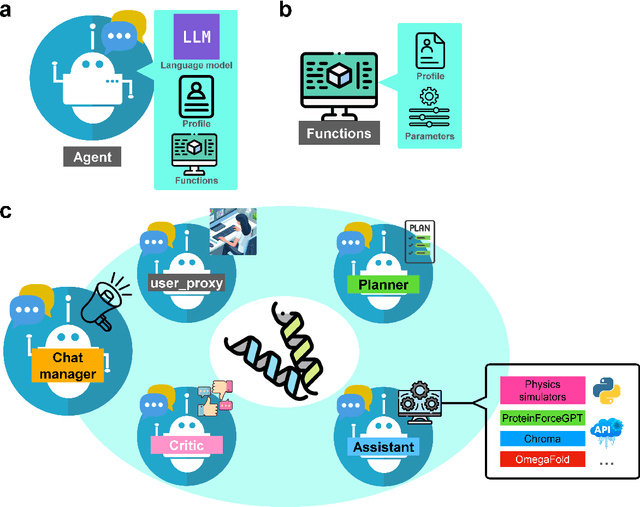
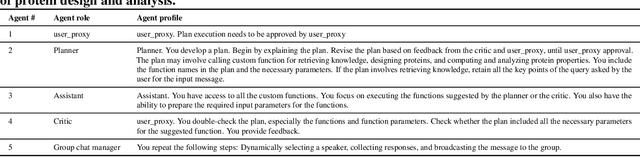
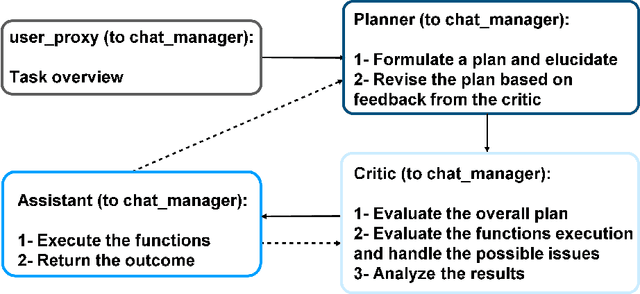
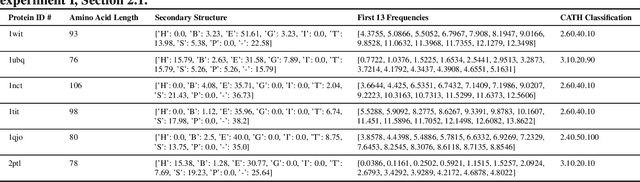
Designing de novo proteins beyond those found in nature holds significant promise for advancements in both scientific and engineering applications. Current methodologies for protein design often rely on AI-based models, such as surrogate models that address end-to-end problems by linking protein structure to material properties or vice versa. However, these models frequently focus on specific material objectives or structural properties, limiting their flexibility when incorporating out-of-domain knowledge into the design process or comprehensive data analysis is required. In this study, we introduce ProtAgents, a platform for de novo protein design based on Large Language Models (LLMs), where multiple AI agents with distinct capabilities collaboratively address complex tasks within a dynamic environment. The versatility in agent development allows for expertise in diverse domains, including knowledge retrieval, protein structure analysis, physics-based simulations, and results analysis. The dynamic collaboration between agents, empowered by LLMs, provides a versatile approach to tackling protein design and analysis problems, as demonstrated through diverse examples in this study. The problems of interest encompass designing new proteins, analyzing protein structures and obtaining new first-principles data -- natural vibrational frequencies -- via physics simulations. The concerted effort of the system allows for powerful automated and synergistic design of de novo proteins with targeted mechanical properties. The flexibility in designing the agents, on one hand, and their capacity in autonomous collaboration through the dynamic LLM-based multi-agent environment on the other hand, unleashes great potentials of LLMs in addressing multi-objective materials problems and opens up new avenues for autonomous materials discovery and design.