 Add to Chrome
 Add to Firefox
 Add to Edge
Exploring the impact of adaptive rewiring in Graph Neural Networks
Feb 11, 2026
This paper explores sparsification methods as a form of regularization in Graph Neural Networks (GNNs) to address high memory usage and computational costs in large-scale graph applications. Using techniques from Network Science and Machine Learning, including Erdős-Rényi for model sparsification, we enhance the efficiency of GNNs for real-world applications. We demonstrate our approach on N-1 contingency assessment in electrical grids, a critical task for ensuring grid reliability. We apply our methods to three datasets of varying sizes, exploring Graph Convolutional Networks (GCN) and Graph Isomorphism Networks (GIN) with different degrees of sparsification and rewiring. Comparison across sparsification levels shows the potential of combining insights from both research fields to improve GNN performance and scalability. Our experiments highlight the importance of tuning sparsity parameters: while sparsity can improve generalization, excessive sparsity may hinder learning of complex patterns. Our adaptive rewiring approach, particularly when combined with early stopping, proves promising by allowing the model to adapt its connectivity structure during training. This research contributes to understanding how sparsity can be effectively leveraged in GNNs for critical applications like power grid reliability analysis.

Sparse Self-Federated Learning for Energy Efficient Cooperative Intelligence in Society 5.0
Jul 10, 2025Federated Learning offers privacy-preserving collaborative intelligence but struggles to meet the sustainability demands of emerging IoT ecosystems necessary for Society 5.0-a human-centered technological future balancing social advancement with environmental responsibility. The excessive communication bandwidth and computational resources required by traditional FL approaches make them environmentally unsustainable at scale, creating a fundamental conflict with green AI principles as billions of resource-constrained devices attempt to participate. To this end, we introduce Sparse Proximity-based Self-Federated Learning (SParSeFuL), a resource-aware approach that bridges this gap by combining aggregate computing for self-organization with neural network sparsification to reduce energy and bandwidth consumption.
Disrupting Resilient Criminal Networks through Data Analysis: The case of Sicilian Mafia
Mar 10, 2020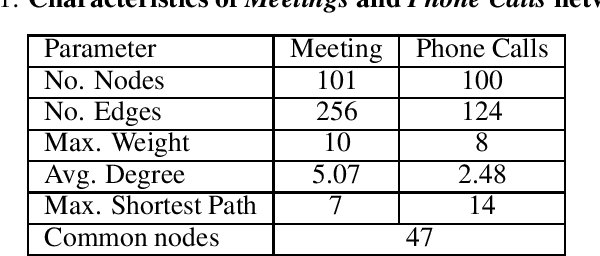
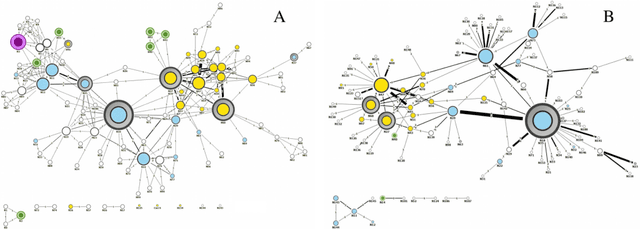
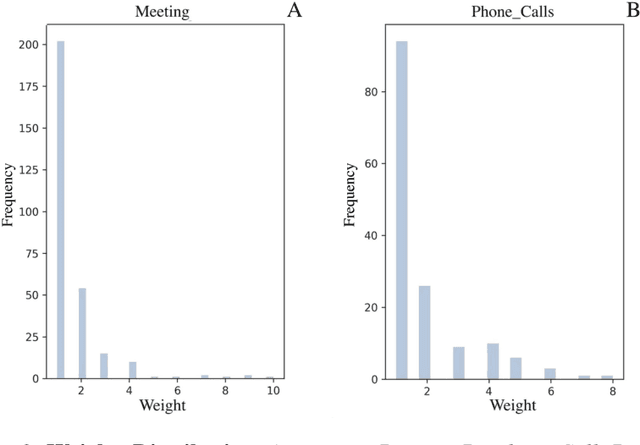
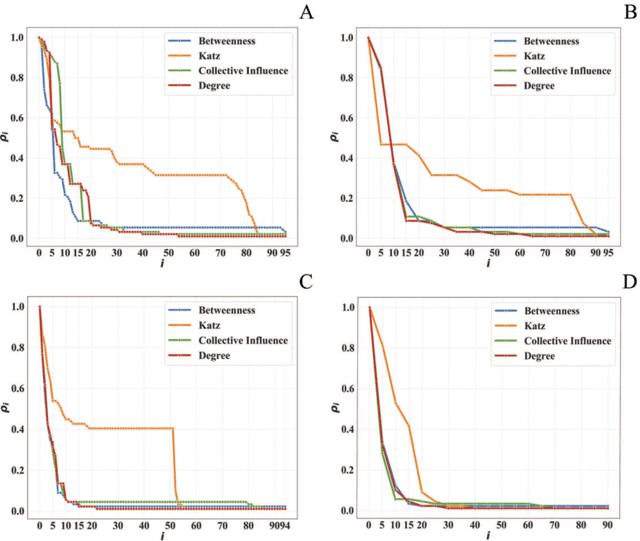
Compared to other types of social networks, criminal networks present hard challenges, due to their strong resilience to disruption, which poses severe hurdles to law-enforcement agencies. Herein, we borrow methods and tools from Social Network Analysis to (i) unveil the structure of Sicilian Mafia gangs, based on two real-world datasets, and (ii) gain insights as to how to efficiently disrupt them. Mafia networks have peculiar features, due to the links distribution and strength, which makes them very different from other social networks, and extremely robust to exogenous perturbations. Analysts are also faced with the difficulty in collecting reliable datasets that accurately describe the gangs' internal structure and their relationships with the external world, which is why earlier studies are largely qualitative, elusive and incomplete. An added value of our work is the generation of two real-world datasets, based on raw data derived from juridical acts, relating to a Mafia organization that operated in Sicily during the first decade of 2000s. We created two different networks, capturing phone calls and physical meetings, respectively. Our network disruption analysis simulated different intervention procedures: (i) arresting one criminal at a time (sequential node removal); and (ii) police raids (node block removal). We measured the effectiveness of each approach through a number of network centrality metrics. We found Betweeness Centrality to be the most effective metric, showing how, by neutralizing only the 5% of the affiliates, network connectivity dropped by 70%. We also identified that, due the peculiar type of interactions in criminal networks (namely, the distribution of the interactions frequency) no significant differences exist between weighted and unweighted network analysis. Our work has significant practical applications for tackling criminal and terrorist networks.