 Add to Chrome
 Add to Firefox
 Add to Edge
Human/AI Collective Intelligence for Deliberative Democracy: A Human-Centred Design Approach
Mar 17, 2026
This chapter introduces the concept of Collective Intelligence for Deliberative Democracy (CI4DD). We propose that the use of computational tools, specifically artificial intelligence to advance deliberative democracy, is an instantiation of a broader class of human-computer system designed to augment collective intelligence. Further, we argue for a fundamentally human-centred design approach to orchestrate how stakeholders can contribute meaningfully to shaping the artifacts and processes needed to create trustworthy DD processes. We first contextualise the key concepts of CI and the role of AI within it. We then detail our co-design methodology for identifying key challenges, refining user scenarios, and deriving technical implications. Two exemplar cases illustrate how user requirements from civic organisations were implemented with AI support and piloted in authentic contexts.

BCause: Human-AI collaboration to improve hybrid mapping and ideation in argumentation-grounded deliberation
May 06, 2025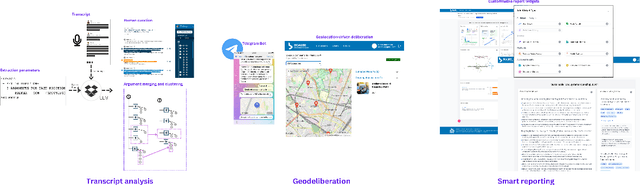
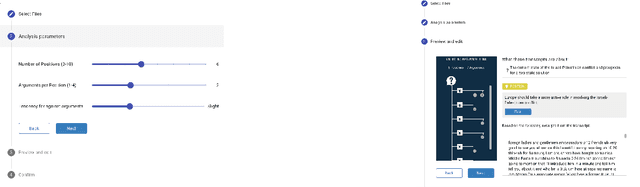
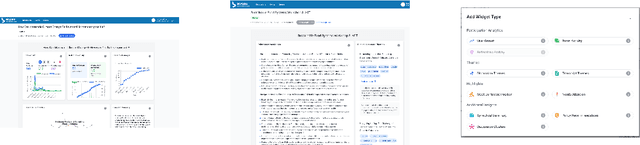
Public deliberation, as in open discussion of issues of public concern, often suffers from scattered and shallow discourse, poor sensemaking, and a disconnect from actionable policy outcomes. This paper introduces BCause, a discussion system leveraging generative AI and human-machine collaboration to transform unstructured dialogue around public issues (such as urban living, policy changes, and current socio-economic transformations) into structured, actionable democratic processes. We present three innovations: (i) importing and transforming unstructured transcripts into argumentative discussions, (ii) geo-deliberated problem-sensing via a Telegram bot for local issue reporting, and (iii) smart reporting with customizable widgets (e.g., summaries, topic modelling, policy recommendations, clustered arguments). The system's human-AI partnership preserves critical human participation to ensure ethical oversight, contextual relevance, and creative synthesis.