 Add to Chrome
 Add to Firefox
 Add to Edge
Generating and Evaluating Sustainable Procurement Criteria for the Swiss Public Sector using In-Context Prompting with Large Language Models
Mar 23, 2026
Public procurement refers to the process by which public sector institutions, such as governments, municipalities, and publicly funded bodies, acquire goods and services. Swiss law requires the integration of ecological, social, and economic sustainability requirements into tender evaluations in the format of criteria that have to be fulfilled by a bidder. However, translating high-level sustainability regulations into concrete, verifiable, and sector-specific procurement criteria (such as selection criteria, award criteria, and technical specifications) remains a labor-intensive and error-prone manual task, requiring substantial domain expertise in several groups of goods and services and considerable manual effort. This paper presents a configurable, LLM-assisted pipeline that is presented as a software supporting the systematic generation and evaluation of sustainability-oriented procurement criteria catalogs for Switzerland. The system integrates in-context prompting, interchangeable LLM backends, and automated output validation to enable auditable criteria generation across different procurement sectors. As a proof of concept, we instantiate the pipeline using official sustainability guidelines published by the Swiss government and the European Commission, which are ingested as structured reference documents. We evaluate the system through a combination of automated quality checks, including an LLM-based evaluation component, and expert comparison against a manually curated gold standard. Our results demonstrate that the proposed pipeline can substantially reduce manual drafting effort while producing criteria catalogs that are consistent with official guidelines. We further discuss system limitations, failure modes, and design trade-offs observed during deployment, highlighting key considerations for integrating generative AI into public sector software workflows.

Unlocking Legal Knowledge: A Multilingual Dataset for Judicial Summarization in Switzerland
Oct 17, 2024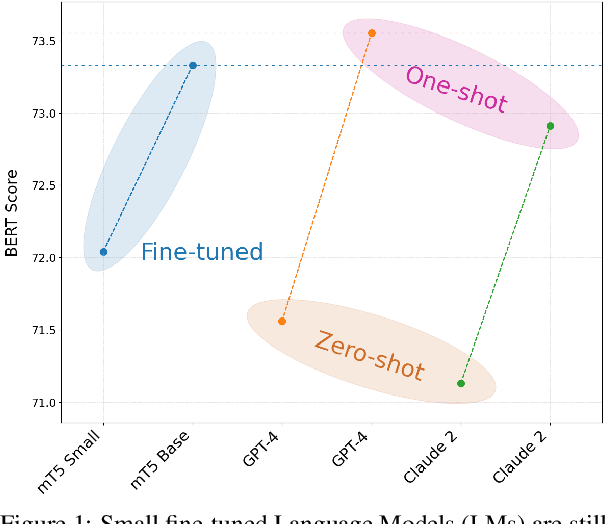

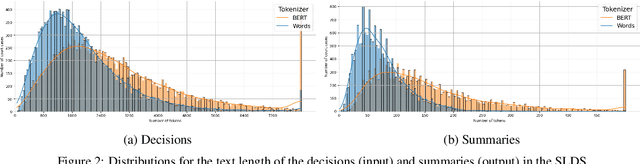
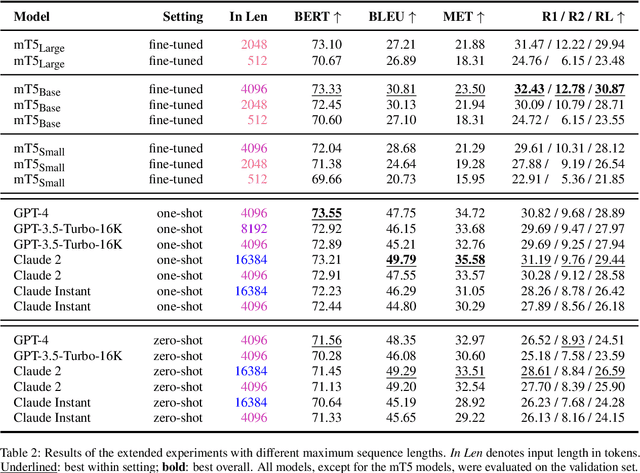
Legal research is a time-consuming task that most lawyers face on a daily basis. A large part of legal research entails looking up relevant caselaw and bringing it in relation to the case at hand. Lawyers heavily rely on summaries (also called headnotes) to find the right cases quickly. However, not all decisions are annotated with headnotes and writing them is time-consuming. Automated headnote creation has the potential to make hundreds of thousands of decisions more accessible for legal research in Switzerland alone. To kickstart this, we introduce the Swiss Leading Decision Summarization ( SLDS) dataset, a novel cross-lingual resource featuring 18K court rulings from the Swiss Federal Supreme Court (SFSC), in German, French, and Italian, along with German headnotes. We fine-tune and evaluate three mT5 variants, along with proprietary models. Our analysis highlights that while proprietary models perform well in zero-shot and one-shot settings, fine-tuned smaller models still provide a strong competitive edge. We publicly release the dataset to facilitate further research in multilingual legal summarization and the development of assistive technologies for legal professionals