 Add to Chrome
 Add to Firefox
 Add to Edge
Cost Trade-offs in Matrix Inversion Updates for Streaming Outlier Detection
Mar 17, 2026
Outlier detection identifies data points that deviate significantly from expected patterns, revealing anomalies that may require special attention. Incorporating online learning further improves accuracy by continuously updating the model to reflect the most recent data. When employing the Christoffel function as an outlier score, online learning requires updating the inverse of a matrix following a rank-k update, given the initial inverse. Surprisingly, there is no consensus on the optimal method for this task. This technical note aims to compare three different updating methods: Direct Inversion (DI), Iterative Sherman-Morrison (ISM), and Woodbury Matrix Identity (WMI), to identify the most suitable approach for different scenarios. We first derive the theoretical computational costs of each method and then validate these findings through comprehensive Python simulations run on a CPU. These results allow us to propose a simple, quantitative, and easy-to-remember rule that can be stated qualitatively as follows: ISM is optimal for rank-1 updates, WMI excels for small updates relative to matrix size, and DI is preferable otherwise. This technical note produces a general result for any problem involving a matrix inversion update. In particular, it contributes to the ongoing development of efficient online outlier detection techniques.

Warped Time Series Anomaly Detection
Apr 18, 2024This paper addresses the problem of detecting time series outliers, focusing on systems with repetitive behavior, such as industrial robots operating on production lines.Notable challenges arise from the fact that a task performed multiple times may exhibit different duration in each repetition and that the time series reported by the sensors are irregularly sampled because of data gaps. The anomaly detection approach presented in this paper consists of three stages.The first stage identifies the repetitive cycles in the lengthy time series and segments them into individual time series corresponding to one task cycle, while accounting for possible temporal distortions.The second stage computes a prototype for the cycles using a GPU-based barycenter algorithm, specifically tailored for very large time series.The third stage uses the prototype to detect abnormal cycles by computing an anomaly score for each cycle.The overall approach, named WarpEd Time Series ANomaly Detection (WETSAND), makes use of the Dynamic Time Warping algorithm and its variants because they are suited to the distorted nature of the time series.The experiments show that \wetsand scales to large signals, computes human-friendly prototypes, works with very little data, and outperforms some general purpose anomaly detection approaches such as autoencoders.
DTW k-means clustering for fault detection in photovoltaic modules
Jun 13, 2023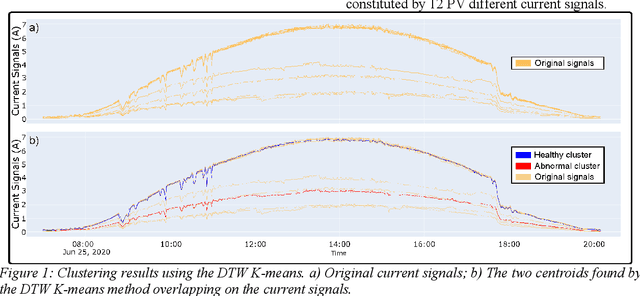
The increase in the use of photovoltaic (PV) energy in the world has shown that the useful life and maintenance of a PV plant directly depend on theability to quickly detect severe faults on a PV plant. To solve this problem of detection, data based approaches have been proposed in the literature.However, these previous solutions consider only specific behavior of one or few faults. Most of these approaches can be qualified as supervised, requiring an enormous labelling effort (fault types clearly identified in each technology). In addition, most of them are validated in PV cells or one PV module. That is hardly applicable in large-scale PV plants considering their complexity. Alternatively, some unsupervised well-known approaches based on data try to detect anomalies but are not able to identify precisely the type of fault. The most performant of these methods do manage to efficiently group healthy panels and separate them from faulty panels. In that way, this article presents an unsupervised approach called DTW K-means. This approach takes advantages of both the dynamic time warping (DWT) metric and the Kmeans clustering algorithm as a data-driven approach. The results of this mixed method in a PV string are compared to diagnostic labels established by visual inspection of the panels.
Detection and classification of faults aimed at preventive maintenance of PV systems
Jun 13, 2023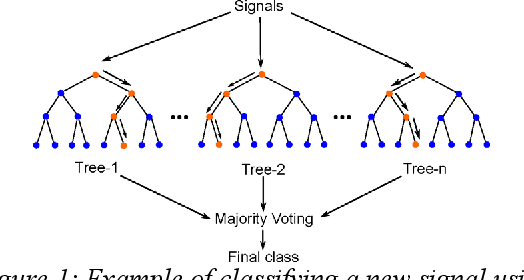
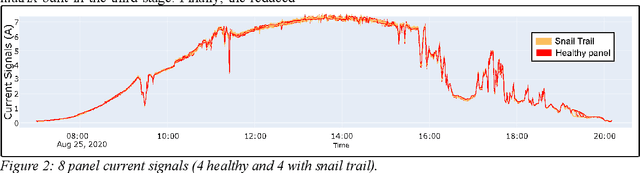
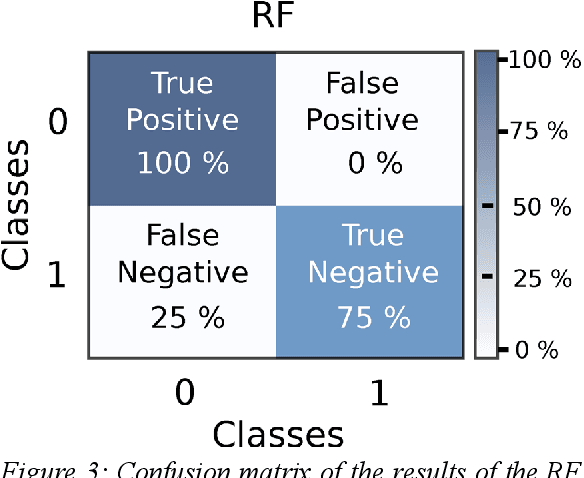
Diagnosis in PV systems aims to detect, locate and identify faults. Diagnosing these faults is vital to guarantee energy production and extend the useful life of PV power plants. In the literature, multiple machine learning approaches have been proposed for this purpose. However, few of these works have paid special attention to the detection of fine faults and the specialized process of extraction and selection of features for their classification. A fine fault is one whose characteristic signature is difficult to distinguish to that of a healthy panel. As a contribution to the detection of fine faults (especially of the snail trail type), this article proposes an innovative approach based on the Random Forest (RF) algorithm. This approach uses a complex feature extraction and selection method that improves the computational time of fault classification while maintaining high accuracy.
Applying Active Diagnosis to Space Systems by On-Board Control Procedures
Mar 05, 2019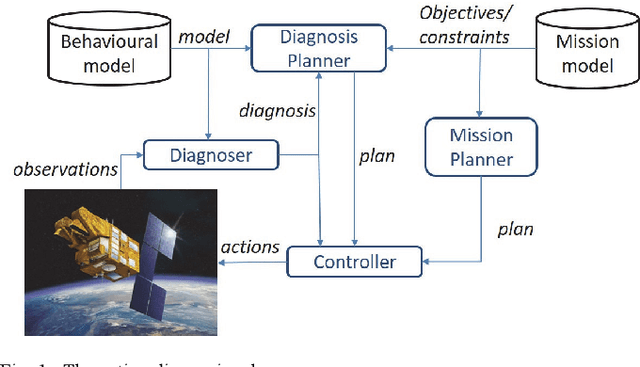
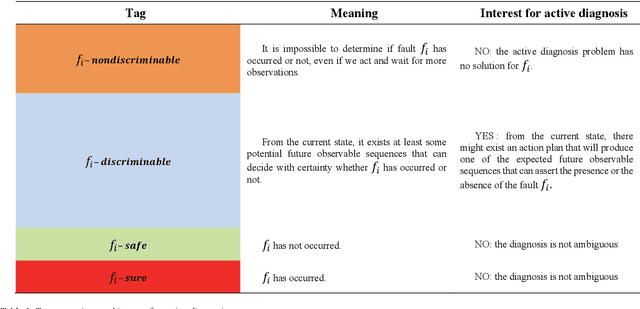
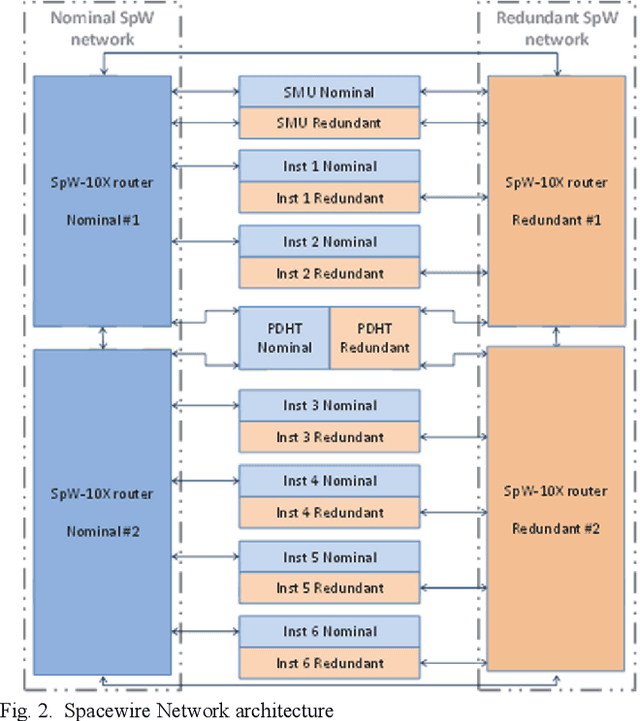
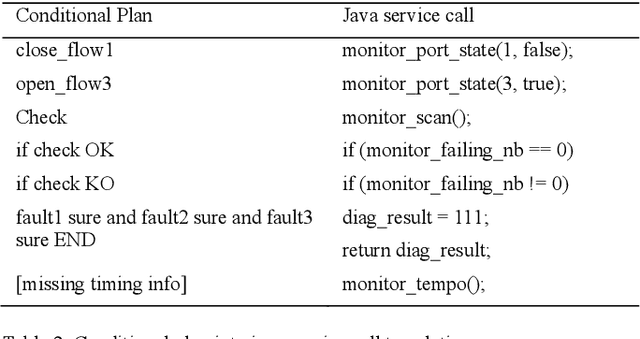
The instrumentation of real systems is often designed for control purposes and control inputs are designed to achieve nominal control objectives. Hence, the available measurements may not be sufficient to isolate faults with certainty and diagnoses are ambiguous. Active diagnosis formulates a planning problem to generate a sequence of actions that, applied to the system, enforce diagnosability and allow to iteratively refine ambiguous diagnoses. This paper analyses the requirements for applying active diagnosis to space systems and proposes ActHyDiag as an effective framework to solve this problem. It presents the results of applying ActHyDiag to a real space case study and of implementing the generated plans in the form of On-Board Control Procedures. The case study is a redundant Spacewire Network where up to 6 instruments, monitored and controlled by the on-board software hosted in the Satellite Management Unit, are transferring science data to a mass memory unit through Spacewire routers. Experiments have been conducted on a real physical benchmark developed by Thales Alenia Space and demonstrate the effectiveness of the plans proposed by ActHyDiag.