 Add to Chrome
 Add to Firefox
 Add to Edge
Neural emulation of gravity-driven geohazard runout
Dec 18, 2025
Predicting geohazard runout is critical for protecting lives, infrastructure and ecosystems. Rapid mass flows, including landslides and avalanches, cause several thousand deaths across a wide range of environments, often travelling many kilometres from their source. The wide range of source conditions and material properties governing these flows makes their runout difficult to anticipate, particularly for downstream communities that may be suddenly exposed to severe impacts. Accurately predicting runout at scale requires models that are both physically realistic and computationally efficient, yet existing approaches face a fundamental speed-realism trade-off. Here we train a machine learning model to predict geohazard runout across representative real world terrains. The model predicts both flow extent and deposit thickness with high accuracy and 100 to 10,000 times faster computation than numerical solvers. It is trained on over 100,000 numerical simulations across over 10,000 real world digital elevation model chips and reproduces key physical behaviours, including avulsion and deposition patterns, while generalizing across different flow types, sizes and landscapes. Our results demonstrate that neural emulation enables rapid, spatially resolved runout prediction across diverse real world terrains, opening new opportunities for disaster risk reduction and impact-based forecasting. These results highlight neural emulation as a promising pathway for extending physically realistic geohazard modelling to spatial and temporal scales relevant for large scale early warning systems.

Unveiling ECC Vulnerabilities: LSTM Networks for Operation Recognition in Side-Channel Attacks
Feb 24, 2025We propose a novel approach for performing side-channel attacks on elliptic curve cryptography. Unlike previous approaches and inspired by the ``activity detection'' literature, we adopt a long-short-term memory (LSTM) neural network to analyze a power trace and identify patterns of operation in the scalar multiplication algorithm performed during an ECDSA signature, that allows us to recover bits of the ephemeral key, and thus retrieve the signer's private key. Our approach is based on the fact that modular reductions are conditionally performed by micro-ecc and depend on key bits. We evaluated the feasibility and reproducibility of our attack through experiments in both simulated and real implementations. We demonstrate the effectiveness of our attack by implementing it on a real target device, an STM32F415 with the micro-ecc library, and successfully compromise it. Furthermore, we show that current countermeasures, specifically the coordinate randomization technique, are not sufficient to protect against side channels. Finally, we suggest other approaches that may be implemented to thwart our attack.
Improving Landslide Detection on SAR Data through Deep Learning
May 03, 2021
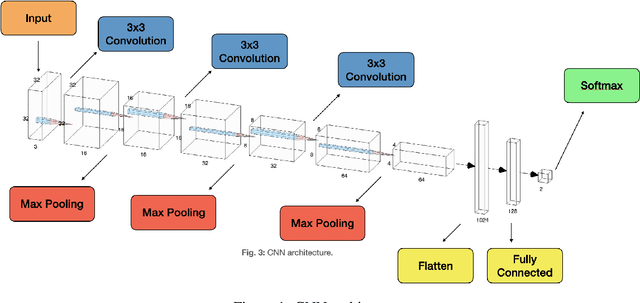
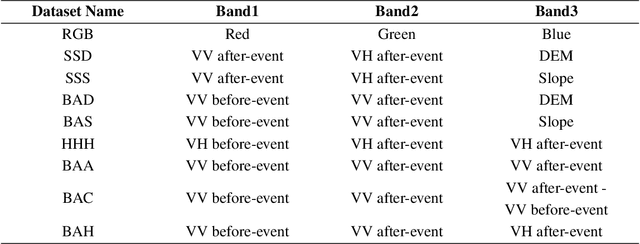
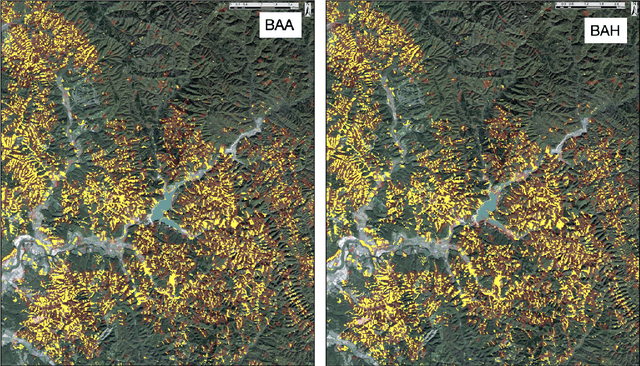
In this letter, we use deep-learning convolution neural networks (CNNs) to assess the landslide mapping and classification performances on optical images (from Sentinel-2) and SAR images (from Sentinel-1). The training and test zones used to independently evaluate the performance of the CNNs on different datasets are located in the eastern Iburi subprefecture in Hokkaido, where, at 03.08 local time (JST) on September 6, 2018, an Mw 6.6 earthquake triggered about 8000 coseismic landslides. We analyzed the conditions before and after the earthquake exploiting multi-polarization SAR as well as optical data by means of a CNN implemented in TensorFlow that points out the locations where the Landslide class is predicted as more likely. As expected, the CNN run on optical images proved itself excellent for the landslide detection task, achieving an overall accuracy of 99.20% while CNNs based on the combination of ground range detected (GRD) SAR data reached overall accuracies beyond 94%. Our findings show that the integrated use of SAR data may also allow for rapid mapping even during storms and under dense cloud cover and seems to provide comparable accuracy to classical optical change detection in landslide recognition and mapping.