 Add to Chrome
 Add to Firefox
 Add to Edge
Public Machine Learning Solver Framework for Novices in the Machine Learning Domain
Jun 06, 2026
Solving machine learning problems is complex and typically reserved for experts. Over the past two decades, systems have emerged to support non-experts. Based on our review, we identify three categories: (1) fully automated AutoML systems, (2) expert cheat sheets for algorithm selection, and (3) decision-support systems using selection criteria (accuracy, transparency, data requirements). We propose a new platform combining categories 2 and 3 to deliver semi-automated, intelligent solution recommendations for non-experts. Unlike existing approaches that recommend a single algorithm, our platform suggests a complete pipeline tailored to the user's problem. It integrates expert-defined selection criteria with transfer learning and automatically extracts data characteristics (e.g., class imbalance, missing values) from user-provided datasets. The platform uses first-order logic to reason over its knowledge base and recommends suitable algorithms ranked by relevance. It features a user-friendly interface and connects to a crowdsourcing platform for ML experts, ensuring continuous updates. The platform is built incrementally, allowing seamless integration of new algorithms, criteria, and domain knowledge. To our knowledge, this is the first free, publicly accessible online framework that systematically captures and operationalizes expert knowledge to guide non-experts in solving ML problems in a structured, transparent manner.

Matching Problems to Solutions: An Explainable Way of Solving Machine Learning Problems
Jun 21, 2024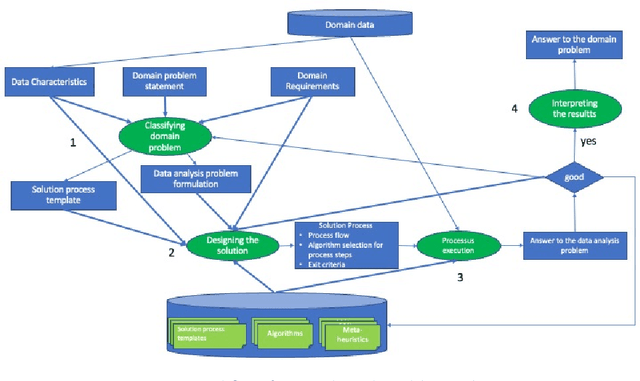
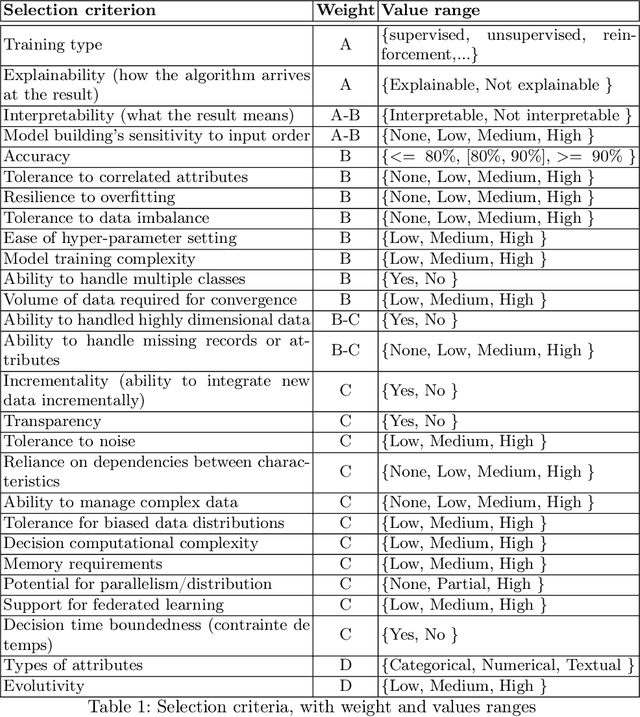
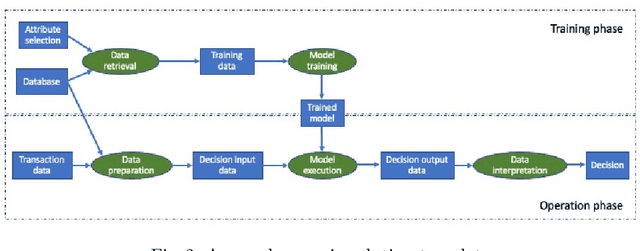
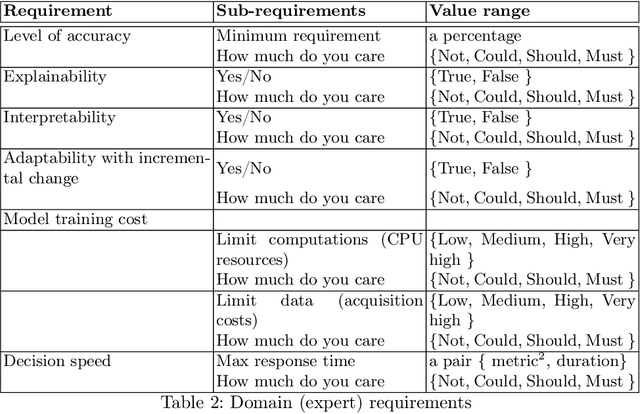
Domain experts from all fields are called upon, working with data scientists, to explore the use of ML techniques to solve their problems. Starting from a domain problem/question, ML-based problem-solving typically involves three steps: (1) formulating the business problem (problem domain) as a data analysis problem (solution domain), (2) sketching a high-level ML-based solution pattern, given the domain requirements and the properties of the available data, and (3) designing and refining the different components of the solution pattern. There has to be a substantial body of ML problem solving knowledge that ML researchers agree on, and that ML practitioners routinely apply to solve the most common problems. Our work deals with capturing this body of knowledge, and embodying it in a ML problem solving workbench to helps domain specialists who are not ML experts to explore the ML solution space. This paper focuses on: 1) the representation of domain problems, ML problems, and the main ML solution artefacts, and 2) a heuristic matching function that helps identify the ML algorithm family that is most appropriate for the domain problem at hand, given the domain (expert) requirements, and the characteristics of the training data. We review related work and outline our strategy for validating the workbench