 Add to Chrome
 Add to Firefox
 Add to Edge
MATRA: Modeling the Attack Surface of Agentic AI Systems -- OpenClaw Case Study
May 11, 2026
LLMs are increasingly deployed as autonomous agents with access to tools, databases, and external services, yet practitioners (across different sectors) lack systematic methods to assess how known threat classes translate into concrete risks within a specific agentic deployment. We present MATRA, a pragmatic threat modeling framework for agentic AI systems that adapts established risk assessment methodology to systematically assess how known LLM threats translate into deployment-specific risks. MATRA begins with an asset-based impact assessment and utilizes attack trees to determine the likelihood of these impacts occurring within the system architecture. We demonstrate MATRA on a personal AI agent deployment using OpenClaw, quantifying how architectural controls such as network sandboxing and least-privilege access reduce risk by limiting the blast radius of successful injections.

FlowPure: Continuous Normalizing Flows for Adversarial Purification
May 19, 2025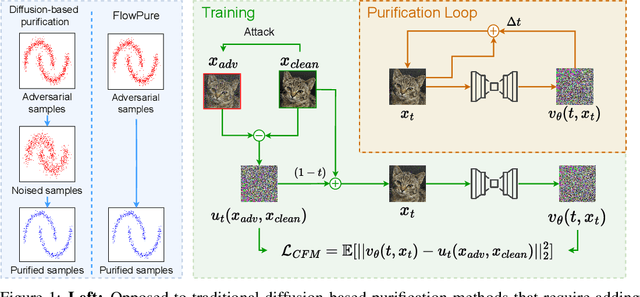
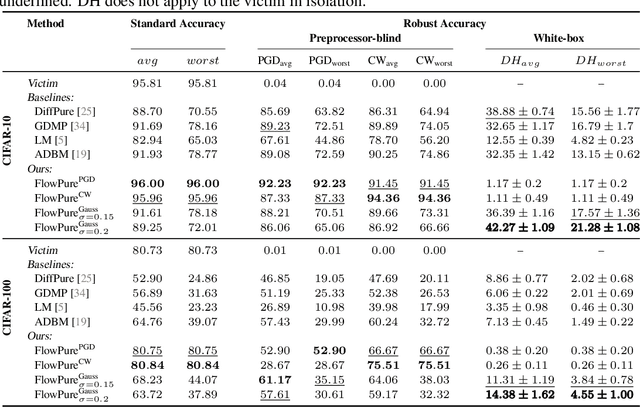

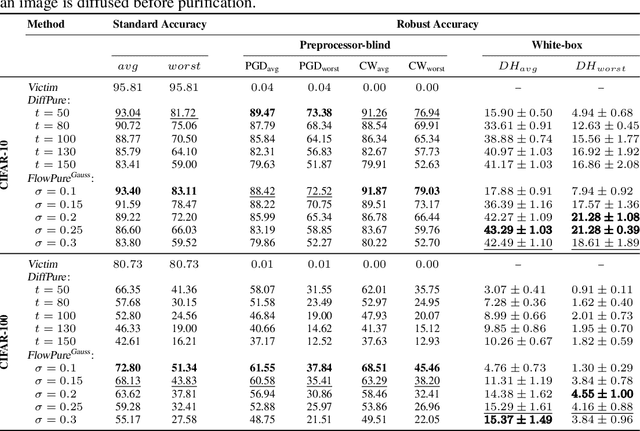
Despite significant advancements in the area, adversarial robustness remains a critical challenge in systems employing machine learning models. The removal of adversarial perturbations at inference time, known as adversarial purification, has emerged as a promising defense strategy. To achieve this, state-of-the-art methods leverage diffusion models that inject Gaussian noise during a forward process to dilute adversarial perturbations, followed by a denoising step to restore clean samples before classification. In this work, we propose FlowPure, a novel purification method based on Continuous Normalizing Flows (CNFs) trained with Conditional Flow Matching (CFM) to learn mappings from adversarial examples to their clean counterparts. Unlike prior diffusion-based approaches that rely on fixed noise processes, FlowPure can leverage specific attack knowledge to improve robustness under known threats, while also supporting a more general stochastic variant trained on Gaussian perturbations for settings where such knowledge is unavailable. Experiments on CIFAR-10 and CIFAR-100 demonstrate that our method outperforms state-of-the-art purification-based defenses in preprocessor-blind and white-box scenarios, and can do so while fully preserving benign accuracy in the former. Moreover, our results show that not only is FlowPure a highly effective purifier but it also holds a strong potential for adversarial detection, identifying preprocessor-blind PGD samples with near-perfect accuracy.