 Add to Chrome
 Add to Firefox
 Add to Edge
Statistical Mechanics Algorithm for Response to Targets (SMART)
Mar 27, 2013
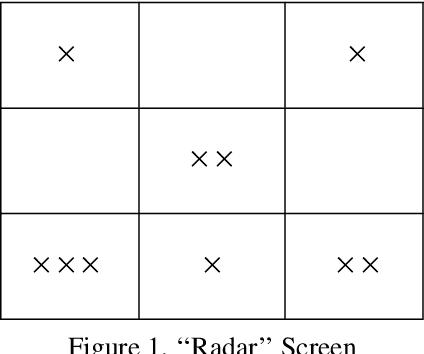
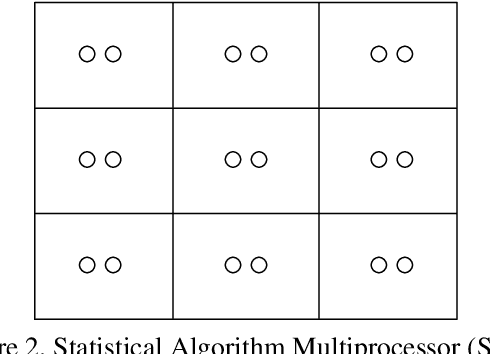
It is proposed to apply modern methods of nonlinear nonequilibrium statistical mechanics to develop software algorithms that will optimally respond to targets within short response times with minimal computer resources. This Statistical Mechanics Algorithm for Response to Targets (SMART) can be developed with a view towards its future implementation into a hardwired Statistical Algorithm Multiprocessor (SAM) to enhance the efficiency and speed of response to targets (SMART_SAM).

Statistical mechanics of neocortical interactions: Portfolio of Physiological Indicators
Dec 18, 2006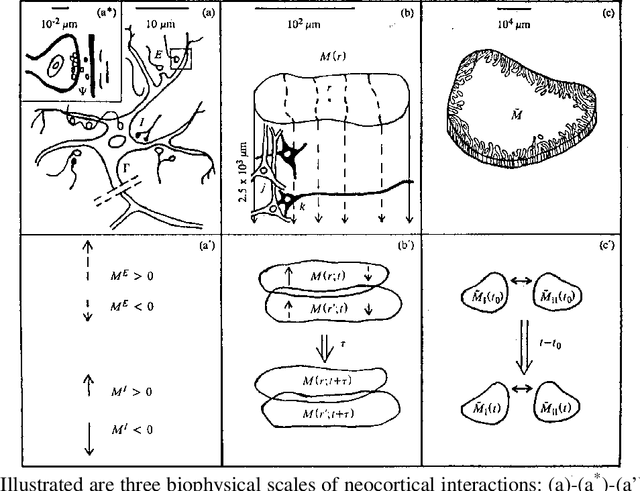

There are several kinds of non-invasive imaging methods that are used to collect data from the brain, e.g., EEG, MEG, PET, SPECT, fMRI, etc. It is difficult to get resolution of information processing using any one of these methods. Approaches to integrate data sources may help to get better resolution of data and better correlations to behavioral phenomena ranging from attention to diagnoses of disease. The approach taken here is to use algorithms developed for the author's Trading in Risk Dimensions (TRD) code using modern methods of copula portfolio risk management, with joint probability distributions derived from the author's model of statistical mechanics of neocortical interactions (SMNI). The author's Adaptive Simulated Annealing (ASA) code is for optimizations of training sets, as well as for importance-sampling. Marginal distributions will be evolved to determine their expected duration and stability using algorithms developed by the author, i.e., PATHTREE and PATHINT codes.
Ideas by Statistical Mechanics (ISM)
Jul 23, 2006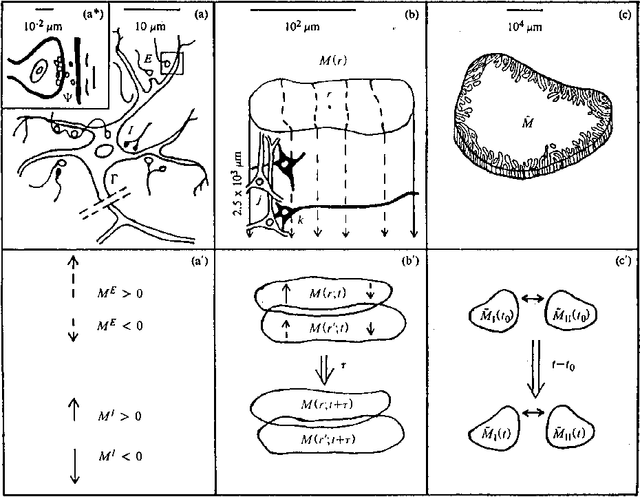
Ideas by Statistical Mechanics (ISM) is a generic program to model evolution and propagation of ideas/patterns throughout populations subjected to endogenous and exogenous interactions. The program is based on the author's work in Statistical Mechanics of Neocortical Interactions (SMNI), and uses the author's Adaptive Simulated Annealing (ASA) code for optimizations of training sets, as well as for importance-sampling to apply the author's copula financial risk-management codes, Trading in Risk Dimensions (TRD), for assessments of risk and uncertainty. This product can be used for decision support for projects ranging from diplomatic, information, military, and economic (DIME) factors of propagation/evolution of ideas, to commercial sales, trading indicators across sectors of financial markets, advertising and political campaigns, etc. A statistical mechanical model of neocortical interactions, developed by the author and tested successfully in describing short-term memory and EEG indicators, is the proposed model. Parameters with a given subset of macrocolumns will be fit using ASA to patterns representing ideas. Parameters of external and inter-regional interactions will be determined that promote or inhibit the spread of these ideas. Tools of financial risk management, developed by the author to process correlated multivariate systems with differing non-Gaussian distributions using modern copula analysis, importance-sampled using ASA, will enable bona fide correlations and uncertainties of success and failure to be calculated. Marginal distributions will be evolved to determine their expected duration and stability using algorithms developed by the author, i.e., PATHTREE and PATHINT codes.