 Add to Chrome
 Add to Firefox
 Add to Edge
MicroPhaseNO: Adapting an Earthquake-Trained Phase Neural Operator for Microseismic Phase Picking
Dec 15, 2025
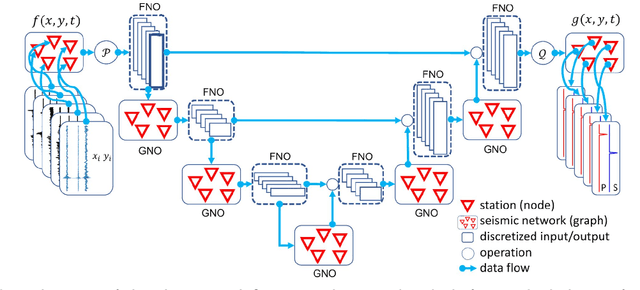
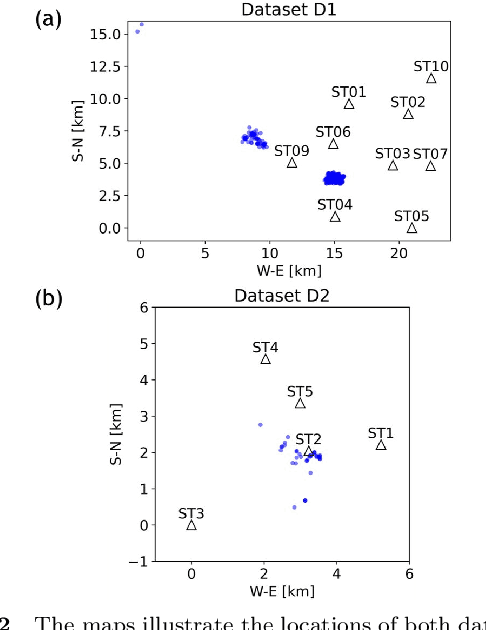
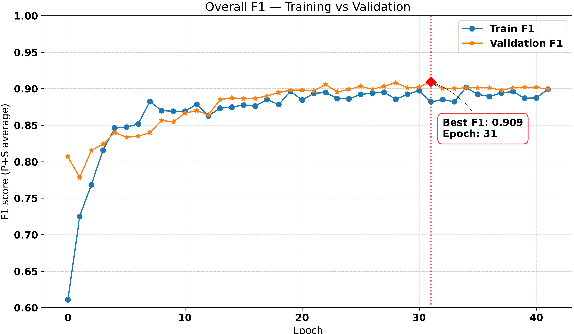
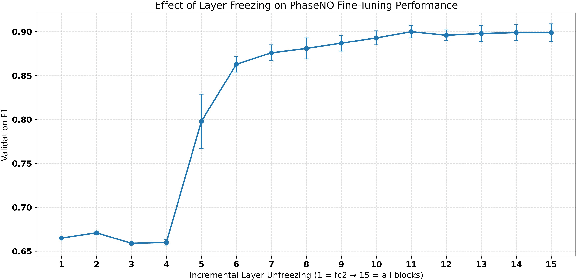
Seismic phase picking is very often used for microseismic monitoring and subsurface imaging. Traditional manual processing is not feasible for either real-time applications or large arrays. Deep learning-based pickers trained on large earthquake catalogs offer an automated alternative. However, they are typically optimized for high signal-to-noise, long-duration networks and struggle with the challenges presented by microseismic datasets, which are purpose-built for limited time without previously detected seismicity. In this study, we demonstrate how a network-wide earthquake phase picker, the Phase Neural Operator (PhaseNO), can be adapted to microseismic monitoring using transfer learning. Starting from a PhaseNO model pre-trained on more than 57,000 three-component earthquake and noise records, we fine-tune the model using only 200 labeled and noise seismograms from induced events in hydraulic-fracturing settings. The fine-tuned model thus preserves the rich spatio-temporal representation learned from abundant earthquake data, while adapting to the characteristics and labeling conventions of microseismic phases, which are often picked on peaks or troughs rather than onsets. We evaluate performance on three distinct real-world microseismic datasets with different network geometries and acquisition parameters. Compared to the original PhaseNO and a conventional workflow, the adapted model increases F1 score and accuracy by up to 30%, and strongly reduces systematic timing bias and pick uncertainty. Because the adaptation relies on a small, campaign-specific calibration set, the approach is readily transferable to other microseismic tasks where public earthquake data and pre-trained models are accessible. The associated code will be released openly at https://github.com/ayratabd/MicroPhaseNO.

Microseismic event classification with a lightweight Fourier Neural Operator model
Dec 08, 2025Real-time monitoring of induced seismicity is crucial for mitigating operational hazards, relying on the rapid and accurate classification of microseismic events from continuous data streams. However, while many deep learning models excel at this task, their high computational requirements often limit their practical application in real-time monitoring systems. To address this limitation, a lightweight model based on the Fourier Neural Operator (FNO) is proposed for microseismic event classification, leveraging its inherent resolution-invariance and computational efficiency for waveform processing. In the STanford EArthquake Dataset (STEAD), a global and large-scale database of seismic waveforms, the FNO-based model demonstrates high effectiveness for trigger classification, with an F1 score of 95% even in the scenario of data sparsity in training. The new FNO model greatly decreases the computer power needed relative to current deep learning models without sacrificing the classification success rate measured by the F1 score. A test on a real microseismic dataset shows a classification success rate with an F1 score of 98%, outperforming many traditional deep-learning techniques. A combination of high success rate and low computational power indicates that the FNO model can serve as a methodology of choice for real-time monitoring of microseismicity for induced seismicity. The method saves computational resources and facilitates both post-processing and real-time seismic processing suitable for the implementation of traffic light systems to prevent undesired induced seismicity.