 Add to Chrome
 Add to Firefox
 Add to Edge
FactSim: Fact-Checking for Opinion Summarization
Feb 09, 2026
We explore the need for more comprehensive and precise evaluation techniques for generative artificial intelligence (GenAI) in text summarization tasks, specifically in the area of opinion summarization. Traditional methods, which leverage automated metrics to compare machine-generated summaries from a collection of opinion pieces, e.g. product reviews, have shown limitations due to the paradigm shift introduced by large language models (LLM). This paper addresses these shortcomings by proposing a novel, fully automated methodology for assessing the factual consistency of such summaries. The method is based on measuring the similarity between the claims in a given summary with those from the original reviews, measuring the coverage and consistency of the generated summary. To do so, we rely on a simple approach to extract factual assessment from texts that we then compare and summarize in a suitable score. We demonstrate that the proposed metric attributes higher scores to similar claims, regardless of whether the claim is negated, paraphrased, or expanded, and that the score has a high correlation to human judgment when compared to state-of-the-art metrics.

Revisiting Graph Projections for Effective Complementary Product Recommendation
Jun 10, 2025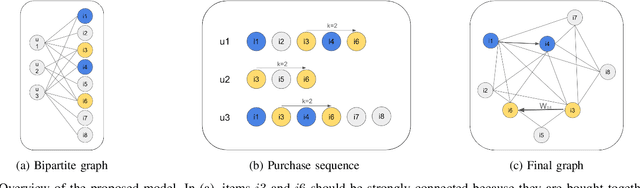
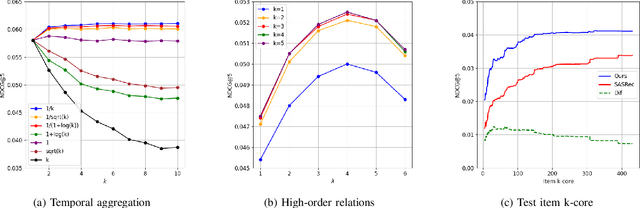
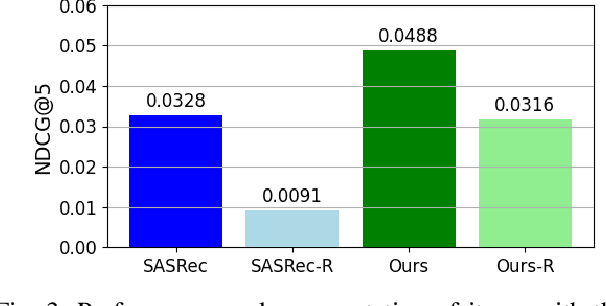
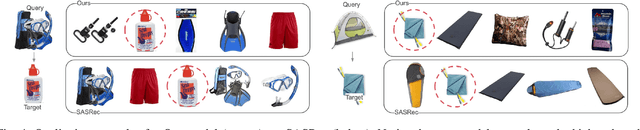
Complementary product recommendation is a powerful strategy to improve customer experience and retail sales. However, recommending the right product is not a simple task because of the noisy and sparse nature of user-item interactions. In this work, we propose a simple yet effective method to predict a list of complementary products given a query item, based on the structure of a directed weighted graph projected from the user-item bipartite graph. We revisit bipartite graph projections for recommender systems and propose a novel approach for inferring complementarity relationships from historical user-item interactions. We compare our model with recent methods from the literature and show, despite the simplicity of our approach, an average improvement of +43% and +38% over sequential and graph-based recommenders, respectively, over different benchmarks.