 Add to Chrome
 Add to Firefox
 Add to Edge
EFT-CoT: A Multi-Agent Chain-of-Thought Framework for Emotion-Focused Therapy
Jan 25, 2026
Leveraging Large Language Models (LLMs) for Mental Health Question Answering (MHQA) is promising for mitigating resource shortages. However, existing Cognitive Behavioral Therapy (CBT)-based approaches predominantly favor a "top-down" rational restructuring, often neglecting clients' embodied experiences and primary emotion processing. To address this, we propose an Emotion-Focused Therapy (EFT)-based Multi-Agent Chain-of-Thought framework (EFT-CoT). Adopting a "bottom-up" trajectory, it deconstructs the intervention into a three-stage reasoning flow: "Embodied Perception - Cognitive Exploration - Narrative Intervention." Utilizing eight specialized agents, the system explicitly executes critical components such as somatic awareness mapping, adaptive assessment, core belief extraction, and narrative restructuring. We further constructed "EFT-Instruct," a high-quality dataset via Chain-of-Thought distillation of approximately 67,000 authentic texts, and fine-tuned a specialized model, EFT-LLM. Experimental evaluations demonstrate that EFT-LLM outperforms strong baselines and human responses across metrics like empathy depth and structural professionalism. Ablation studies confirm the necessity of the multi-agent mechanism. The model exhibits superior psychological reasoning, offering an effective pathway for interpretable, high-empathy counseling systems.

The Art NFTs and Their Marketplaces
Oct 23, 2022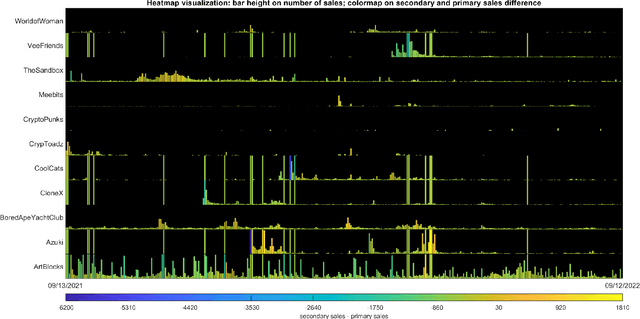
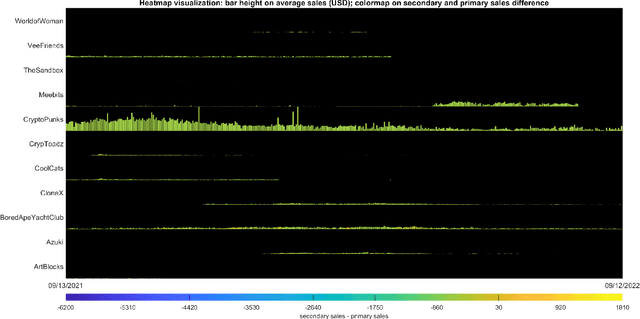
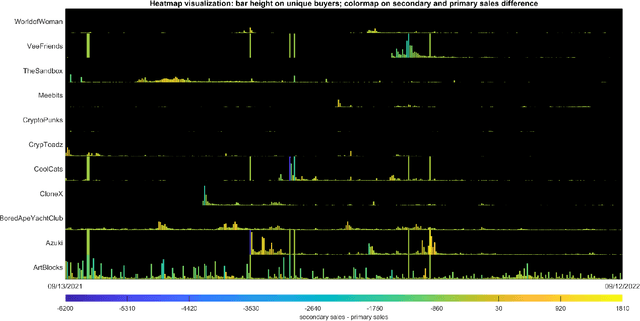
Non-Fungible Tokens (NFTs) are crypto assets with a unique digital identifier for ownership, powered by blockchain technology. Technically speaking, anything digital could be minted and sold as an NFT, which provides proof of ownership and authenticity of a digital file. For this reason, it helps us distinguish between the originals and their copies, making it possible to trade them. This paper focuses on art NFTs that change how artists can sell their products. It also changes how the art trade market works since NFT technology cuts out the middleman. Recently, the utility of NFTs has become an essential issue in the NFT ecosystem, which refers to the owners' usefulness, profitability, and benefits. Using recent major art NFT marketplace datasets, we summarize and interpret the current market trends and patterns in a way that brings insight into the future art market. Numerical examples are presented.