 Add to Chrome
 Add to Firefox
 Add to Edge
Human-Human-AI Triadic Programming: Uncovering the Role of AI Agent and the Value of Human Partner in Collaborative Learning
Jan 17, 2026
As AI assistance becomes embedded in programming practice, researchers have increasingly examined how these systems help learners generate code and work more efficiently. However, these studies often position AI as a replacement for human collaboration and overlook the social and learning-oriented aspects that emerge in collaborative programming. Our work introduces human-human-AI (HHAI) triadic programming, where an AI agent serves as an additional collaborator rather than a substitute for a human partner. Through a within-subjects study with 20 participants, we show that triadic collaboration enhances collaborative learning and social presence compared to the dyadic human-AI (HAI) baseline. In the triadic HHAI conditions, participants relied significantly less on AI-generated code in their work. This effect was strongest in the HHAI-shared condition, where participants had an increased sense of responsibility to understand AI suggestions before applying them. These findings demonstrate how triadic settings activate socially shared regulation of learning by making AI use visible and accountable to a human peer, suggesting that AI systems that augment rather than automate peer collaboration can better preserve the learning processes that collaborative programming relies on.

How Managers Perceive AI-Assisted Conversational Training for Workplace Communication
May 21, 2025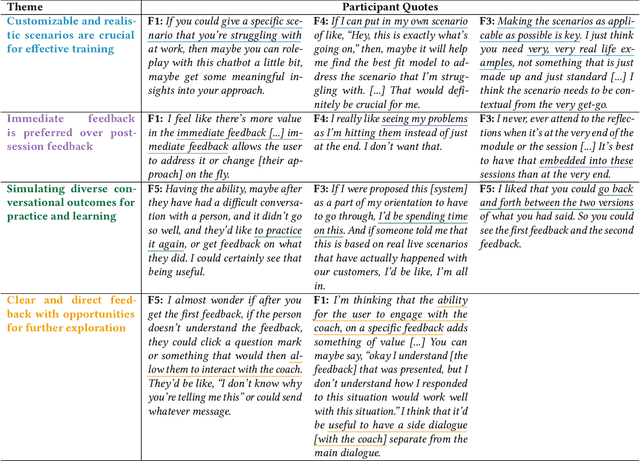
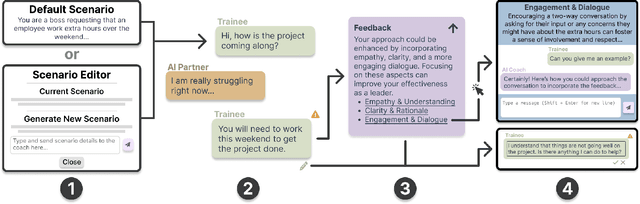
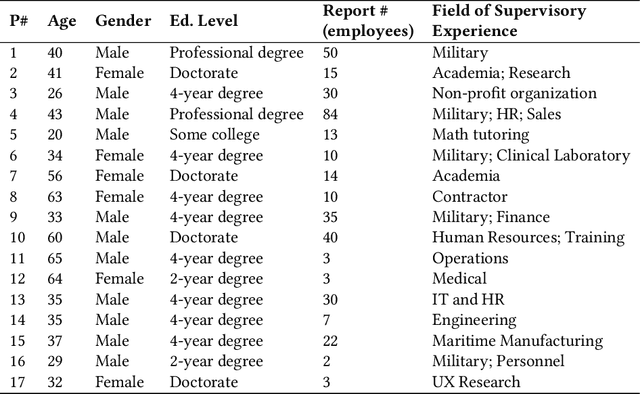
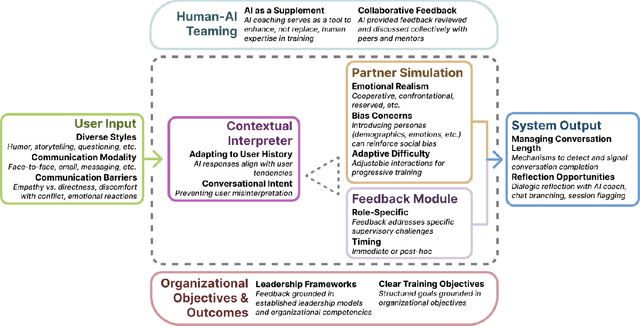
Effective workplace communication is essential for managerial success, yet many managers lack access to tailored and sustained training. Although AI-assisted communication systems may offer scalable training solutions, little is known about how managers envision the role of AI in helping them improve their communication skills. To investigate this, we designed a conversational role-play system, CommCoach, as a functional probe to understand how managers anticipate using AI to practice their communication skills. Through semi-structured interviews, participants emphasized the value of adaptive, low-risk simulations for practicing difficult workplace conversations. They also highlighted opportunities, including human-AI teaming, transparent and context-aware feedback, and greater control over AI-generated personas. AI-assisted communication training should balance personalization, structured learning objectives, and adaptability to different user styles and contexts. However, achieving this requires carefully navigating tensions between adaptive and consistent AI feedback, realism and potential bias, and the open-ended nature of AI conversations versus structured workplace discourse.