 Add to Chrome
 Add to Firefox
 Add to Edge
A dataset of medication images with instance segmentation masks for preventing adverse drug events
Mar 11, 2026
Medication errors and adverse drug events (ADEs) pose significant risks to patient safety, often arising from difficulties in reliably identifying pharmaceuticals in real-world settings. AI-based pill recognition models offer a promising solution, but the lack of comprehensive datasets hinders their development. Existing pill image datasets rarely capture real-world complexities such as overlapping pills, varied lighting, and occlusions. MEDISEG addresses this gap by providing instance segmentation annotations for 32 distinct pill types across 8262 images, encompassing diverse conditions from individual pill images to cluttered dosette boxes. We trained YOLOv8 and YOLOv9 on MEDISEG to demonstrate their usability, achieving mean average precision at IoU 0.5 of 99.5 percent on the 3-Pills subset and 80.1 percent on the 32-Pills subset. We further evaluate MEDISEG under a few-shot detection protocol, demonstrating that base training on MEDISEG significantly improves recognition of unseen pill classes in occluded multi-pill scenarios compared to existing datasets. These results highlight the dataset's ability not only to support robust supervised training but also to promote transferable representations under limited supervision, making it a valuable resource for developing and benchmarking AI-driven systems for medication safety.

Evaluating Few-Shot Pill Recognition Under Visual Domain Shift
Mar 11, 2026Adverse drug events are a significant source of preventable harm, which has led to the development of automated pill recognition systems to enhance medication safety. Real-world deployment of these systems is hindered by visually complex conditions, including cluttered scenes, overlapping pills, reflections, and diverse acquisition environments. This study investigates few-shot pill recognition from a deployment-oriented perspective, prioritizing generalization under realistic cross-dataset domain shifts over architectural innovation. A two-stage object detection framework is employed, involving base training followed by few-shot fine-tuning. Models are adapted to novel pill classes using one, five, or ten labeled examples per class and are evaluated on a separate deployment dataset featuring multi-object, cluttered scenes. The evaluation focuses on classification-centric and error-based metrics to address heterogeneous annotation strategies. Findings indicate that semantic pill recognition adapts rapidly with few-shot supervision, with classification performance reaching saturation even with a single labeled example. However, stress testing under overlapping and occluded conditions demonstrates a marked decline in localization and recall, despite robust semantic classification. Models trained on visually realistic, multi-pill data consistently exhibit greater robustness in low-shot scenarios, underscoring the importance of training data realism and the diagnostic utility of few-shot fine-tuning for deployment readiness.
Study of Robust Direction Finding Based on Joint Sparse Representation
May 27, 2024Standard Direction of Arrival (DOA) estimation methods are typically derived based on the Gaussian noise assumption, making them highly sensitive to outliers. Therefore, in the presence of impulsive noise, the performance of these methods may significantly deteriorate. In this paper, we model impulsive noise as Gaussian noise mixed with sparse outliers. By exploiting their statistical differences, we propose a novel DOA estimation method based on sparse signal recovery (SSR). Furthermore, to address the issue of grid mismatch, we utilize an alternating optimization approach that relies on the estimated outlier matrix and the on-grid DOA estimates to obtain the off-grid DOA estimates. Simulation results demonstrate that the proposed method exhibits robustness against large outliers.
Automatic Velocity Picking Using a Multi-Information Fusion Deep Semantic Segmentation Network
May 07, 2022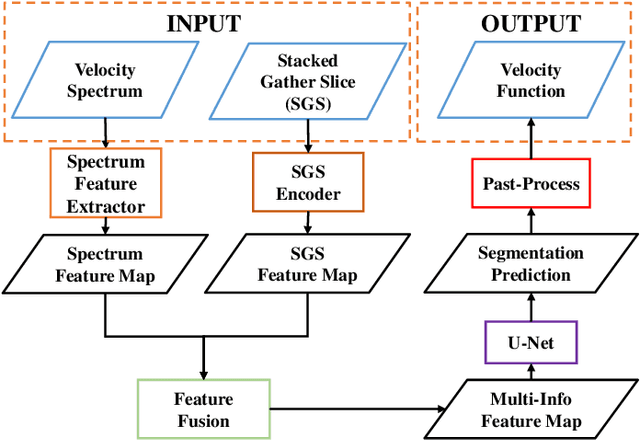
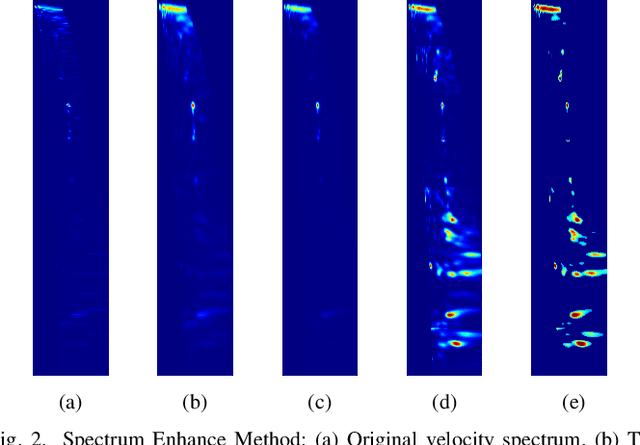
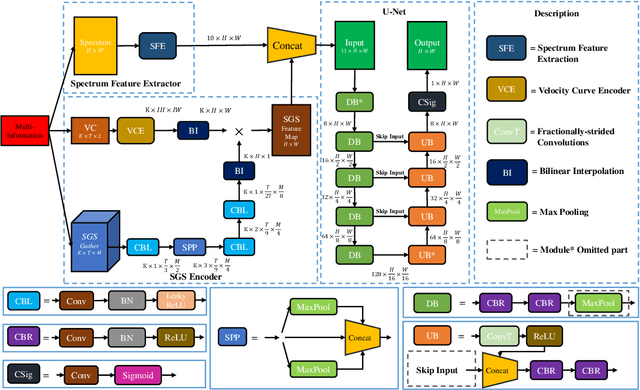
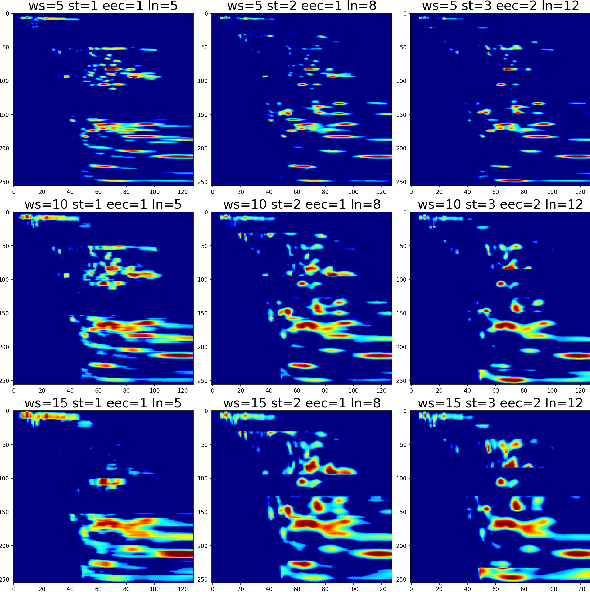
Velocity picking, a critical step in seismic data processing, has been studied for decades. Although manual picking can produce accurate normal moveout (NMO) velocities from the velocity spectra of prestack gathers, it is time-consuming and becomes infeasible with the emergence of large amount of seismic data. Numerous automatic velocity picking methods have thus been developed. In recent years, deep learning (DL) methods have produced good results on the seismic data with medium and high signal-to-noise ratios (SNR). Unfortunately, it still lacks a picking method to automatically generate accurate velocities in the situations of low SNR. In this paper, we propose a multi-information fusion network (MIFN) to estimate stacking velocity from the fusion information of velocity spectra and stack gather segments (SGS). In particular, we transform the velocity picking problem into a semantic segmentation problem based on the velocity spectrum images. Meanwhile, the information provided by SGS is used as a prior in the network to assist segmentation. The experimental results on two field datasets show that the picking results of MIFN are stable and accurate for the scenarios with medium and high SNR, and it also performs well in low SNR scenarios.
Autonomous Driving at Intersections: A Critical-Turning-Point Approach for Left Turns
Mar 05, 2020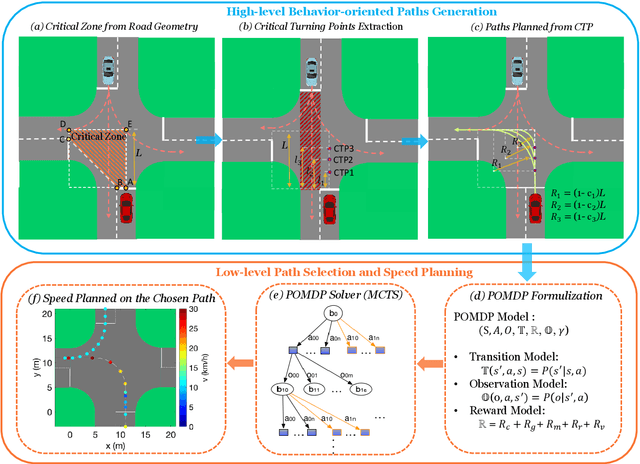
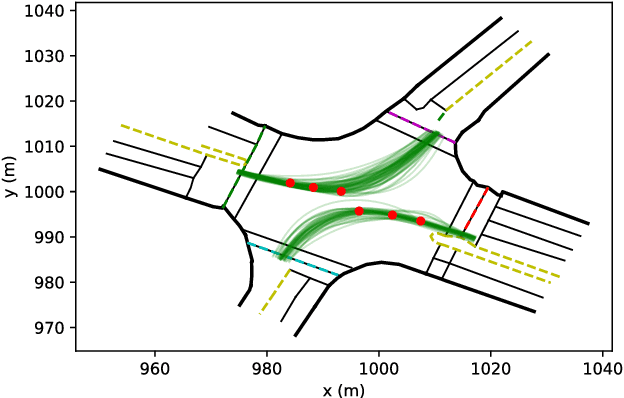
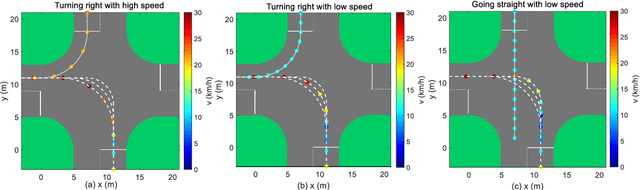
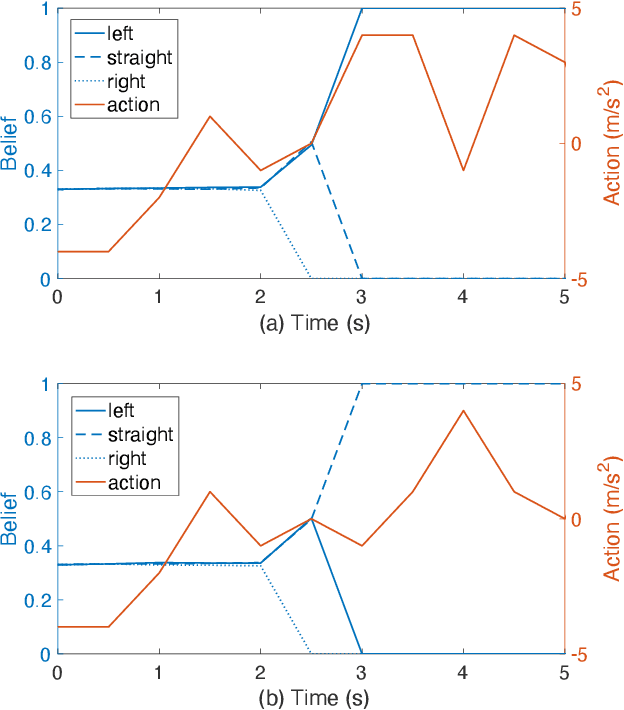
Left-turn planning is one of the formidable challenges for autonomous vehicles, especially at unsignalized intersections due to the unknown intentions of oncoming vehicles. This paper addresses the challenge by proposing a critical turning point (CTP) based hierarchical planning approach. This includes a high-level candidate path generator and a low-level partially observable Markov decision process (POMDP) based planner. The proposed (CTP) concept, inspired by human-driving behaviors at intersections, aims to increase the computational efficiency of the low-level planner and to enable human-friendly autonomous driving. The POMDP based low-level planner takes unknown intentions of oncoming vehicles into considerations to perform less conservative yet safe actions. With proper integration, the proposed hierarchical approach is capable of achieving safe planning results with high commute efficiency at unsignalized intersections in real time.
Generative adversarial networks for generation and classification of physical rehabilitation movement episodes
Dec 15, 2018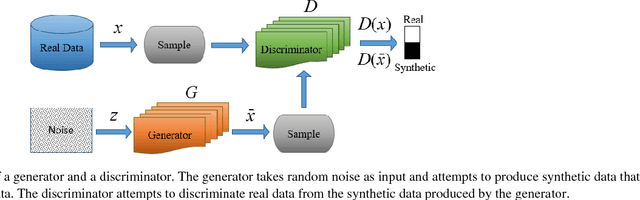
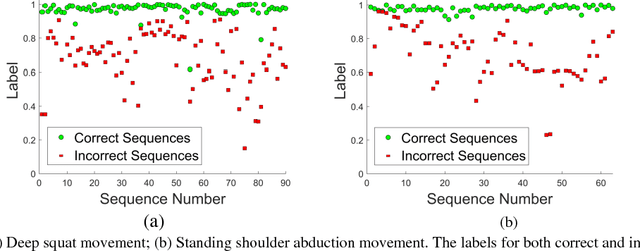
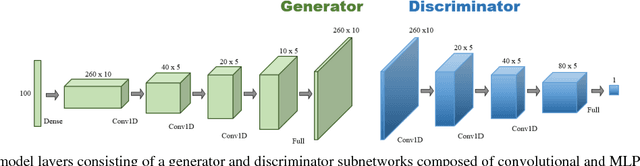
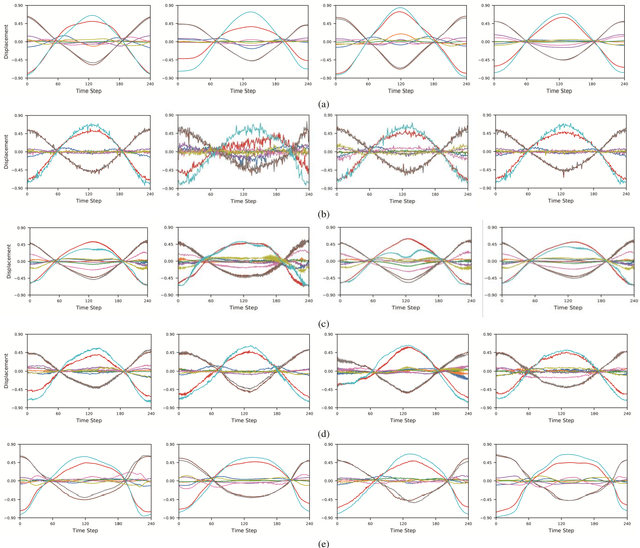
This article proposes a method for mathematical modeling of human movements related to patient exercise episodes performed during physical therapy sessions by using artificial neural networks. The generative adversarial network structure is adopted, whereby a discriminative and a generative model are trained concurrently in an adversarial manner. Different network architectures are examined, with the discriminative and generative models structured as deep subnetworks of hidden layers comprised of convolutional or recurrent computational units. The models are validated on a data set of human movements recorded with an optical motion tracker. The results demonstrate an ability of the networks for classification of new instances of motions, and for generation of motion examples that resemble the recorded motion sequences.
* 11 pages, 6 figures
Engineering a Conformant Probabilistic Planner
Sep 26, 2011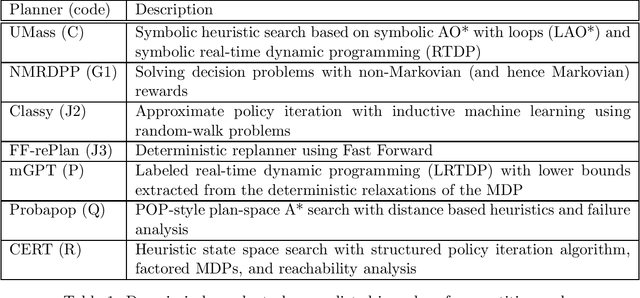
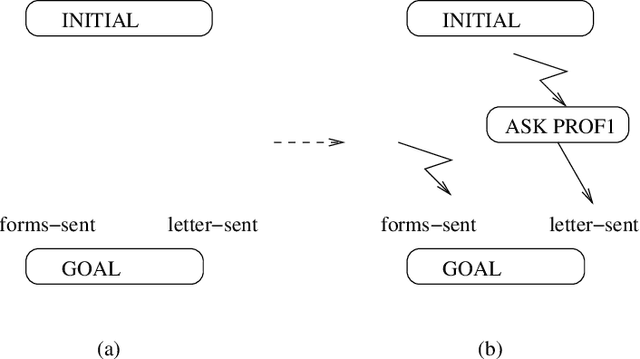
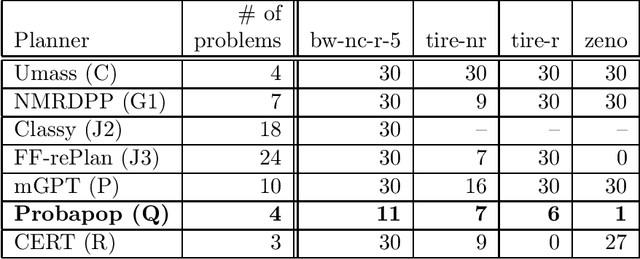
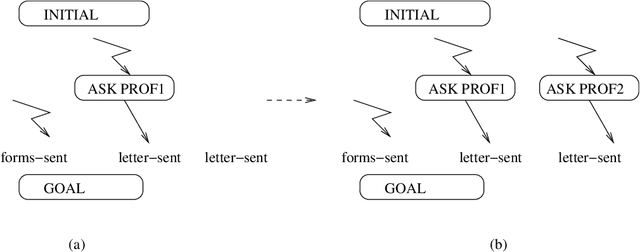
We present a partial-order, conformant, probabilistic planner, Probapop which competed in the blind track of the Probabilistic Planning Competition in IPC-4. We explain how we adapt distance based heuristics for use with probabilistic domains. Probapop also incorporates heuristics based on probability of success. We explain the successes and difficulties encountered during the design and implementation of Probapop.